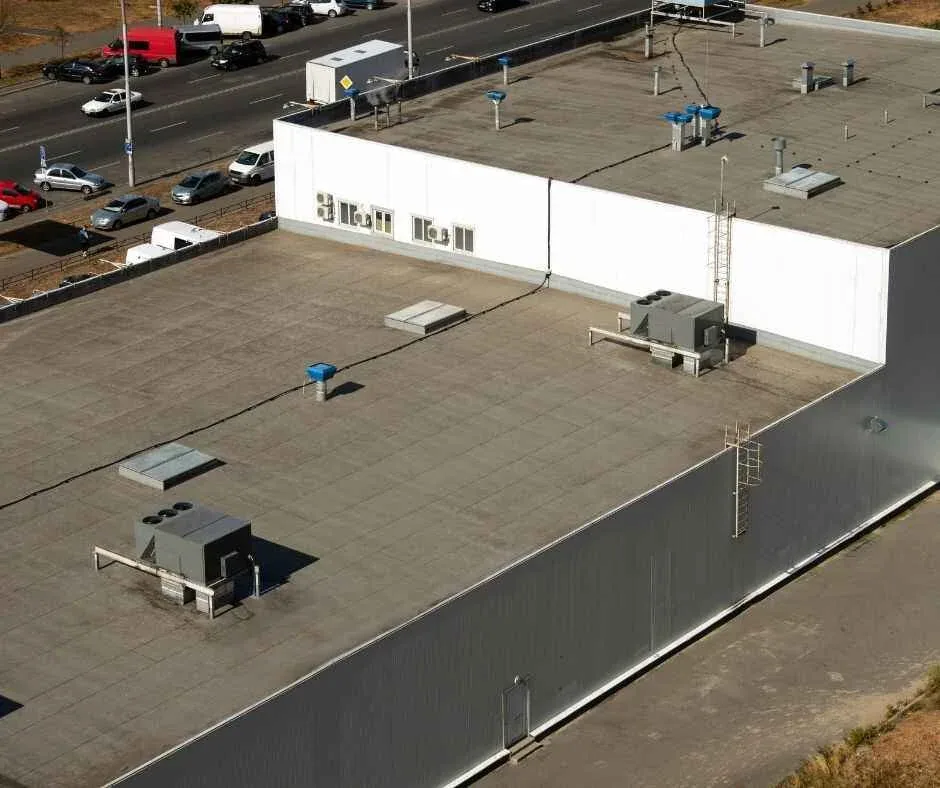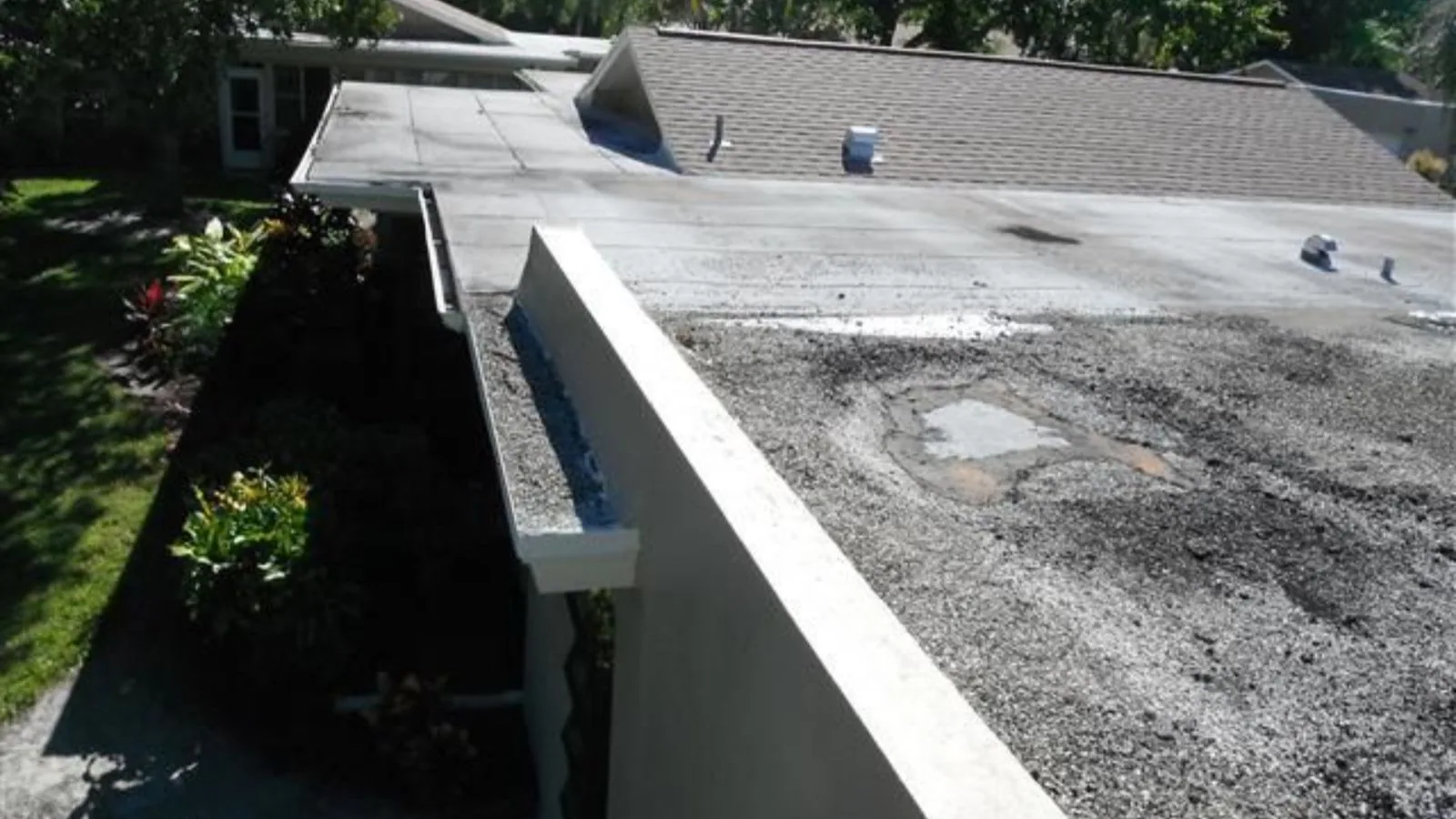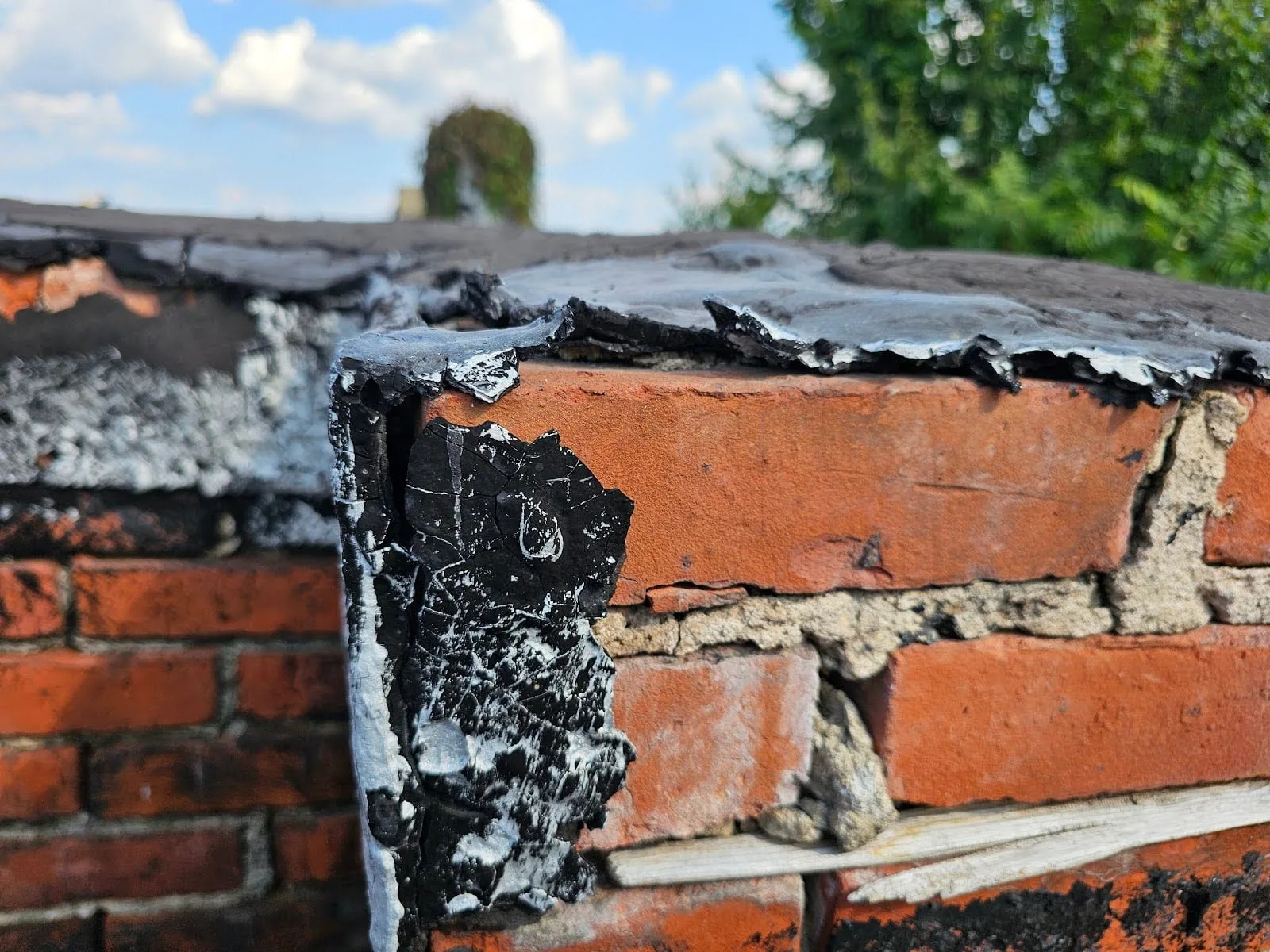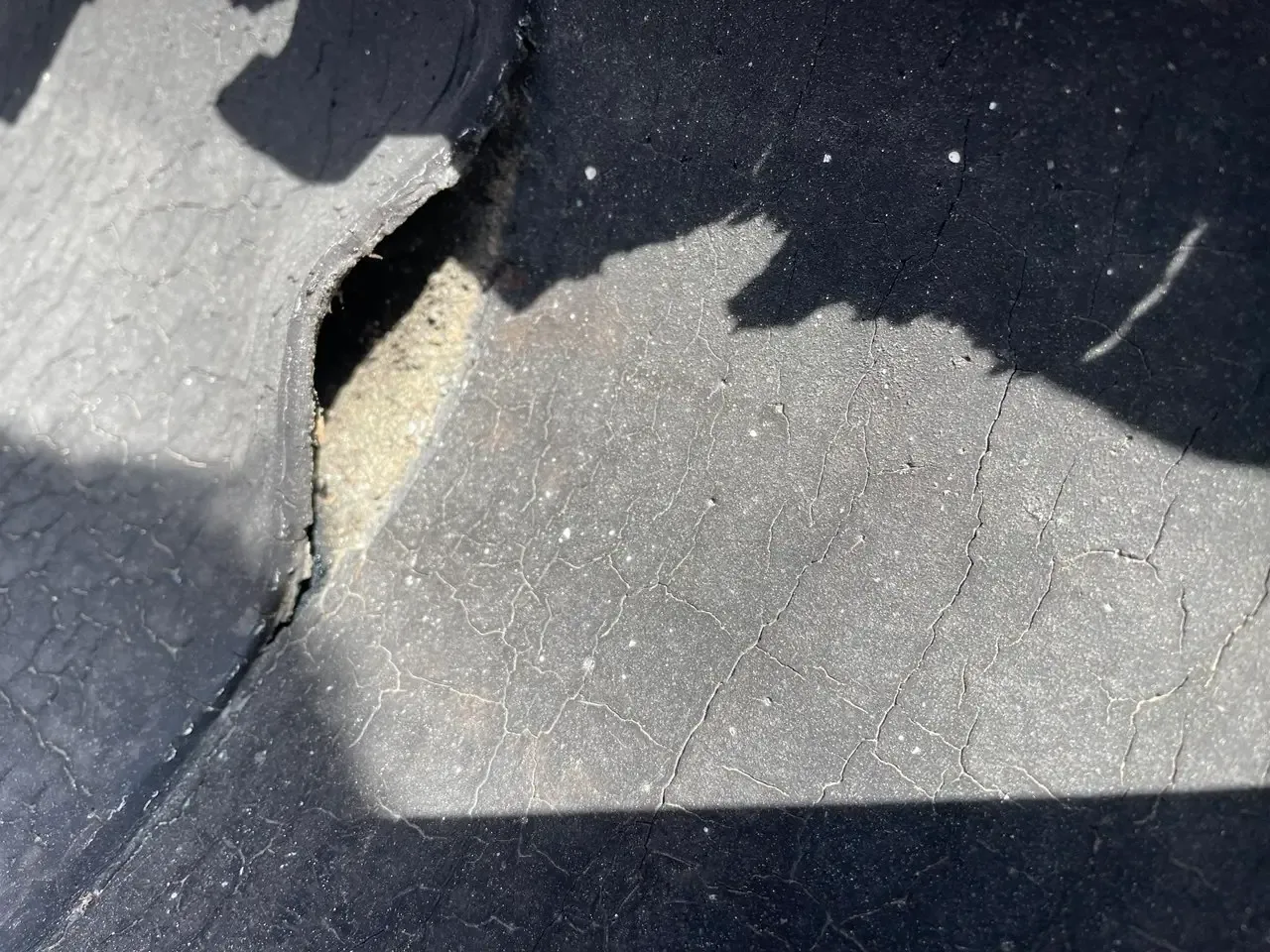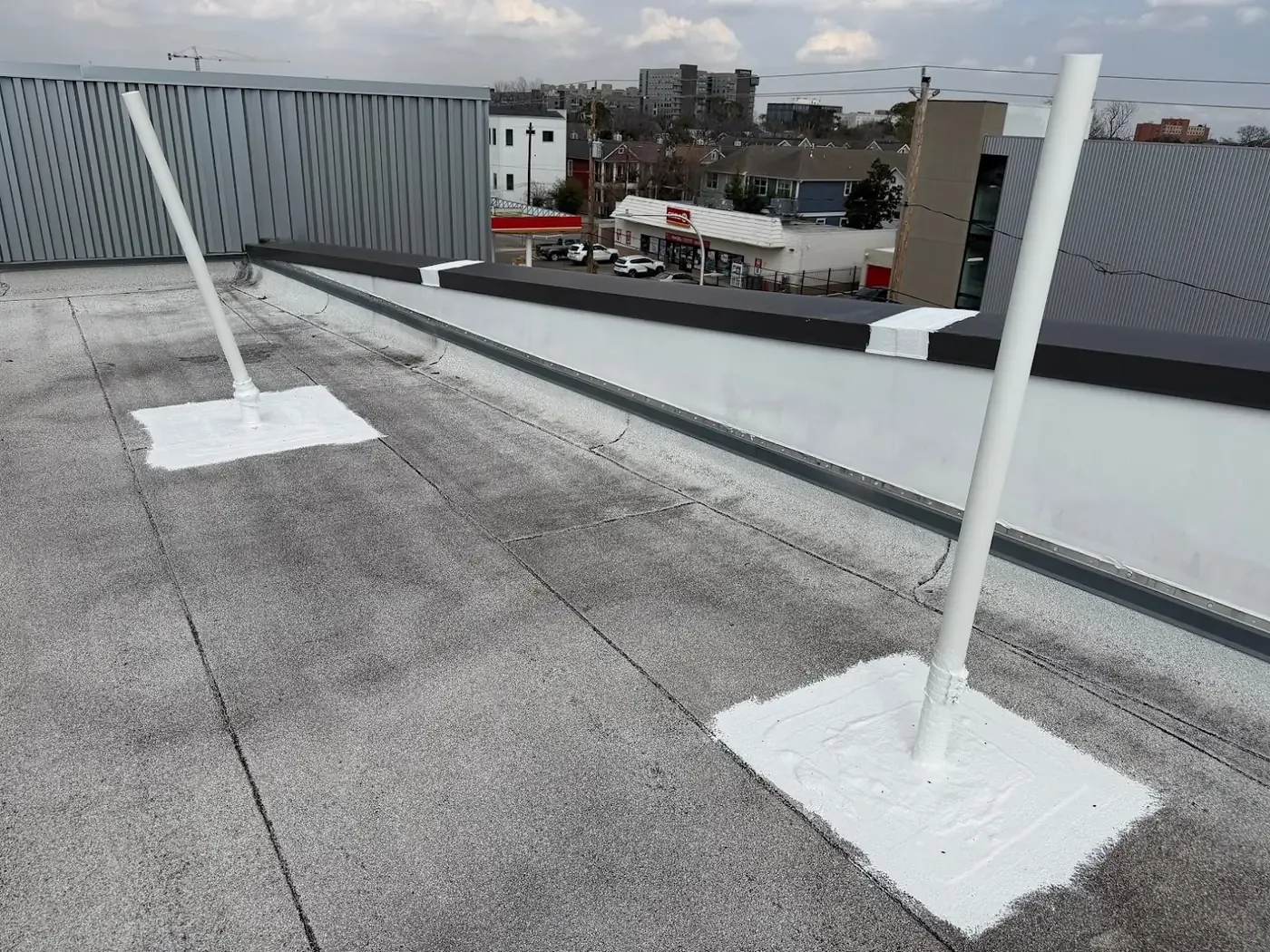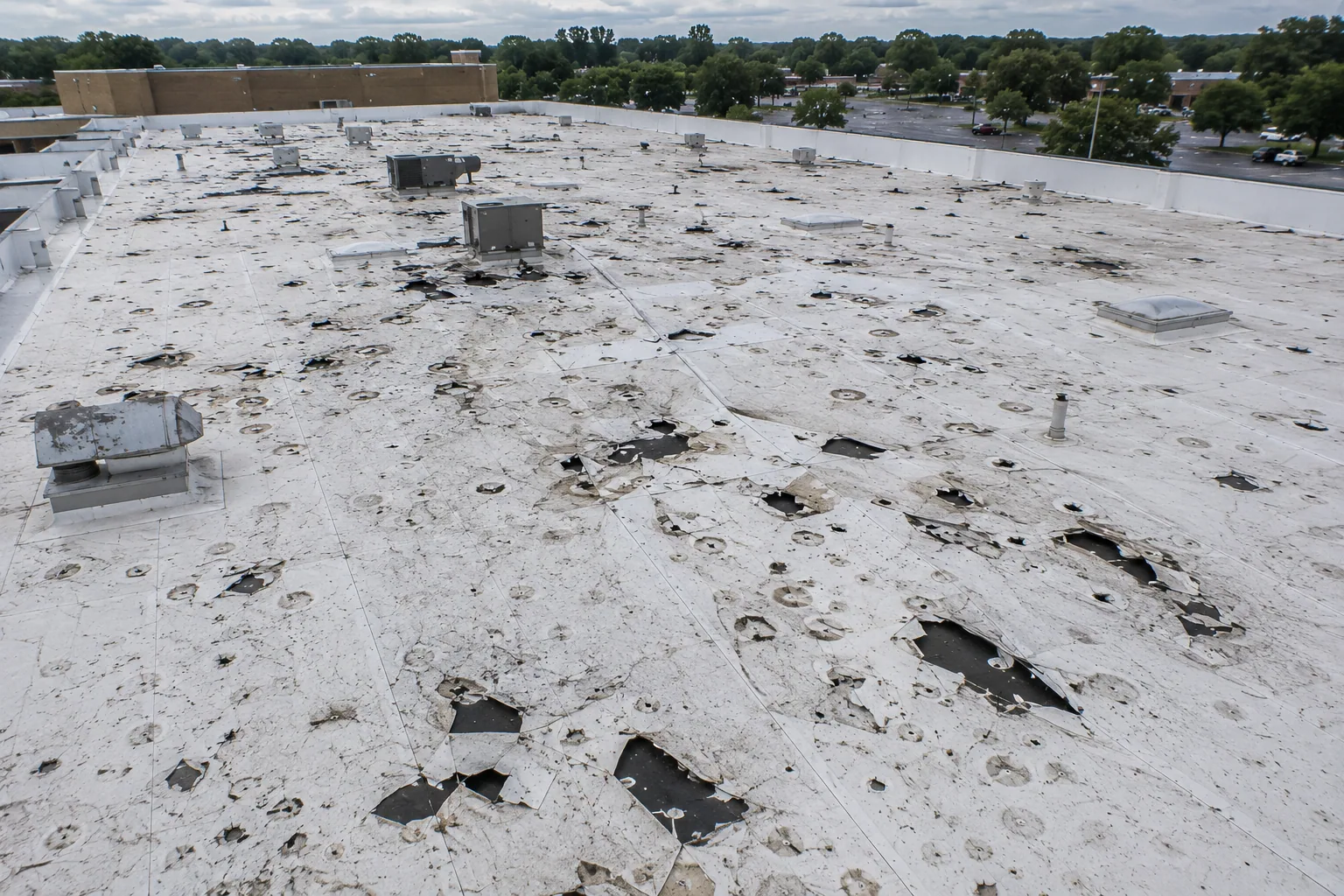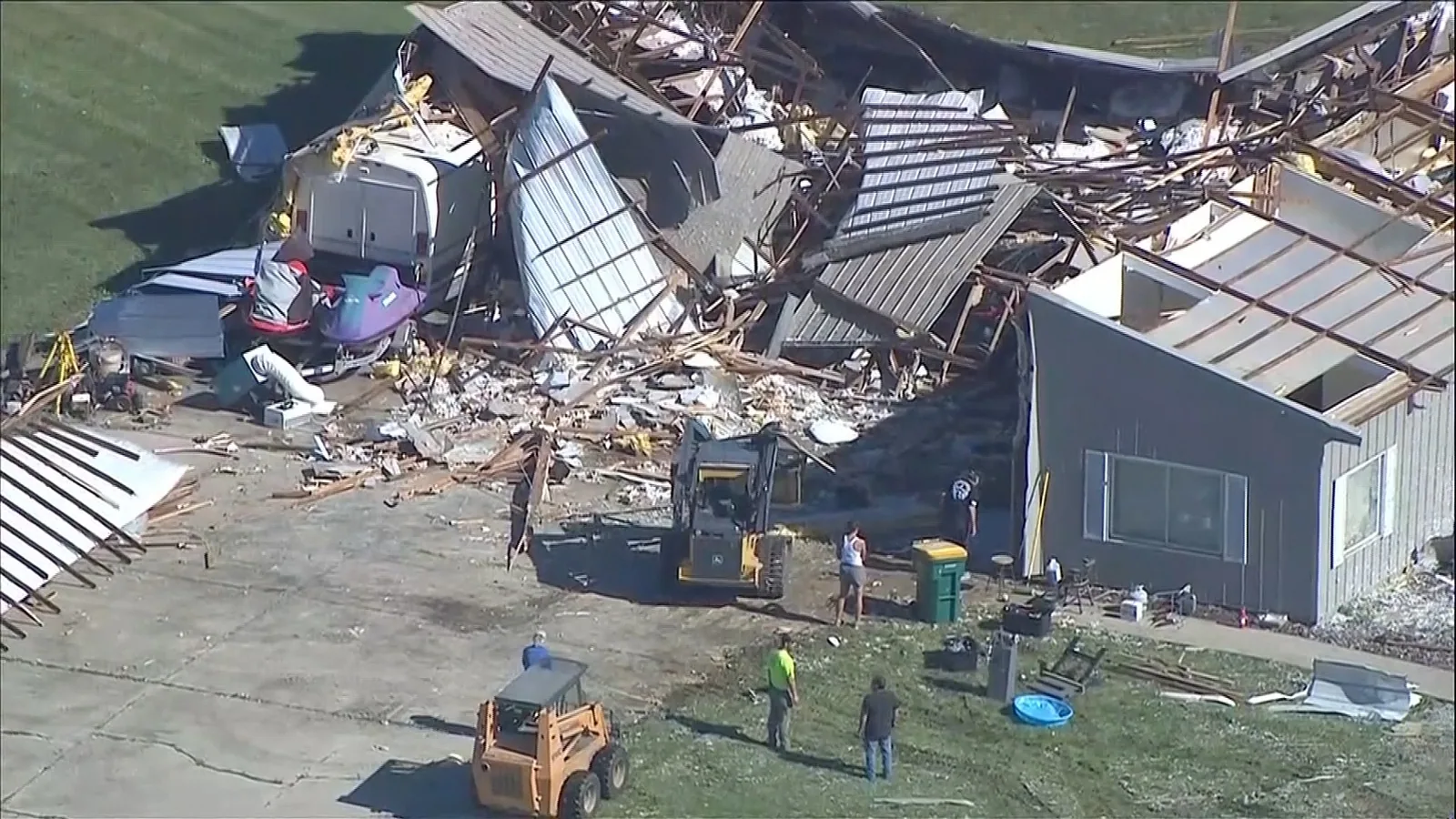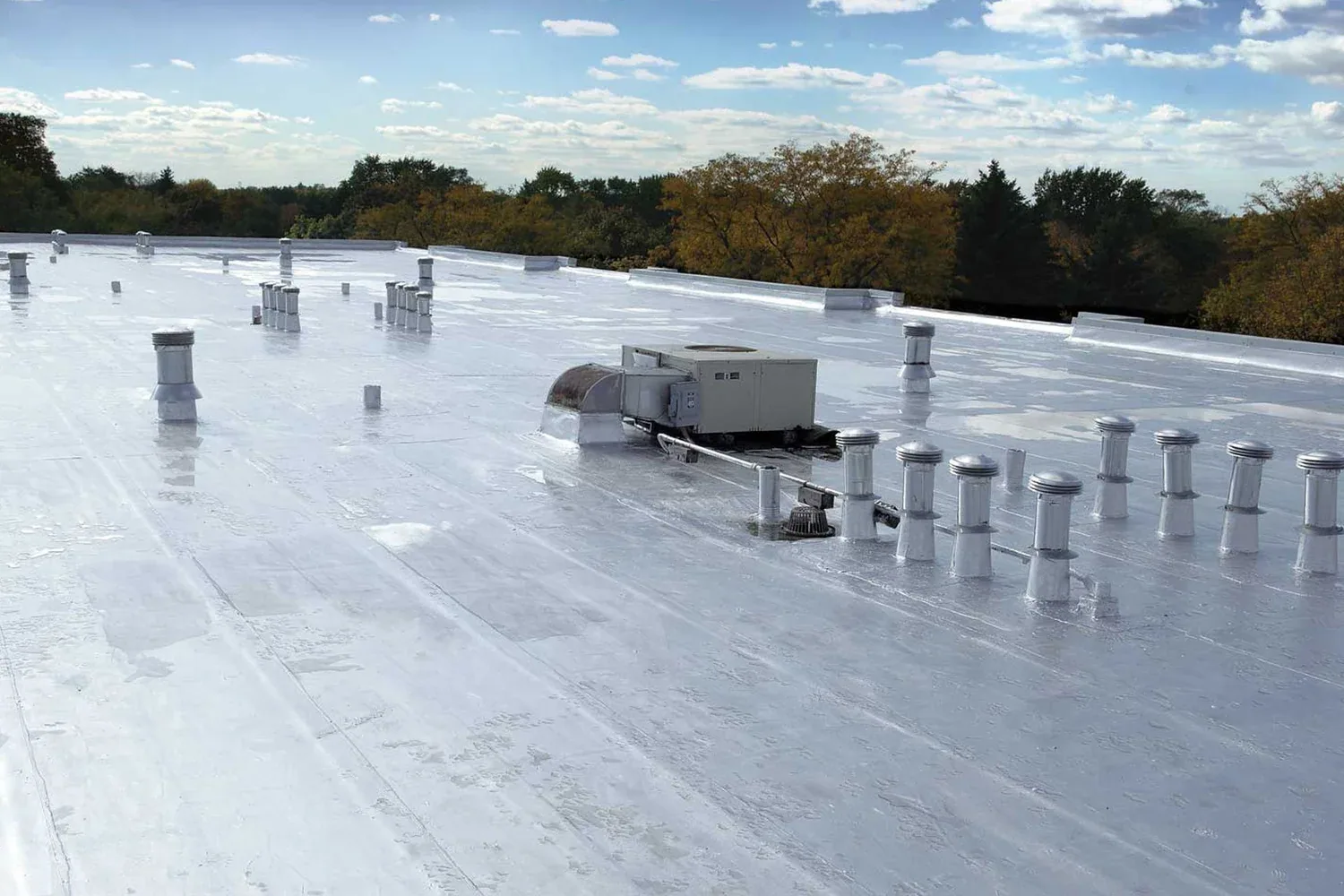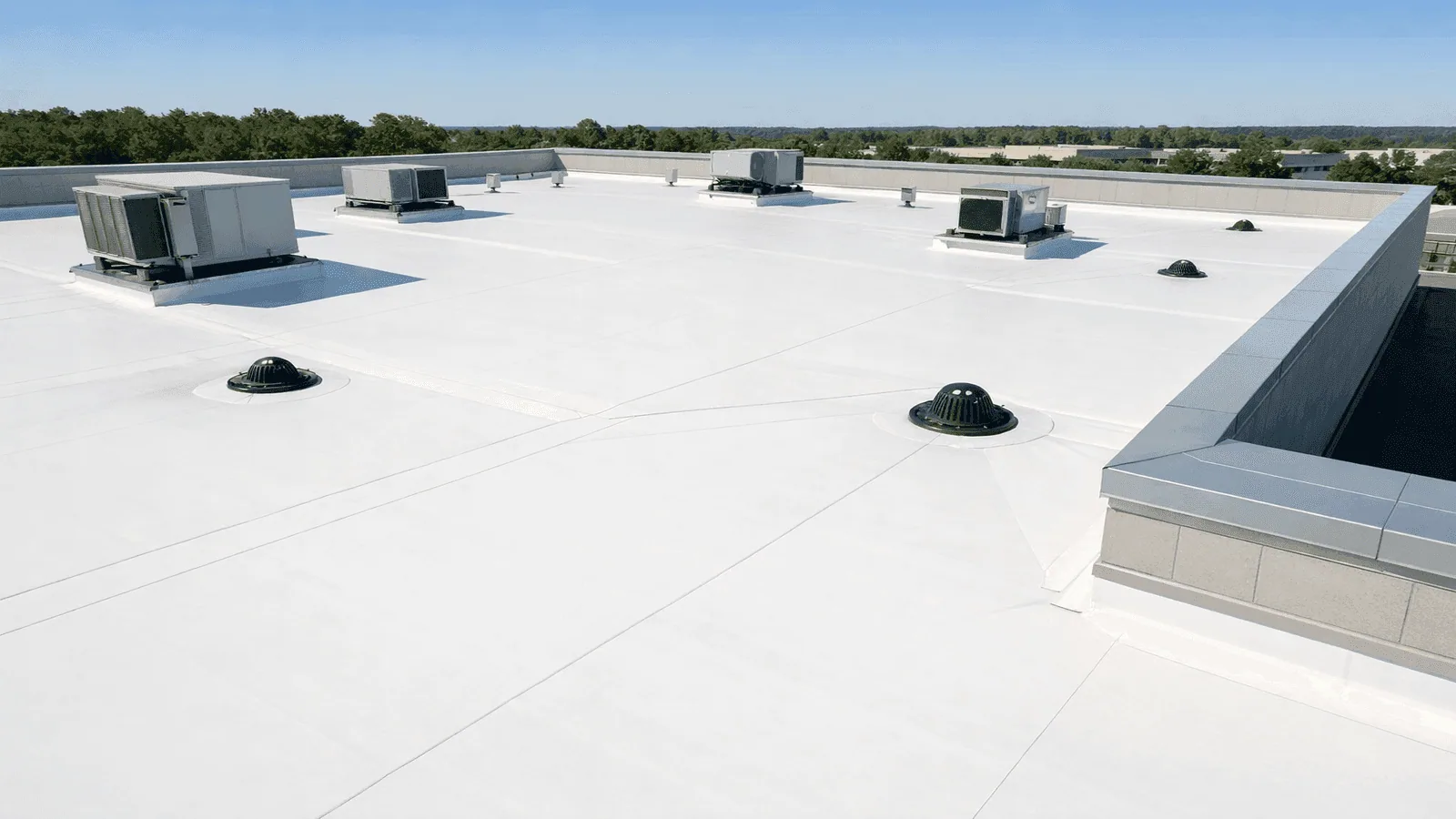
A roof incident needs a safe first response and a careful record of what the inspection can confirm. We locate the opening, protect active space, trace water, and photograph visible damage before setting a permanent repair boundary. Carmel’s central Indiana climate includes hail, tornado, wind, snow, and heat exposure, so the inspection follows the reported event and the actual roof evidence. Begin with wind damage, hail damage, or tornado damage when a storm has affected the property.
Emergency work limits water entry and protects the interior; it does not replace the follow-up inspection. We check the surrounding seams, penetrations, drains, and edge details to see whether the visible opening has a wider path. The report distinguishes temporary stabilization from the permanent repair and notes areas that could not be accessed. For an active leak, membrane puncture repair or flashing failure repair may fit once the system and failure are identified.
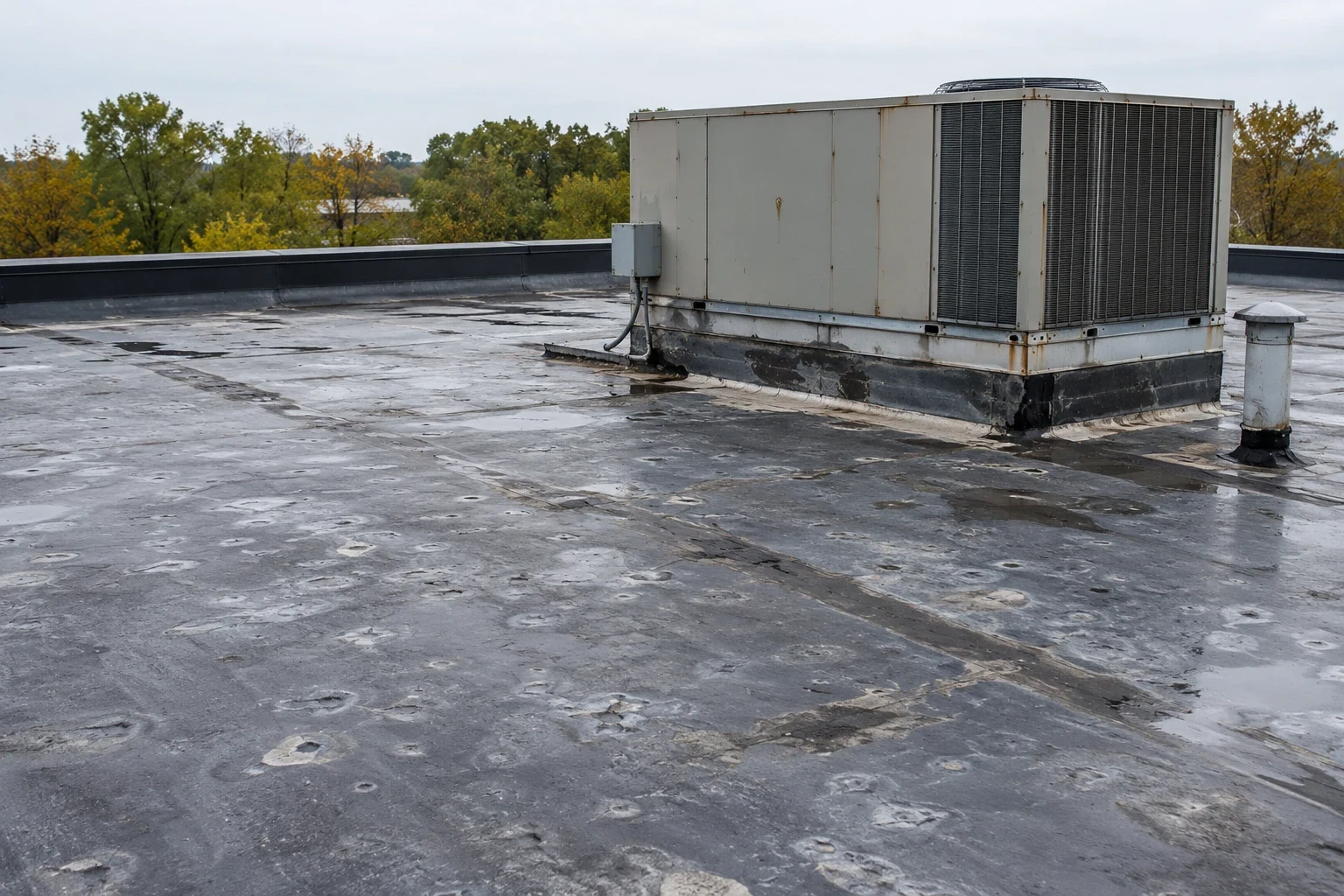
Water can move below a membrane or insulation before it appears indoors. We compare the stain location with low points, seams, curbs, and roof-to-wall transitions. A clogged drain can hold water over a weak detail; an open flashing can send it along a different path. The ponding-water assessment records the drain, overflow, slope, and substrate condition. When temperatures fall, snow and ice exposure adds safe access and freeze-thaw movement to the inspection plan.
A repair estimate should show the damaged area, compatible detail, access, and measured quantity. If insulation, attachment, or edge conditions have broader failure, we compare targeted work with recover or replacement rather than extend the patch by assumption. Photos and test results support the scope; the carrier decides insurance coverage. Owners can use claim documentation to record the inspection and repair sequence.
Save the report, dated photos, weather event information, temporary work, permanent repairs, and follow-up results with the roof maintenance log. That gives the next inspection a baseline and helps separate a later leak from the original incident. At Parkwood Crossing and City Center, each building needs its own roof record. A commercial inspection can document the next condition before repair or capital work is approved.
We return to inspect adjacent seams, penetrations, drains, and interior reports, then define the permanent repair and any additional testing needed.
Yes. We photograph visible conditions, identify completed stabilization, and prepare a repair scope. Coverage remains the carrier’s decision.
Not by itself. Water can travel through the assembly, so we trace the path from the interior report to roof details and test where needed.
Repeated failures across several zones, wet insulation, or widespread attachment problems can justify a renewal comparison. We document those conditions before recommending scope.