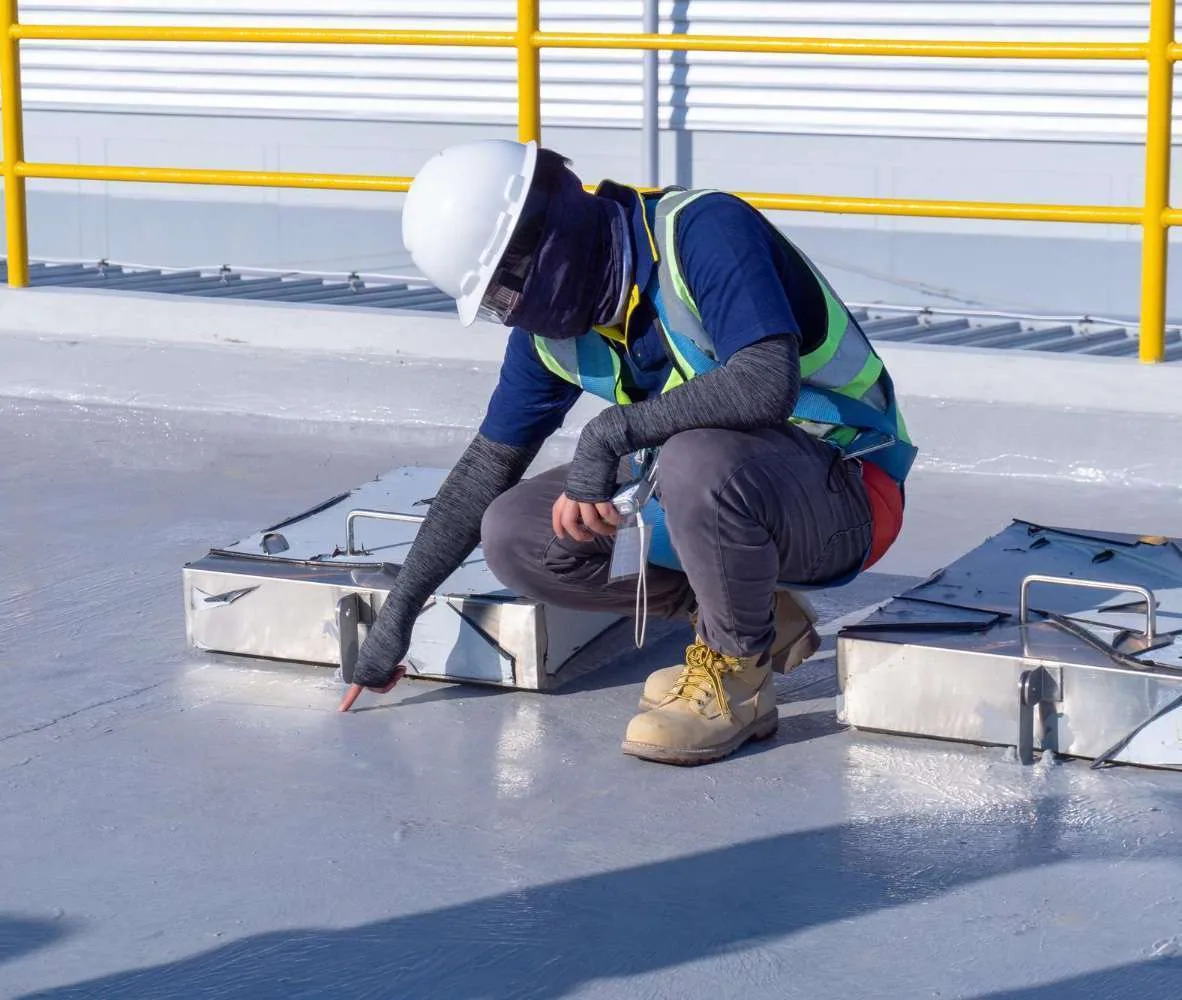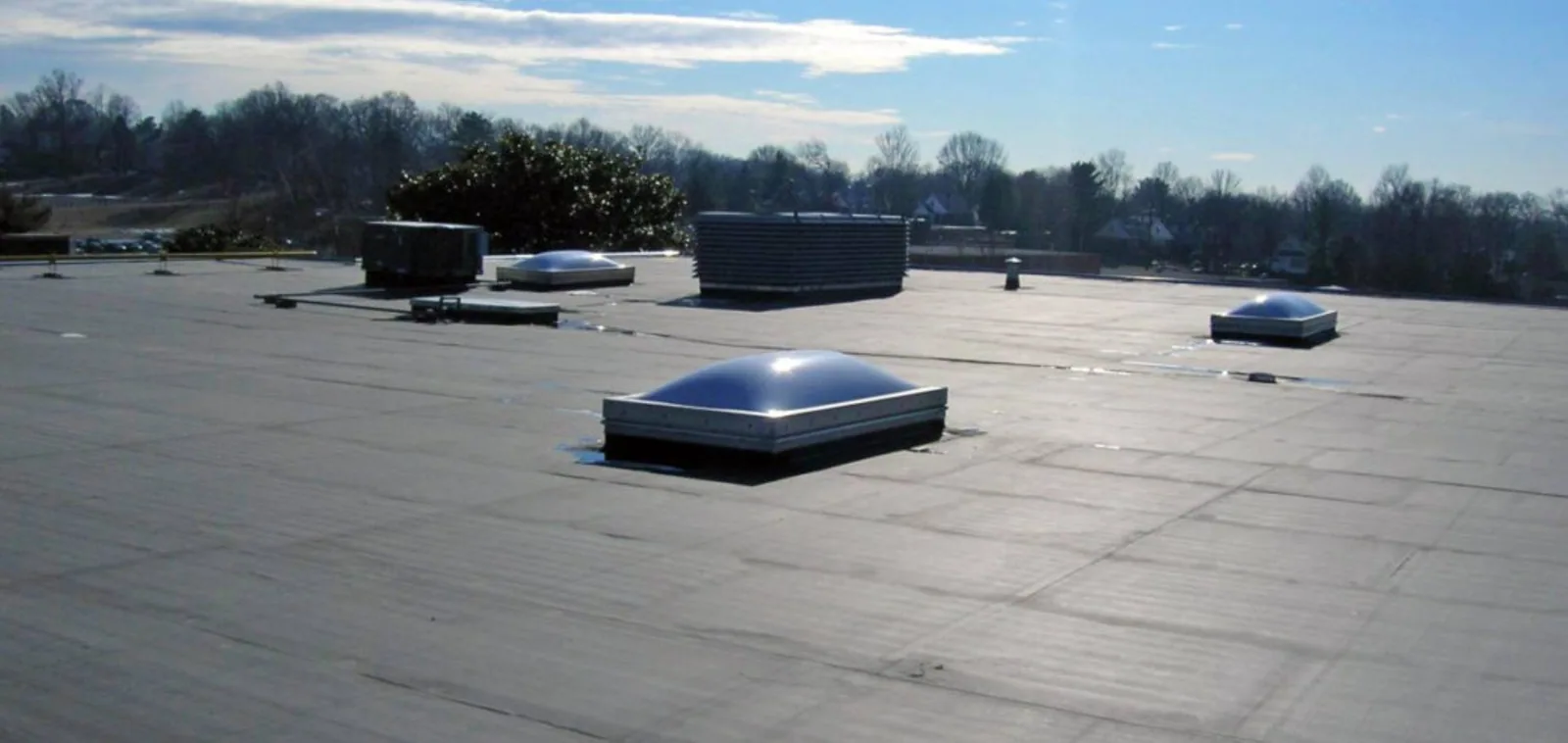
Summer exposure can reveal a roof condition that was less visible in cooler weather. We inspect the membrane surface, seams, flashings, equipment bases, and drainage, then decide whether the issue is surface aging, a failed detail, or a broader loss of material integrity. Indianapolis July normals, used for Carmel, show an 85.2-degree average high. Air temperature is not roof-surface temperature, but heat and solar exposure make a seasonal inspection useful when the roof has cracks, chalking, shrinking, or repeated repairs.
Carmel's commercial inventory includes multi-building office properties along Meridian and U.S. 31, as well as mixed-use settings such as City Center. Different roof sections can have different shade, equipment, and service patterns. We map the condition by section and avoid treating one discolored area as proof that an entire roof needs replacement.
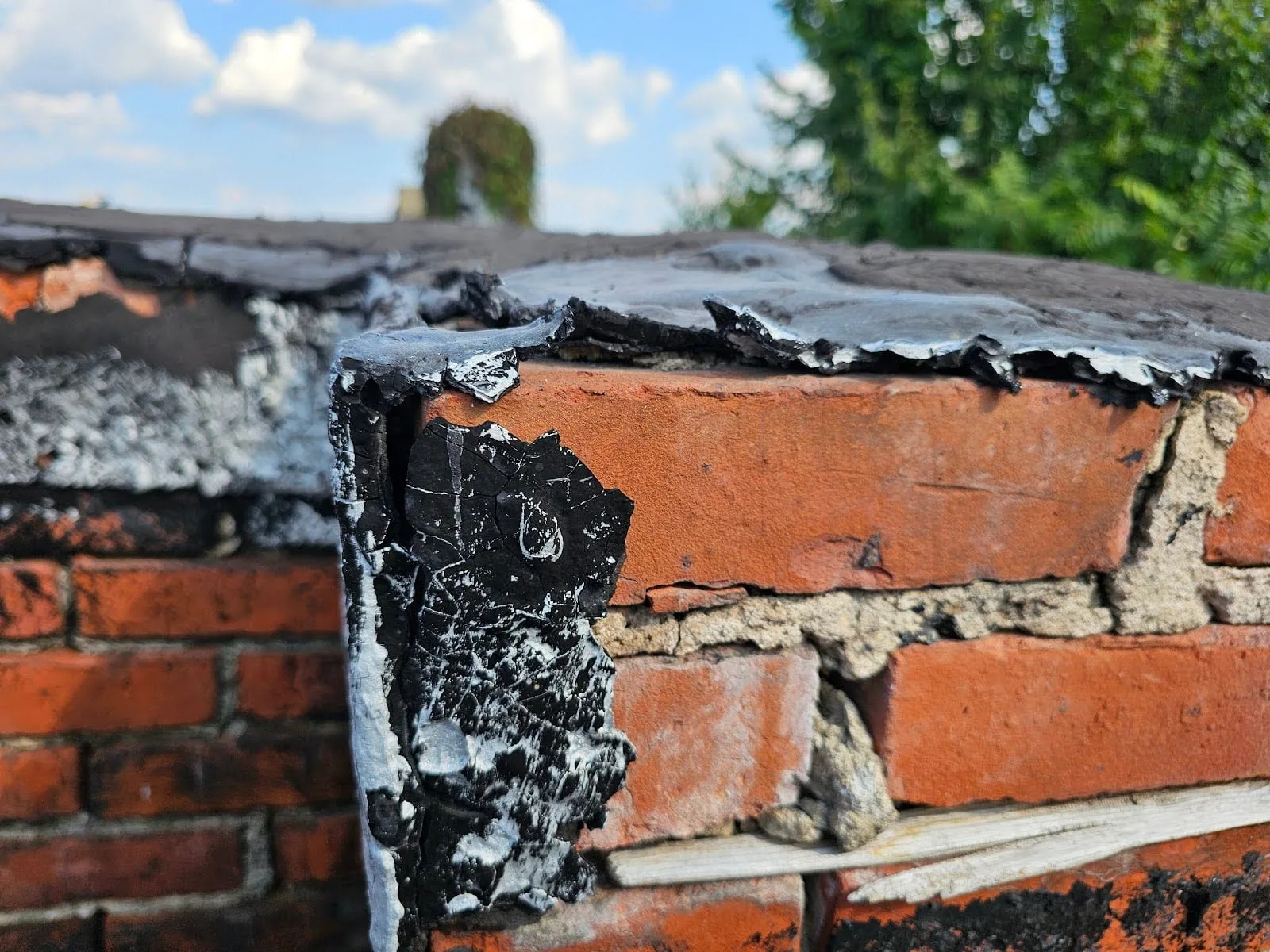
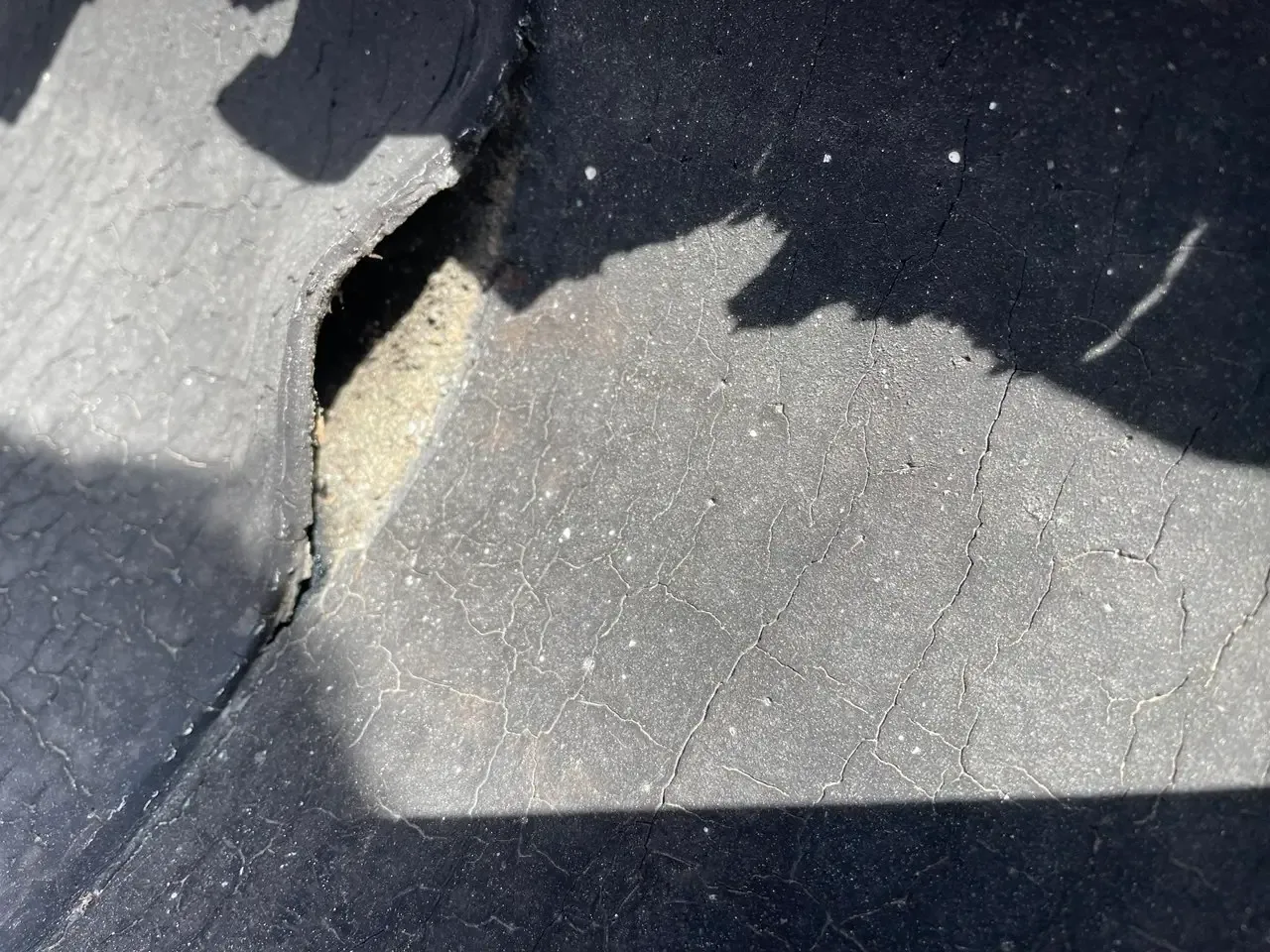
We look for exposed reinforcement, cracks, splits, brittle edges, loose seams, loss of coating, and deterioration around penetrations. A faded surface alone does not identify a leak or show how much material remains serviceable. We check laps, fasteners, wall transitions, drains, and rooftop equipment, then compare the visible surface with maintenance logs and prior repair locations.
Heat can accelerate movement at a detail, but equipment service, foot traffic, water, and earlier patching may also contribute. We inspect the access route and any area where tools or service carts repeatedly cross the membrane. A roof condition inspection can document how a surface concern relates to seams and transitions, while an infrared moisture survey may help screen for hidden moisture when conditions support that method.
Where water appears inside, we record the room and timing, then trace the likely path to the roof. Heat damage can coexist with a separate curb, flashing, or drain failure. We keep the findings separate so the owner can see which repair addresses the leak and which work improves exposed material elsewhere.
Surface wear and water entry are related but not identical. A brittle membrane may crack under movement; a coating can thin over high points; a seam can open where adhesion or weld strength has declined. We test the affected detail and examine the material around it. At transitions between older and newer sections, we check whether repairs created incompatible surfaces or a hard edge that concentrates movement. A coating should not bridge an open joint or conceal a loose sheet. If the roof remains dry and firmly attached, local repair or restoration may be possible. If moisture, weak attachment, or widespread deterioration is present, a larger assembly decision may be needed.
At curbs, pipes, and skylights, we check whether heat-related movement has stressed flashing or sealant. A flashing repair can restore that transition, while a seam repair addresses a failed joint in the field. Repeated cracking at the same location may also call for a change in detail or access protection, not another surface patch in the same spot.
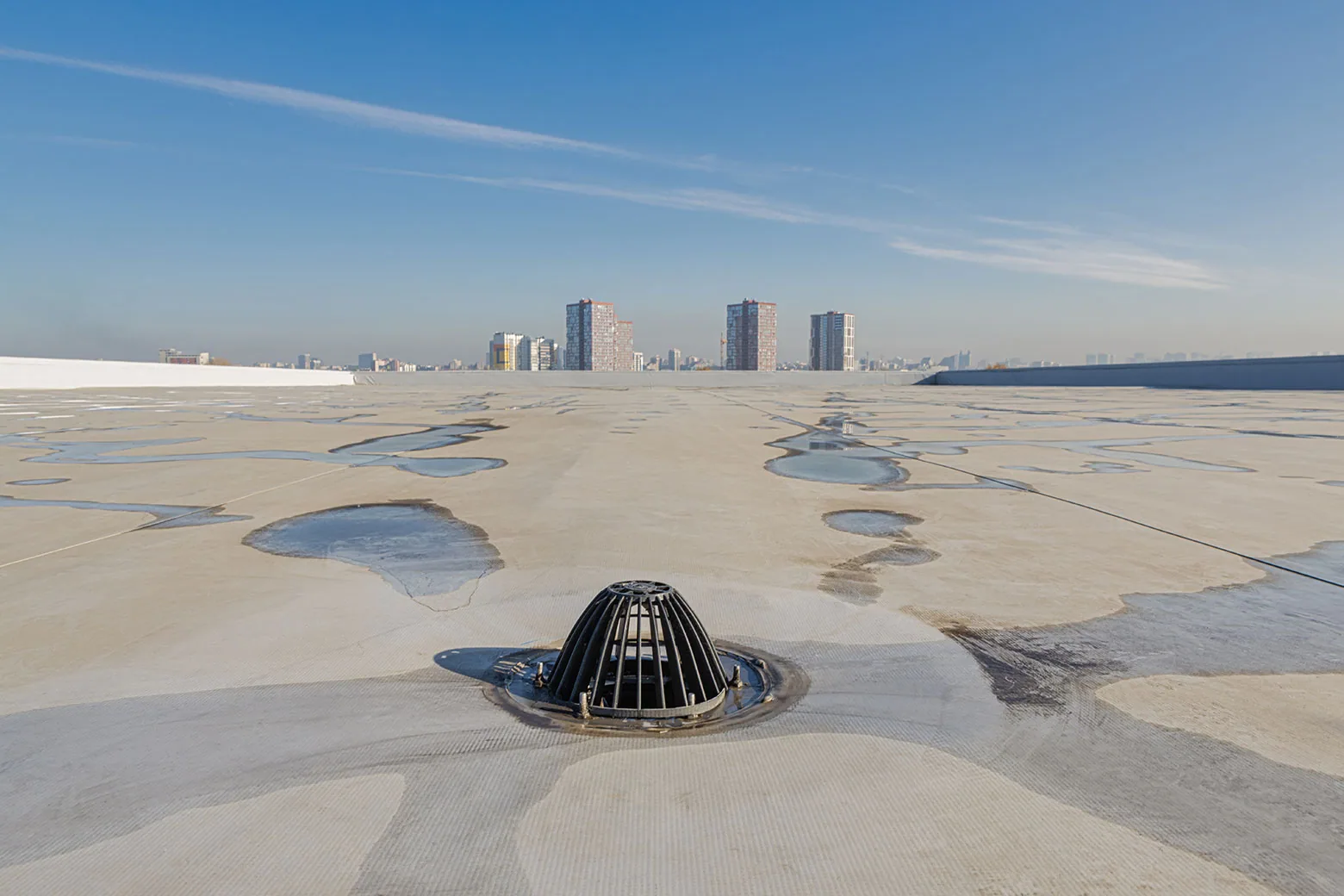
Drainage matters during hot weather too. Debris and standing water can keep a low area wet while exposed material cycles through warm and cool conditions. A drainage check can distinguish cleaning from a connection or membrane repair. We note which finding is causing the current leak and which condition merits a separate maintenance or capital item.
A coating is not a universal response to a hot roof. We check whether the substrate is sound, dry, clean, and compatible with the proposed system. Cracks, open seams, wet insulation, or failed attachment need correction before a coating can be considered. The scope identifies surface preparation, detail work, application conditions, and any area excluded because it cannot support the treatment.
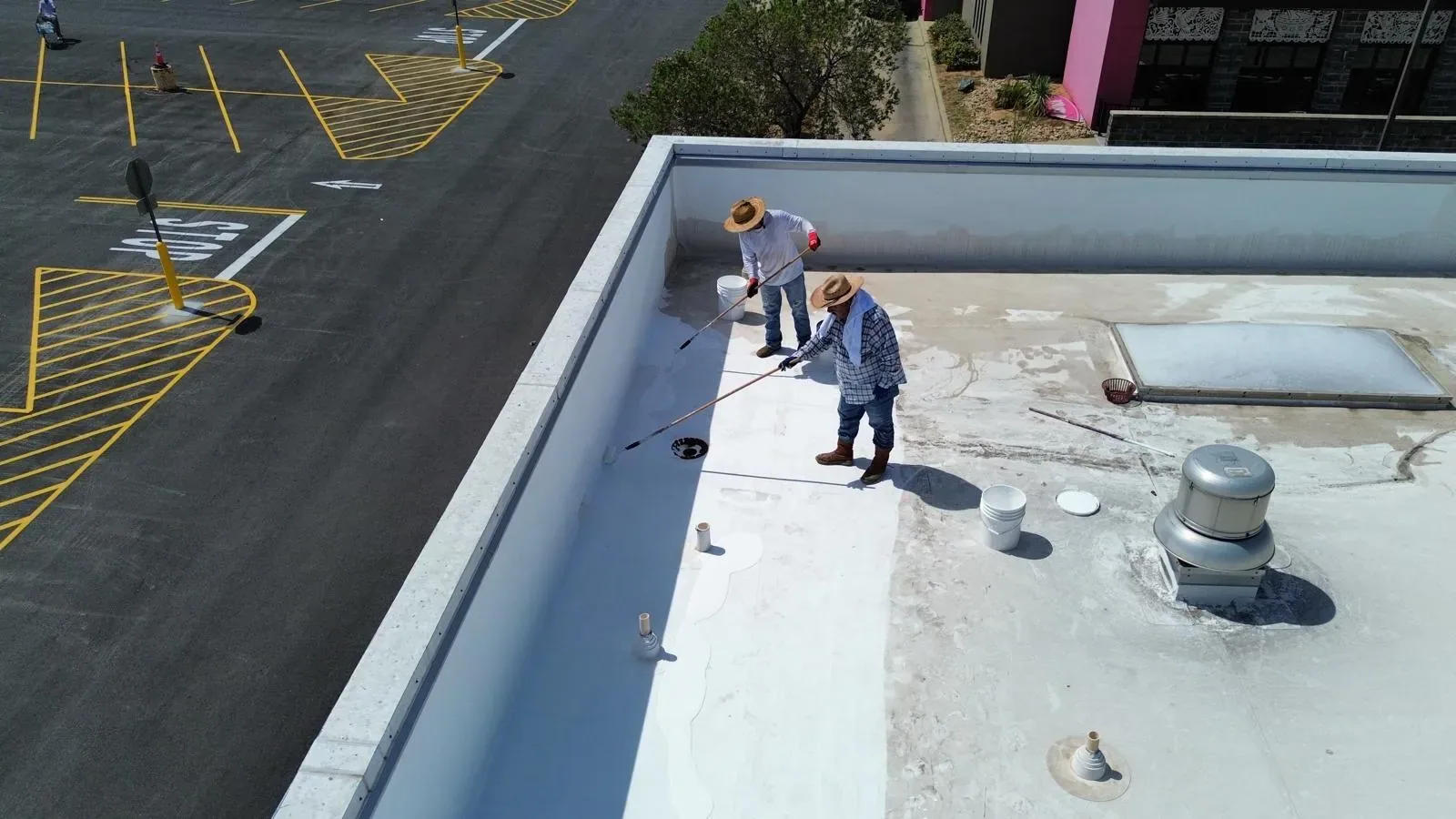
A roof coating restoration may help protect a serviceable assembly when the material and details support it. Localized damage may call for membrane or flashing repair instead. Where the roof has broad deterioration or moisture, a replacement evaluation can compare removal, insulation, cover board, edges, and equipment tie-ins. We show the measured condition and likely schedule effect for each path.
Cost depends on preparation, detail count, access, testing, and whether equipment or rooftop service routes need protection. Timing depends on surface temperature, weather, cure or weld requirements, and how much of the building remains active. We identify dependencies before mobilization rather than promise that a product can be applied under any condition.
Repair work must follow the material requirements and actual roof conditions. We check the surface, forecast, access, and water path before choosing a work window. Summer heat can affect safe handling and material application, while a sudden storm can interrupt an exposed section. The crew needs a dry-in point and a plan for keeping drains open if the work spans more than one shift.
Carmel City Center includes retail, offices, housing, and public parking; Parkwood Crossing combines offices with hotel, dining, bank, and parking uses. Those areas illustrate why staging, access, and tenant notice can matter on commercial roofs, but the property contact defines each building's rules. We coordinate lifts, material delivery, equipment operation, and interior protection for the site being repaired.
If several roof sections show different aging patterns, we can sequence the most vulnerable areas first and document which remain serviceable. A maintenance visit can revisit exposed seams, coatings, and high-traffic routes before the next seasonal shift. The owner receives an inspection record that separates completed repairs from conditions still under observation.
Closeout identifies the inspected area, repair boundary, materials used, photos, and any surface left for later review. We note whether the work was a localized repair, coating restoration, or removal and replacement. If another visit is needed after curing or testing, the record says what will be checked and who should receive the result.
The Meridian and U.S. 31 corridor supports Carmel's corporate office market, while more than 70 retailers at Clay Terrace line pedestrian sidewalks connecting the center toward Meridian Street. Those local settings can have different access and equipment patterns, but they do not determine an individual roof's surface condition. A Science and Technology Park area plan can help organize broader property visits; the asset record carries the actual surface findings and treatment limits.
Send roof plans, maintenance history, leak locations, system information, and the capital window you are considering. We can inspect the exposed areas, identify what is repairable, and compare a coating, repair, or renewal scope using measured conditions.
Not automatically. We inspect adhesion, seams, moisture, surface condition, and compatibility before deciding whether restoration can work or repair is needed.
It can contribute to cracking or movement at seams and transitions, but a leak inspection should identify the actual opening. We map surface wear separately from confirmed water entry.
No. Carmel's regional July average high provides seasonal context, while the roof surface and material conditions must be checked at the site.
Widespread moisture, poor attachment, failed details, or a substrate that cannot support a coating may point toward renewal. We verify those conditions and compare the measured scopes.
We follow the system requirements and confirm surface, weather, access, and cure conditions. The work plan also sets a dry-in point if a section cannot be completed in one shift.