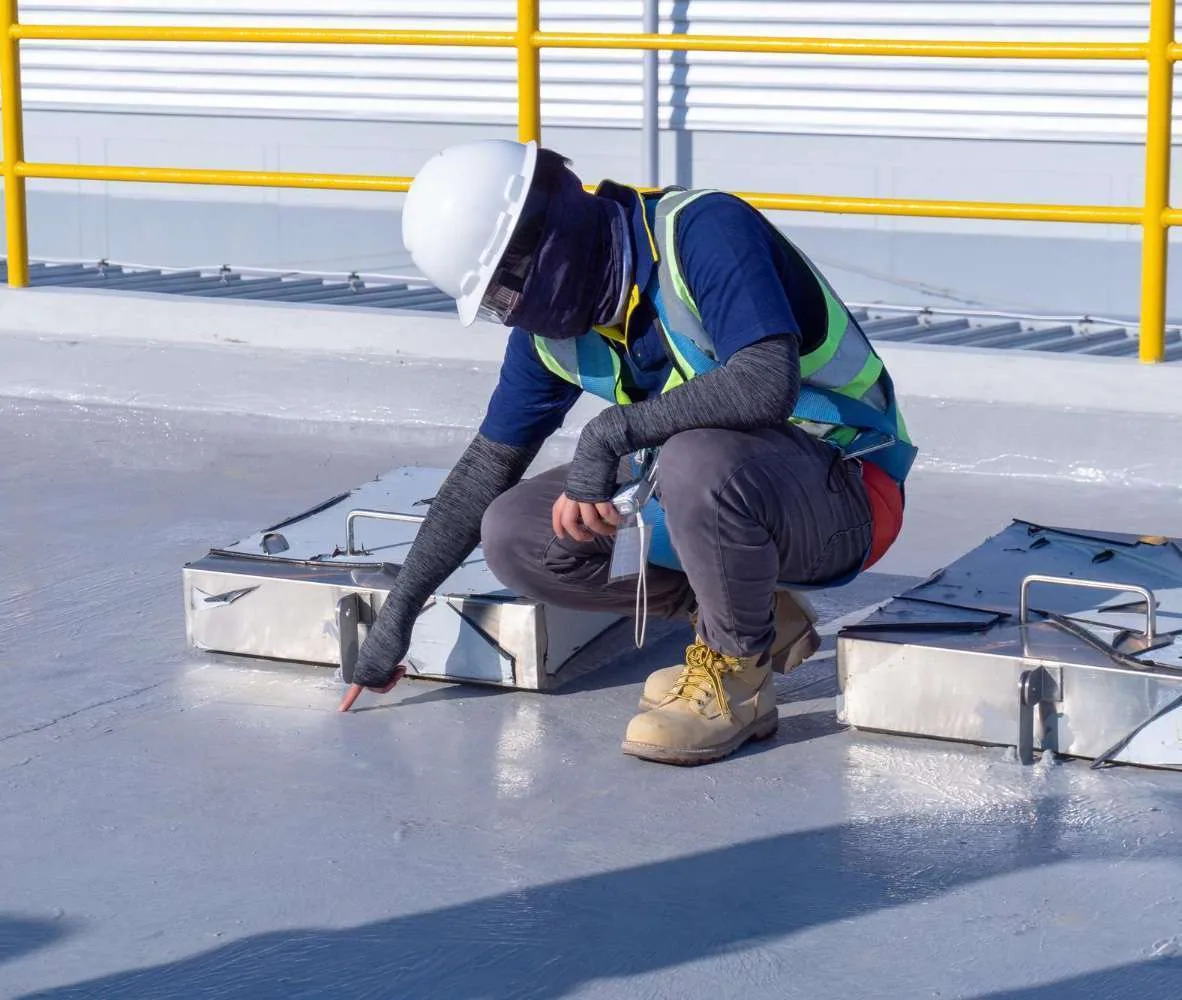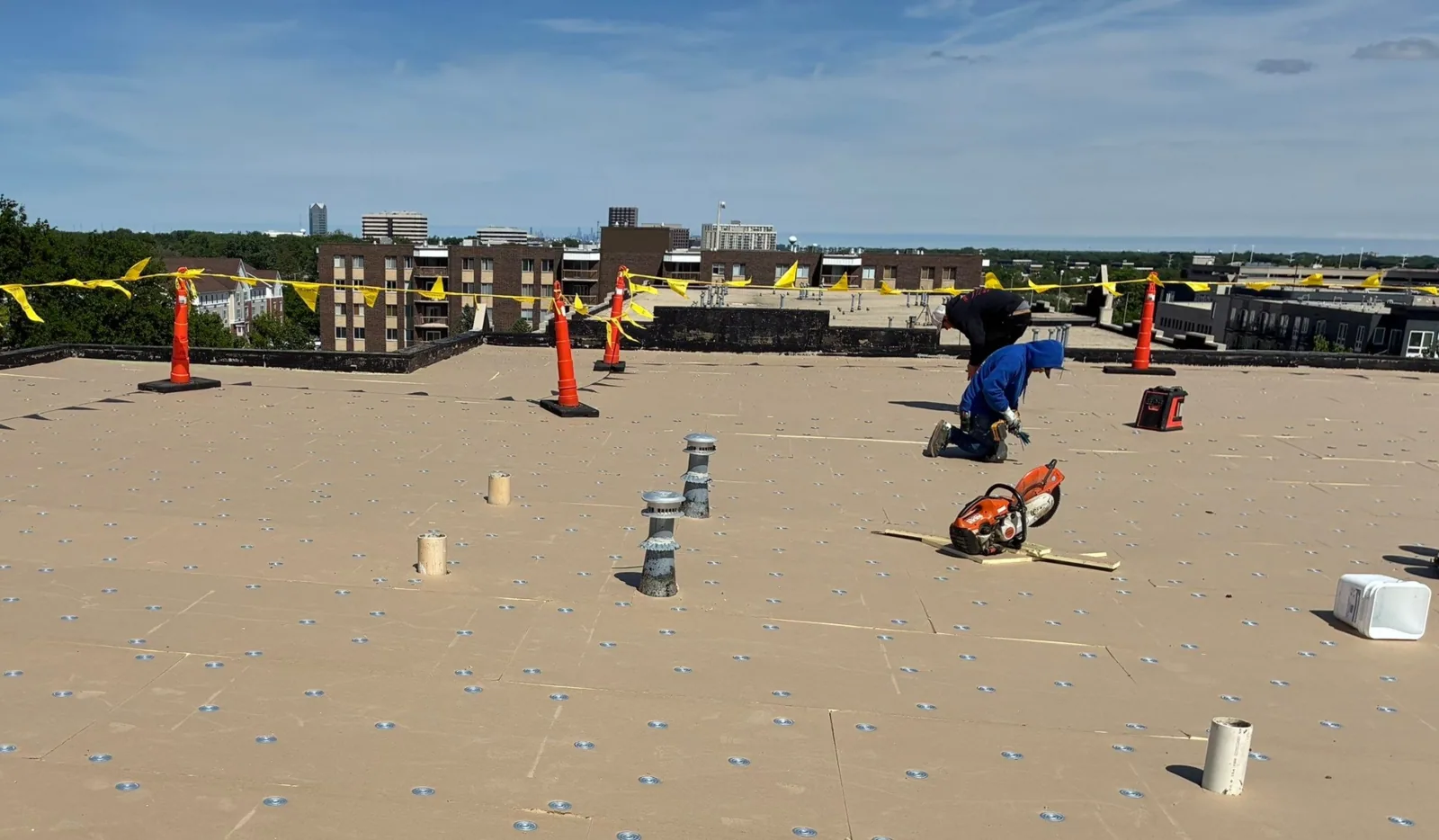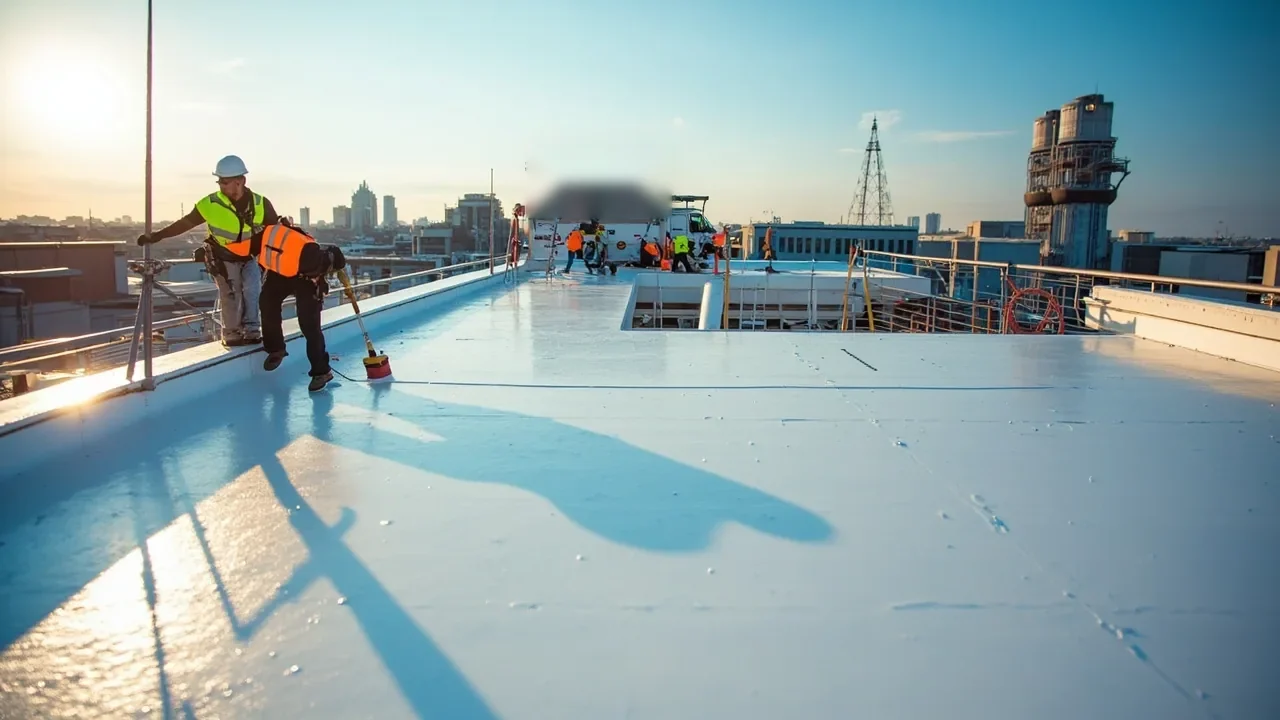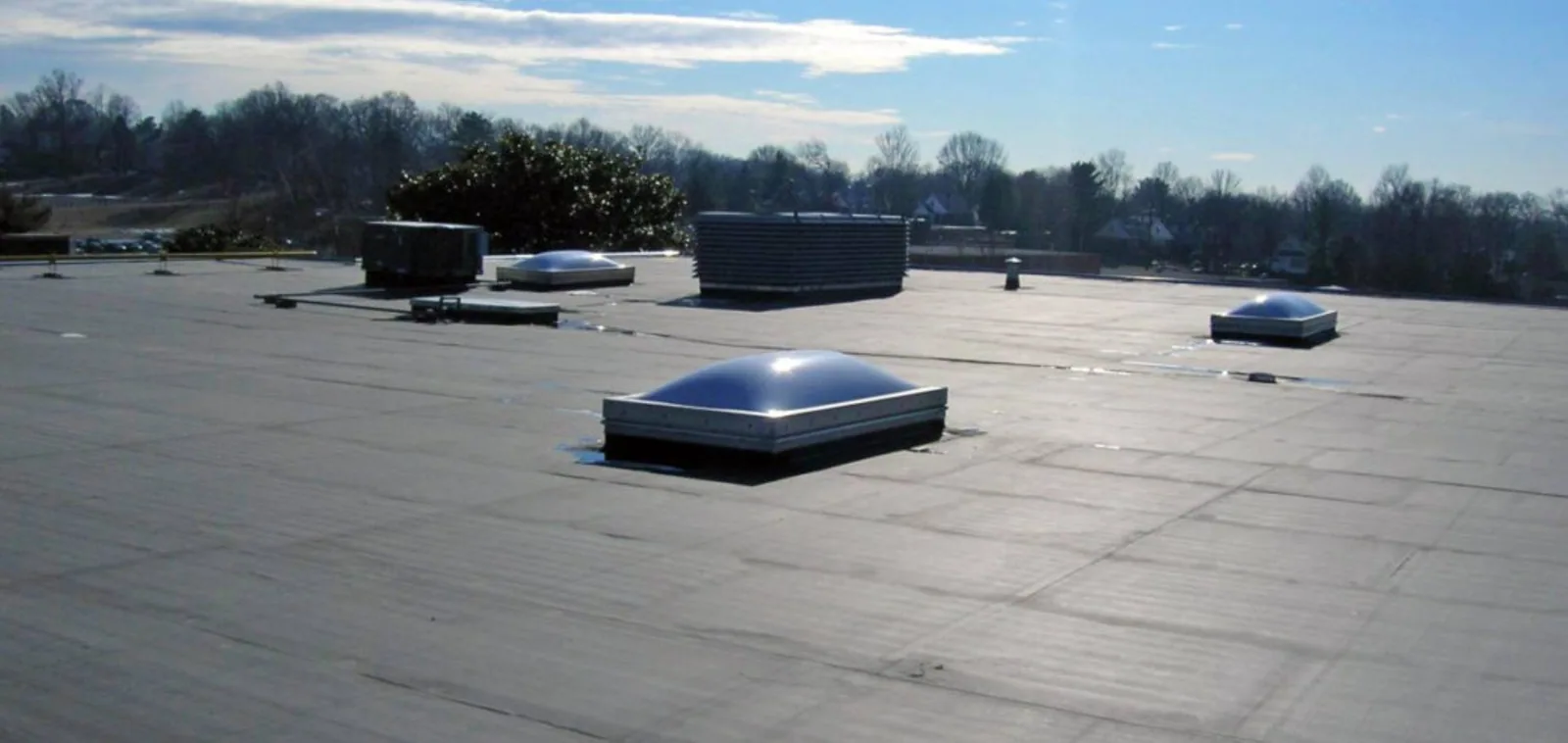
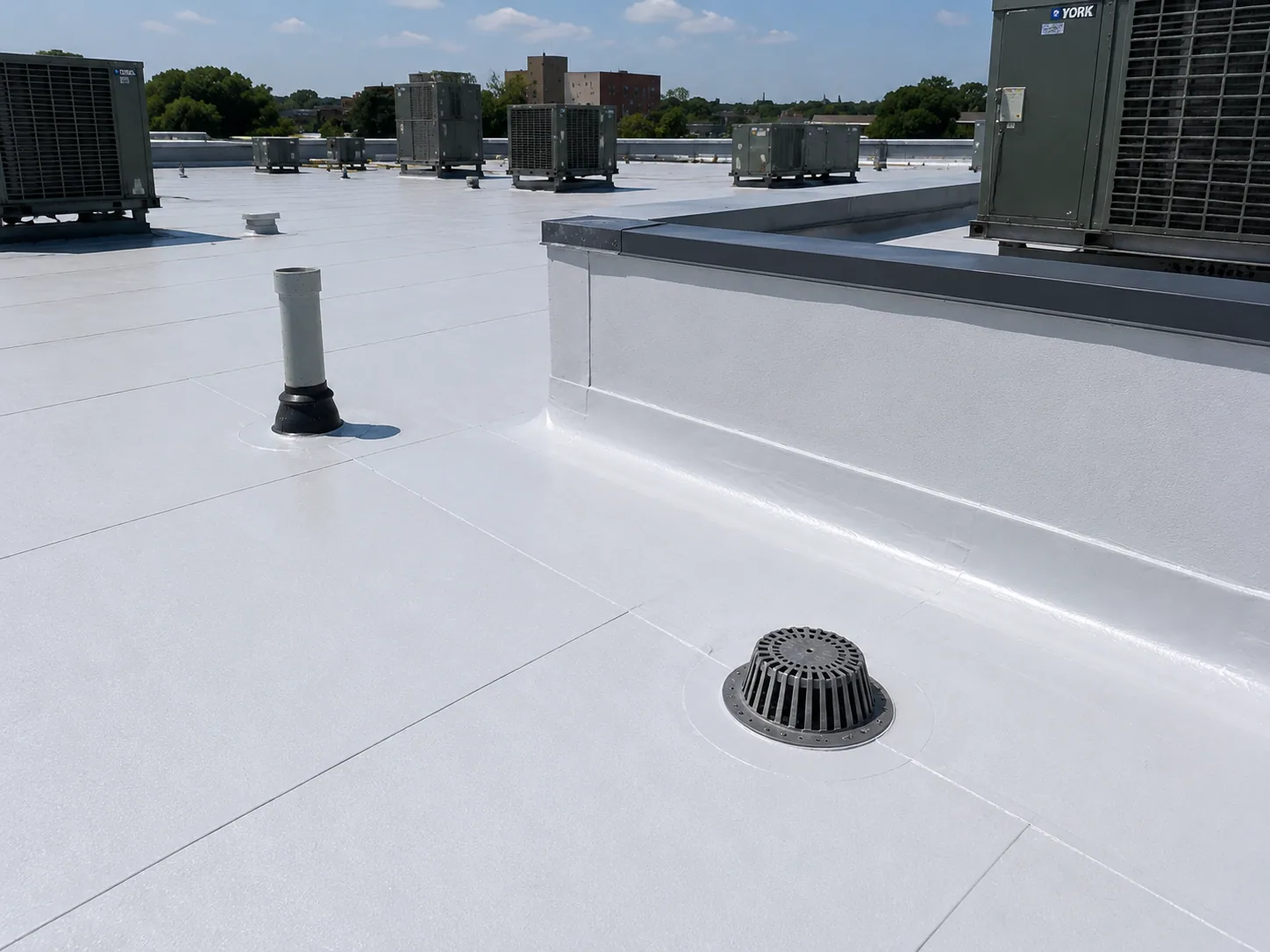
During a Carmel thaw, water still needs a clear path to the drain after the roof field begins to clear. We note when water appeared, whether it followed rain or snowmelt, and which rooms or equipment are at risk. On the roof, we inspect above and around the interior stain, following seams, drains, curbs, penetrations, and transitions. Indianapolis, the nearest long-term weather station for Carmel, averages 25.5 inches of snowfall and 43.63 inches of precipitation each year. Those regional conditions make drainage and freeze-thaw exposure worth checking, but only the building inspection can locate this leak. We photograph the likely entry point and distinguish temporary protection from permanent repair. If water is active, we can respond around the clock and stabilize the area first. A commercial roof inspection then helps determine whether the failure is limited to one detail or connected to a larger condition.
The ceiling mark is often downstream from the roof opening. Water can move along a deck, insulation joint, pipe, or structural member before it becomes visible. We check the roof section over the affected room, then work outward to likely paths rather than applying sealant at the first suspect seam. A drain may be slow, an upstand may have separated, or an old patch may have diverted water to another joint.
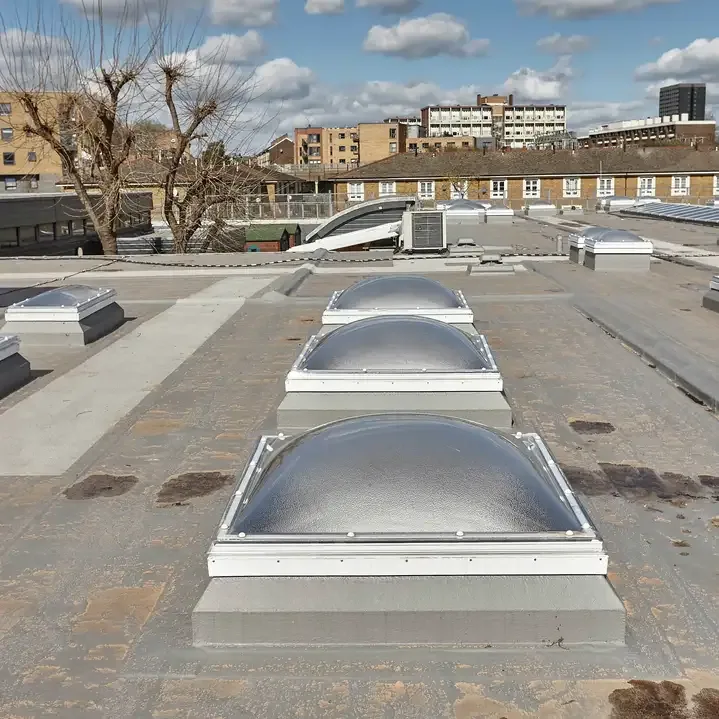
At the membrane, we inspect laps, seams, punctures, blistering, and repairs that have lifted. At the perimeter, we look at edge metal and transitions where wind and movement can loosen attachment. Curbs, skylights, pipes, and equipment supports need flashing that stays intact as the roof expands and contracts. A penetration and skylight review can help when the leak aligns with those roof details.
Drainage conditions can mimic a flashing failure. We clear the view of drain bowls and scuppers, look for debris and overflow marks, and map low areas. In winter, snow and ice can delay visible drainage problems until a thaw sends water toward a weak seam. We record conditions that may recur so the repair can address the source and the water path together.
When water is still entering, the first goal is to limit damage below. We identify the active area, protect sensitive equipment and finishes where possible, and install temporary measures suited to the roof and weather. A temporary cover or seal is a short-term step. It does not replace inspection of the surrounding membrane, insulation, and drainage details. We tell the property contact what is protected and what remains exposed.
Some conditions need a permanent repair as soon as the roof is safe and dry enough to work. Others require a short monitoring period or testing before opening the assembly. If a leak is affecting tenant operations or electrical equipment, we coordinate the response route with the manager and keep interior staff informed about access and expected noise. Around-the-clock response is available for urgent conditions, including nights and holidays, while the final repair follows the roof evidence.
Central Indiana weather can change the repair window. Freezing surfaces, snow cover, or active rain may limit adhesion and safe access. We explain whether the visit will provide a temporary dry-in, a permanent repair, or both. If a roof section must remain protected until conditions improve, the interim step is documented so the next crew knows where to inspect.
Once the water path is understood, we define the repair boundary. The scope may include seam work, flashing replacement, drain correction, a localized membrane patch, or removal of wet insulation and cover board. We separate confirmed work from conditions that need an opening or core sample. This lets the owner decide whether to authorize a targeted repair or inspect a wider area before committing to additional work.
Location alone does not define the scope. Carmel has an office concentration along U.S. 31 and Meridian, while Clay Terrace is a large outdoor retail district; both illustrate why roof access, interior use, and operating schedules vary by property. Neither a corridor nor a neighboring roof tells us the assembly above a specific business. We inspect the actual building and coordinate with its contact before staging materials or closing access routes.
We note material compatibility and preparation. A repair must bond to the existing roof surface and remain suitable at the seam, curb, or drain where it is installed. If the membrane is deteriorated beyond the repair area, we explain that limitation before applying a patch. A broader commercial roof repair scope may be needed for multiple failures; recurring or widespread damage can also justify a replacement comparison.
The closeout note should say where the crew worked, what material was used, and which details remain on the watch list. Photographs and a marked roof plan help the next inspection revisit the correct drain, seam, or curb. We also note whether the roof was wet or inaccessible during the visit, because those limits affect how confidently a condition can be ruled out.
If the leak returns, we compare its timing and interior location with the recorded repair boundary. A recurring problem can mean the source was nearby, water traveled farther than expected, or moisture remained in the assembly. We check those possibilities instead of repeating the same patch automatically. Where moisture extent is uncertain, a targeted moisture survey can guide core testing on a large roof.
For an office campus or a group of properties, link each call to the correct building and roof section. Carmel City Center contains mixed-use development in the city's central core, but building and roof conditions still need individual records. We can organize findings in a roof condition report so repeat calls, open items, and recommended follow-up remain visible to the asset manager.
A leak repair can reveal maintenance items that are not part of the emergency work. Debris around a drain, open sealant at an old curb, or loose metal at a transition may deserve a planned visit before cold weather. Before winter, we review drainage and water-control details alongside the roof's own leak history and observed conditions to set priorities.
Follow-up checks should focus on the repaired detail and the path water would take if it failed again. We inspect nearby seams, drain flow, and temporary measures that were left in place. If the owner wants a broader service plan, preventive roof maintenance can group routine drain and flashing checks with documented repairs. A Carmel Midtown property or another active commercial site receives the same building-specific assessment, with timing arranged around operations.
Water can travel along the deck or framing and appear after the roof surface dries. We compare the stain location with seams, penetrations, drains, and roof slope, then inspect likely paths instead of assuming the nearest detail caused the entry.
Yes. We respond around the clock to urgent roof leaks, first protecting the interior and applying a suitable temporary dry-in if needed. Permanent repair timing depends on weather, access, and what the roof inspection finds.
Not always. Many failures are visible at a seam, curb, drain, or edge. If water may be trapped below the membrane, testing or a small opening can confirm the extent before wet materials are replaced.
Note when the water appeared, recent rain or thaw conditions, affected rooms, and any equipment at risk. Photos help us compare the interior mark with the roof. We also record temporary measures so they are not mistaken for completed repairs.
We document the repaired detail and inspect it after suitable conditions return. A later check can confirm drainage and look for renewed entry. If the roof contains wet insulation or an adjacent failure, we identify that separate work rather than imply the patch addressed it.