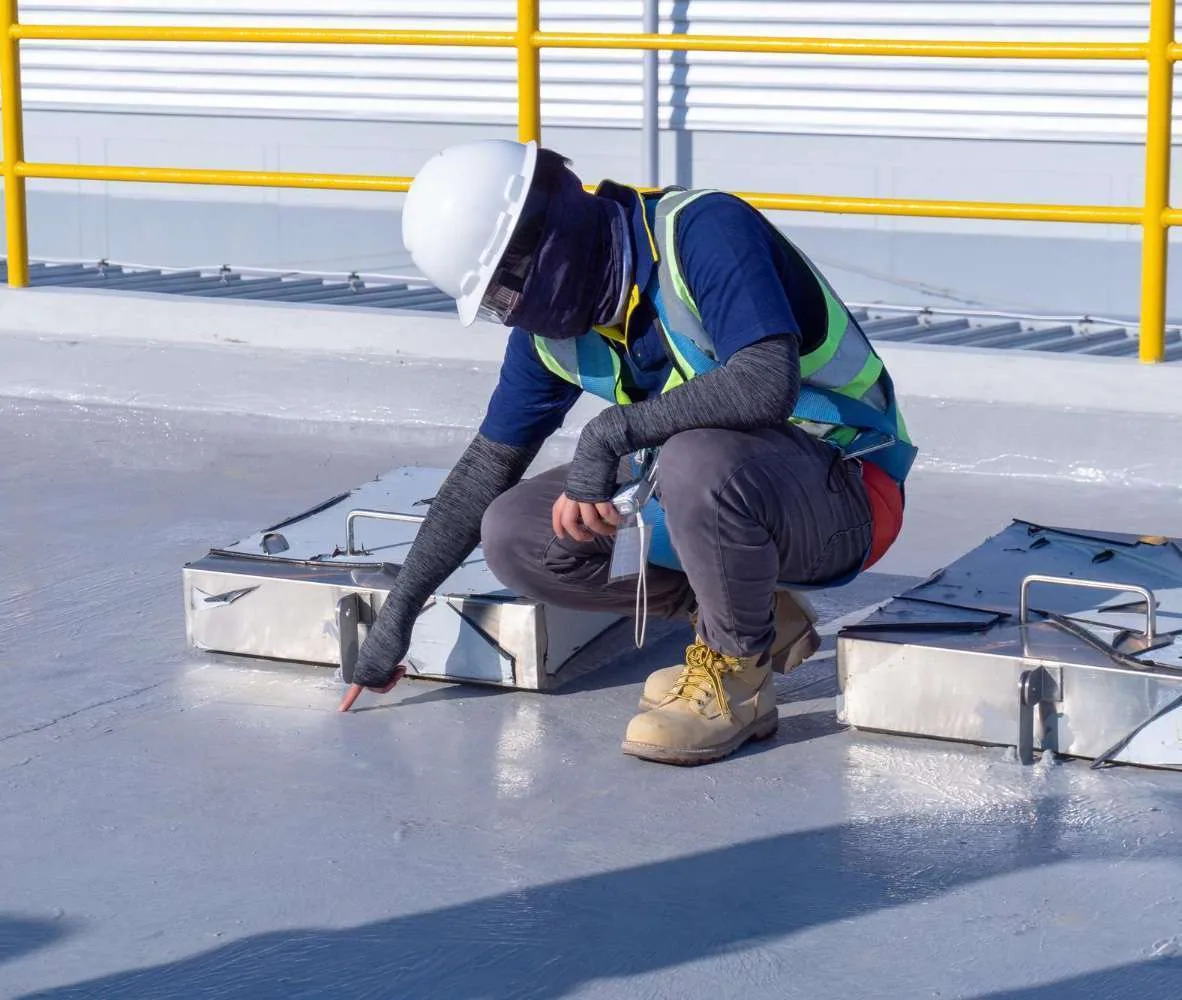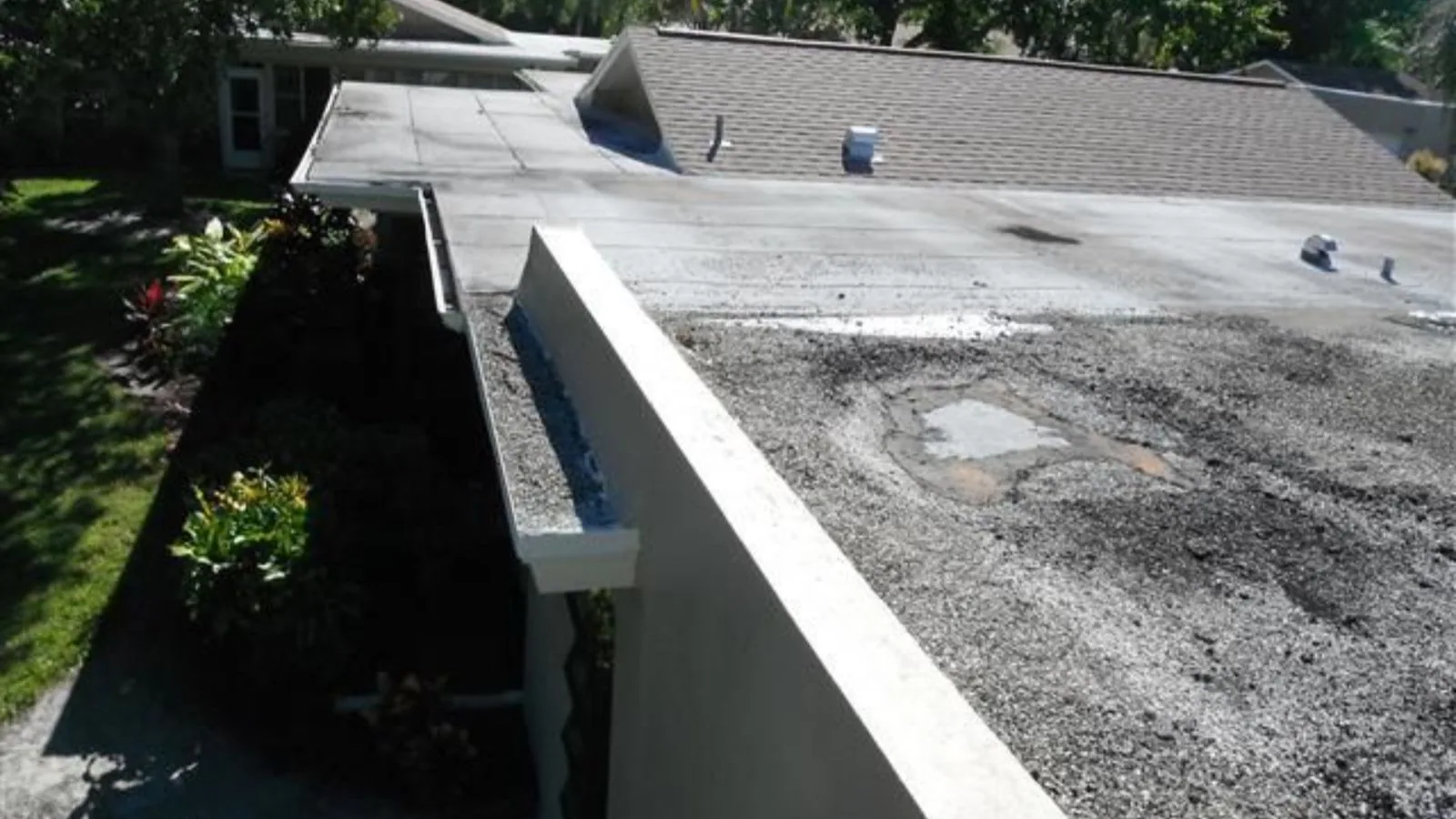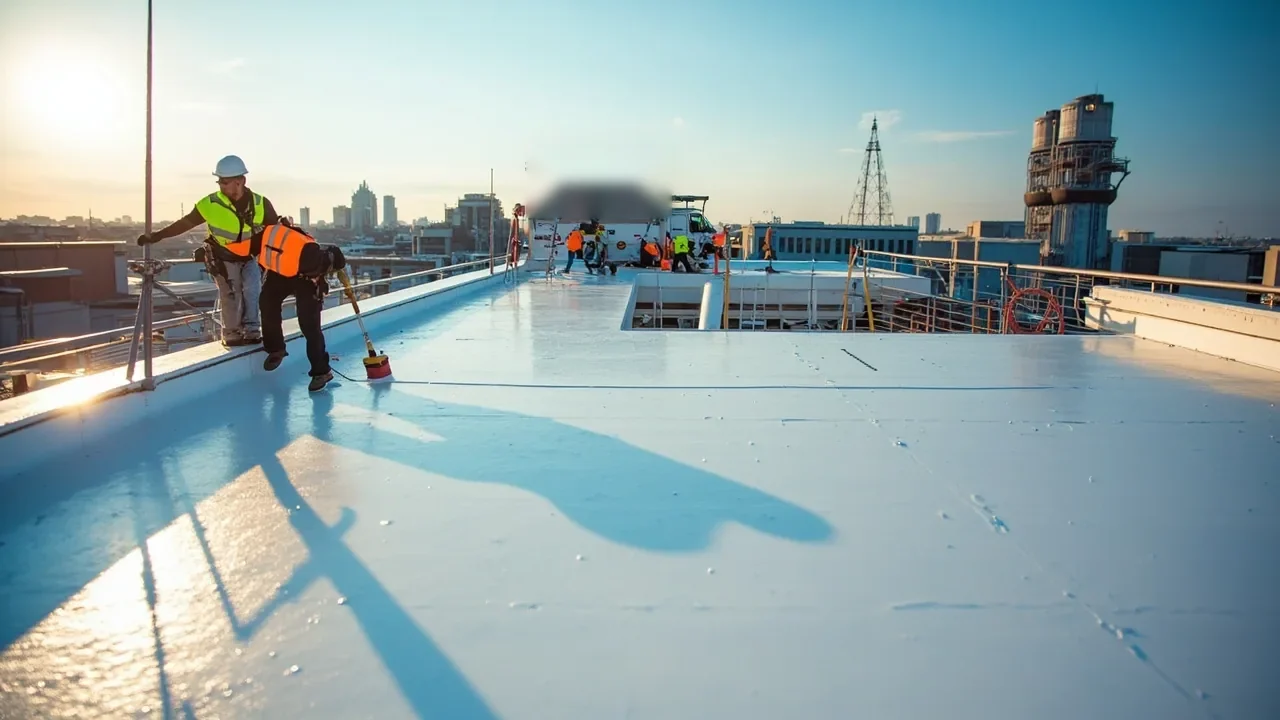
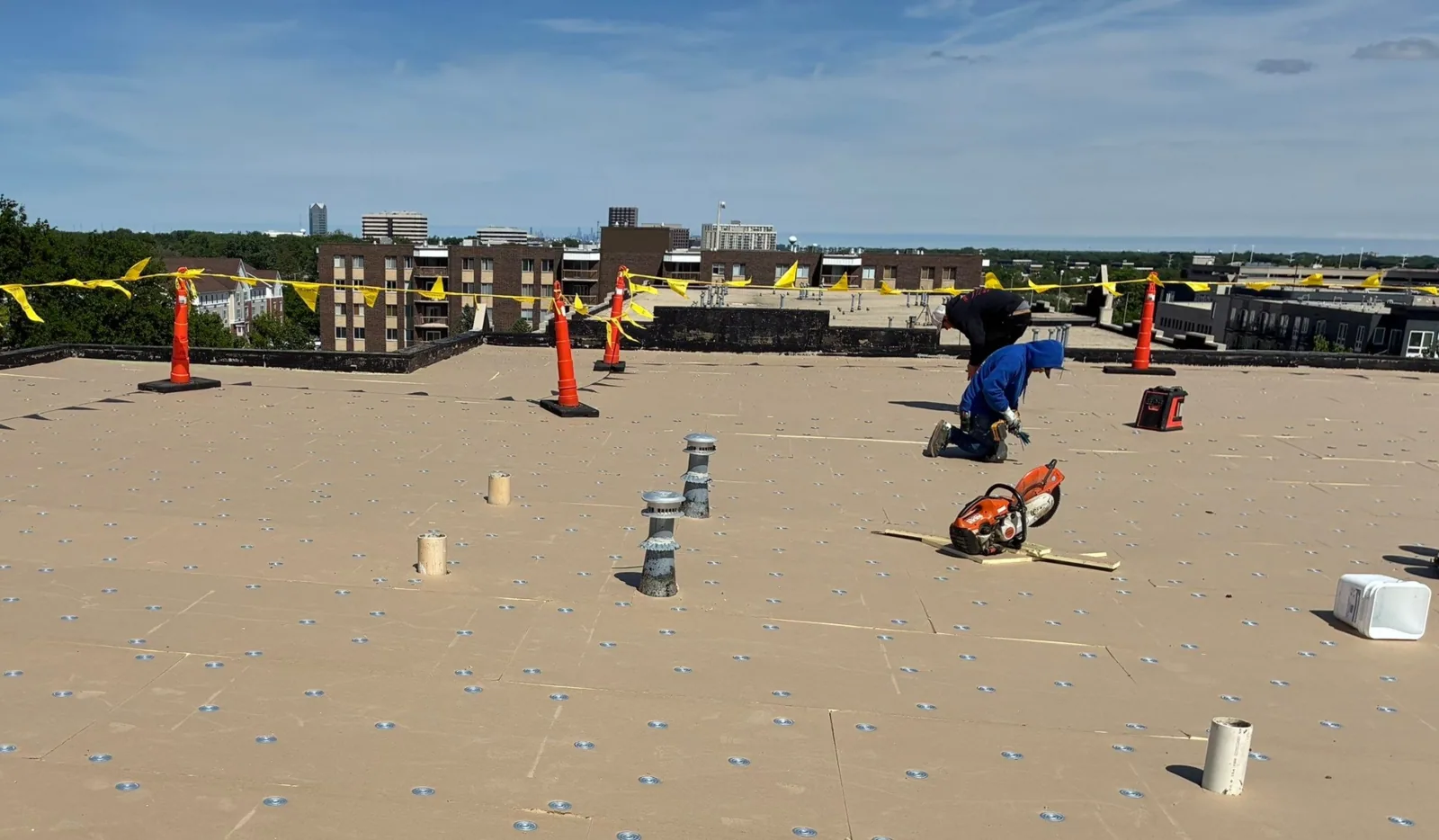
A repair budget works best when the damaged area and the surrounding roof are described separately. In Carmel, we start with the leak history, prior patches, and the building's maintenance log, then walk from the reported area toward drains, seams, edges, and penetrations. A stain inside the building is a clue, not a map of the roof defect. We trace the water path and identify the repair boundary before proposing work. Central Indiana's winter precipitation and thaw cycles make drain condition and flashing useful checks during a repair walk. We look at the actual membrane and detail, record what is visible, and mark where access or testing is needed. The result is a repair scope that explains what we can correct now and what should remain on the inspection list. A roof inspection can help separate an isolated failure from a pattern across the assembly.
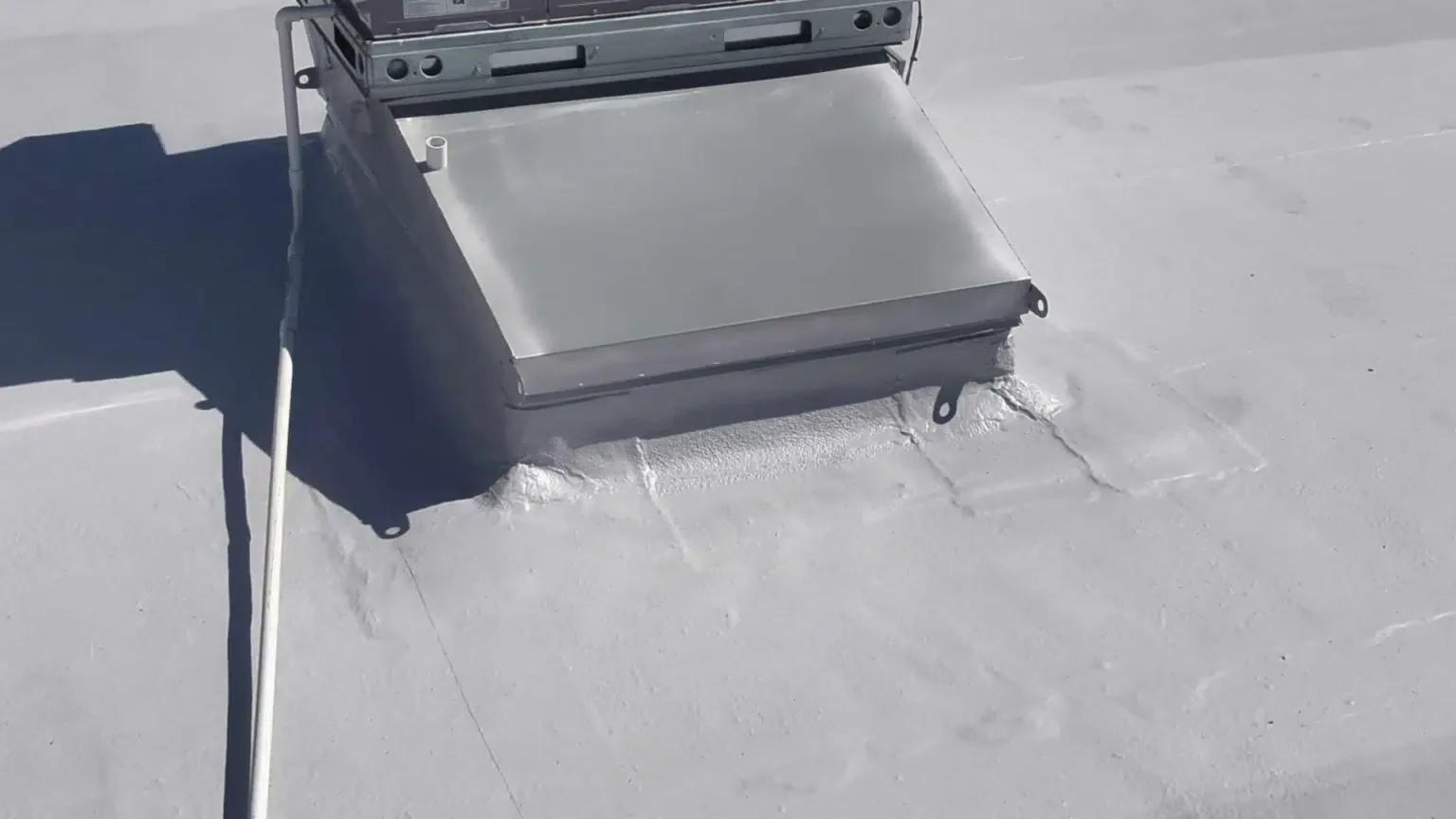
Water can enter at a lap, curb, drain bowl, scupper, edge, or penetration and travel before it reaches the ceiling. We inspect the likely route instead of sealing the nearest visible opening. On membrane roofs, we check seams for separation, wrinkles, fishmouths, or contamination that interrupts the bond. At metal transitions, we look for movement, corrosion, loose fasteners, and failed sealant. Around equipment, the curb and flashing need to move with the assembly without trapping water.
Drainage details tell us whether the roof is repeatedly wet. We remove debris where appropriate, inspect strainers and bowls, and follow the flow toward the outlet. Ponding, overflow marks, or recurring damp insulation can indicate more than a clogged drain. We note low points and confirm whether the slope, scupper, and leader are carrying water as intended. Where ponding continues, our ponding-water repair work addresses the cause as well as the visible symptom.
The scope names the roof section, the detail to be repaired, and the material or preparation needed to complete it. We distinguish a seam weld from flashing replacement, a drain correction from a surface patch, and a local insulation repair from a broad replacement. That description gives the manager a way to compare future observations with the completed work. It also helps avoid expanding a repair simply because several unrelated details are nearby.
The Carmel Arts & Design District has shops, dining, and arts venues, while Clay Terrace is an outdoor retail center with more than 70 retailers. Their operating patterns can affect staging and access; we confirm the specific entrance, loading window, and roof system with each property contact before setting the repair scope.
Material compatibility matters. A patch must adhere to the existing membrane and tolerate the roof's movement, exposure, and maintenance traffic. We identify the roof type where it can be confirmed and select repair materials accordingly. If the membrane is too brittle, the substrate is wet, or multiple details have failed together, we explain why a local patch may not provide durable service. A replacement evaluation may then be appropriate for only the affected roof sections.
Repair timing depends on access, weather, material cure or weld conditions, and whether a roof section must be dried before work begins. We confirm safe roof access, staging, and any equipment shutdown before setting the visit. If the building is occupied, we coordinate around entrances, loading periods, and sensitive interior areas. Carmel properties near busy retail and office areas may have different delivery or pedestrian constraints, so we rely on the site contact for the operating schedule and walk the route before bringing materials up.
Winter conditions can change which repairs are suitable on a given day. Central Indiana temperatures, snow, and precipitation affect surface preparation, adhesion, and safe movement. We identify work that can be completed under current conditions and protect any opening until the roof is closed. An emergency dry-in may be needed first, with permanent repair scheduled for a suitable window. Around-the-clock response is available for active water entry, but the correct permanent repair still depends on the observed assembly.
After repair, we record the location, preparation, material, and limits of the completed work. Photos show the detail before and after, and notes identify any adjacent condition left in place. This is useful when a different manager receives the next leak call or when the roof is inspected after a storm. A repair record should explain what was corrected without suggesting that nearby roof sections have also been renewed. For an asset manager, a roof condition report keeps repair findings alongside other capital needs.
Follow-up is based on the failure mode. A repaired seam, drain, curb, and metal edge each deserve a different check. We can return to inspect the work and look for movement or renewed water entry, then update the maintenance log with what changed. If several recurring issues appear across a roof, a preventive maintenance visit can address debris, small detail failures, and drain conditions before they become larger service calls.
One isolated puncture in a sound membrane is different from repeated failures along a brittle seam or a wet insulation field. We explain that distinction using visible evidence and testing when the result changes the recommendation. A patch can be sensible where the surrounding assembly remains secure. Repeatedly repairing the same area without correcting movement, drainage, or attachment can spend money without changing the underlying risk.
For a roof with several sections, we rank findings by urgency and scale. Active water entry comes first, followed by conditions that are likely to spread or damage interior finishes. Lower-priority maintenance can be grouped into a planned visit. Where the roof is part of a portfolio, Carmel's U.S. 31/Meridian office corridor and City Center provide broad examples of the market's mixed commercial inventory, but each property still gets an individual inspection and scope.
The repair proposal states the boundary, access assumptions, work sequence, and exclusions. If opening the roof reveals a different condition, we stop at the agreed point, document the finding, and price the changed scope before proceeding. This gives the asset manager a decision rather than an open-ended authorization. When you share the building list, leak history, and timing constraints, we can prepare a site walk and a repair record that fits the property's maintenance plan.
Sometimes, but the visible stain may sit away from the opening. We trace the path across seams, curbs, drains, and penetrations, then mark the area that needs repair. If the surrounding membrane is stable, the scope can remain local.
A recurring leak calls for a fresh look at the water path and the prior repair. We check for movement, failed flashing, trapped moisture, or drainage conditions that a surface patch did not correct, then explain whether testing or a wider repair boundary is warranted.
We respond around the clock for urgent leaks and can first protect the building with temporary dry-in when conditions require it. Permanent repair timing depends on safe access, weather, drying, and compatible materials. We identify those steps when we assess the roof.
The access plan can reduce disruption by separating work areas and coordinating material movement with the property contact. We confirm entrances, loading periods, and equipment needs for the actual building before scheduling, rather than assuming the district's general activity defines its operations.
Compare them when failures recur across multiple sections, moisture testing shows broad damage, or repair quantities keep growing. We document the repair boundary and the evidence behind it, then prepare a measured replacement option if the assembly no longer supports localized work.