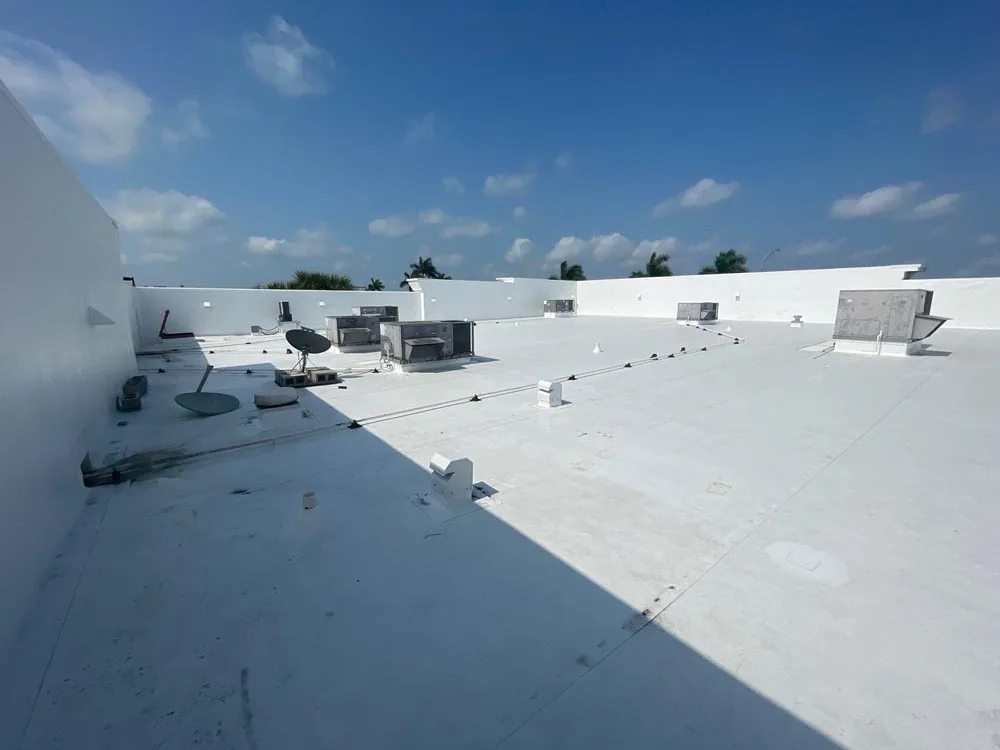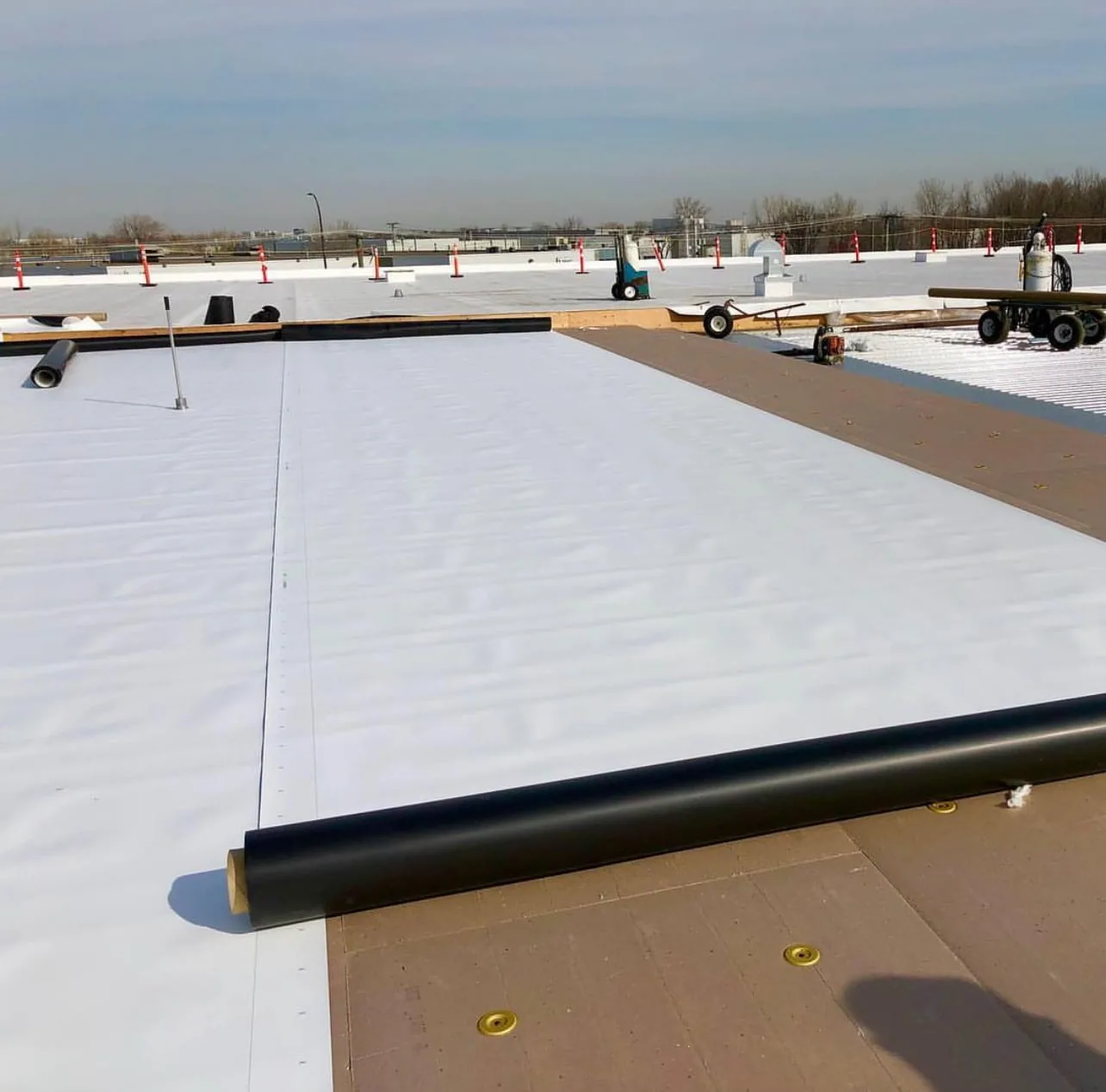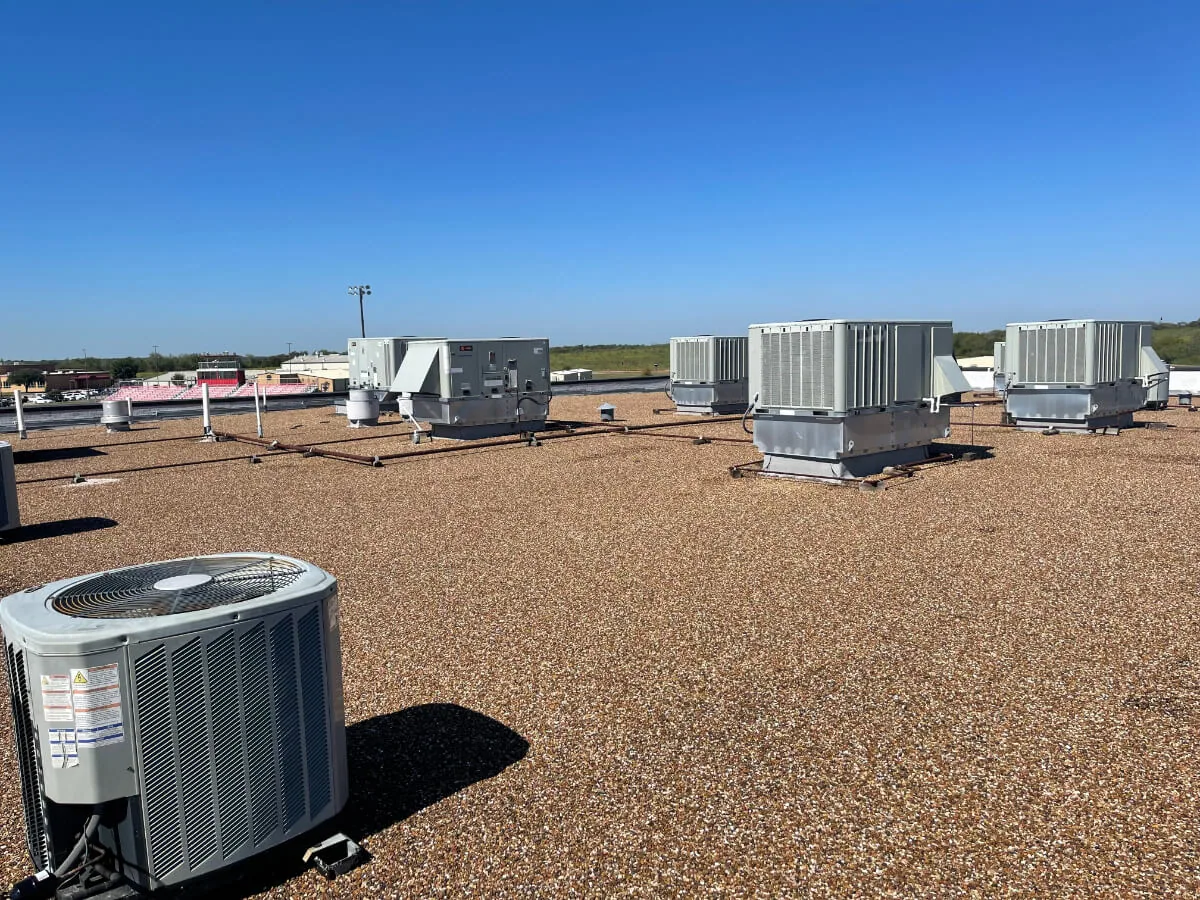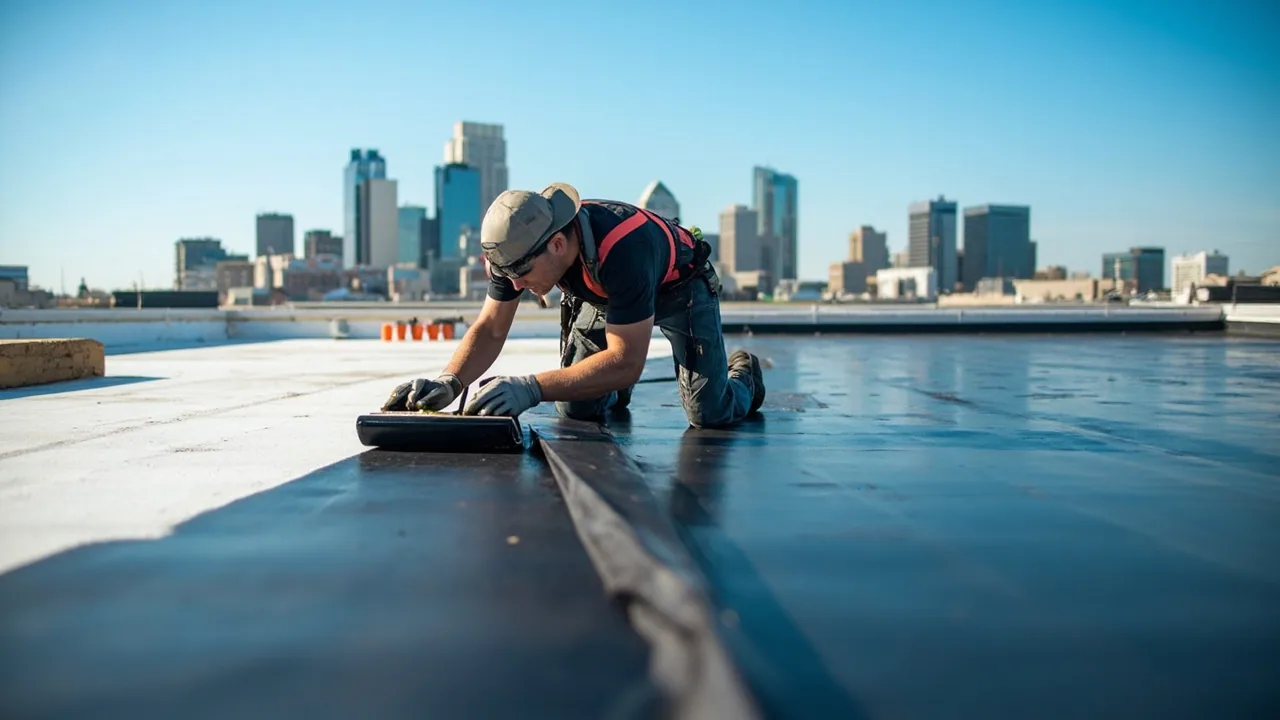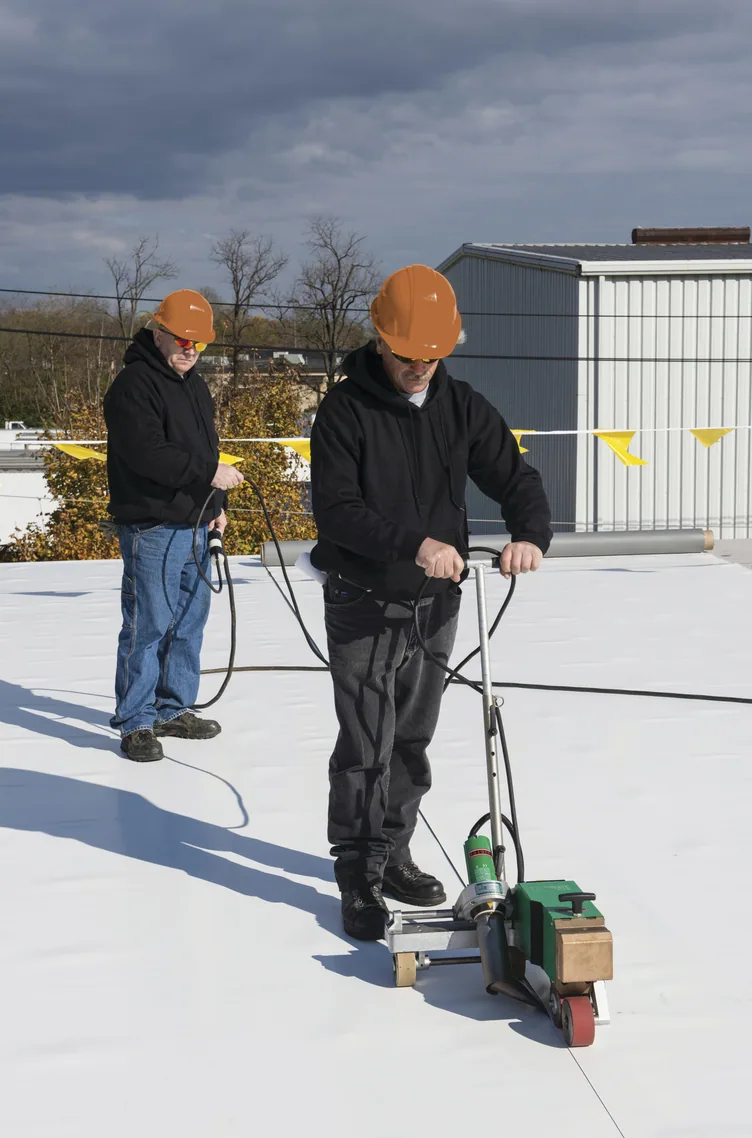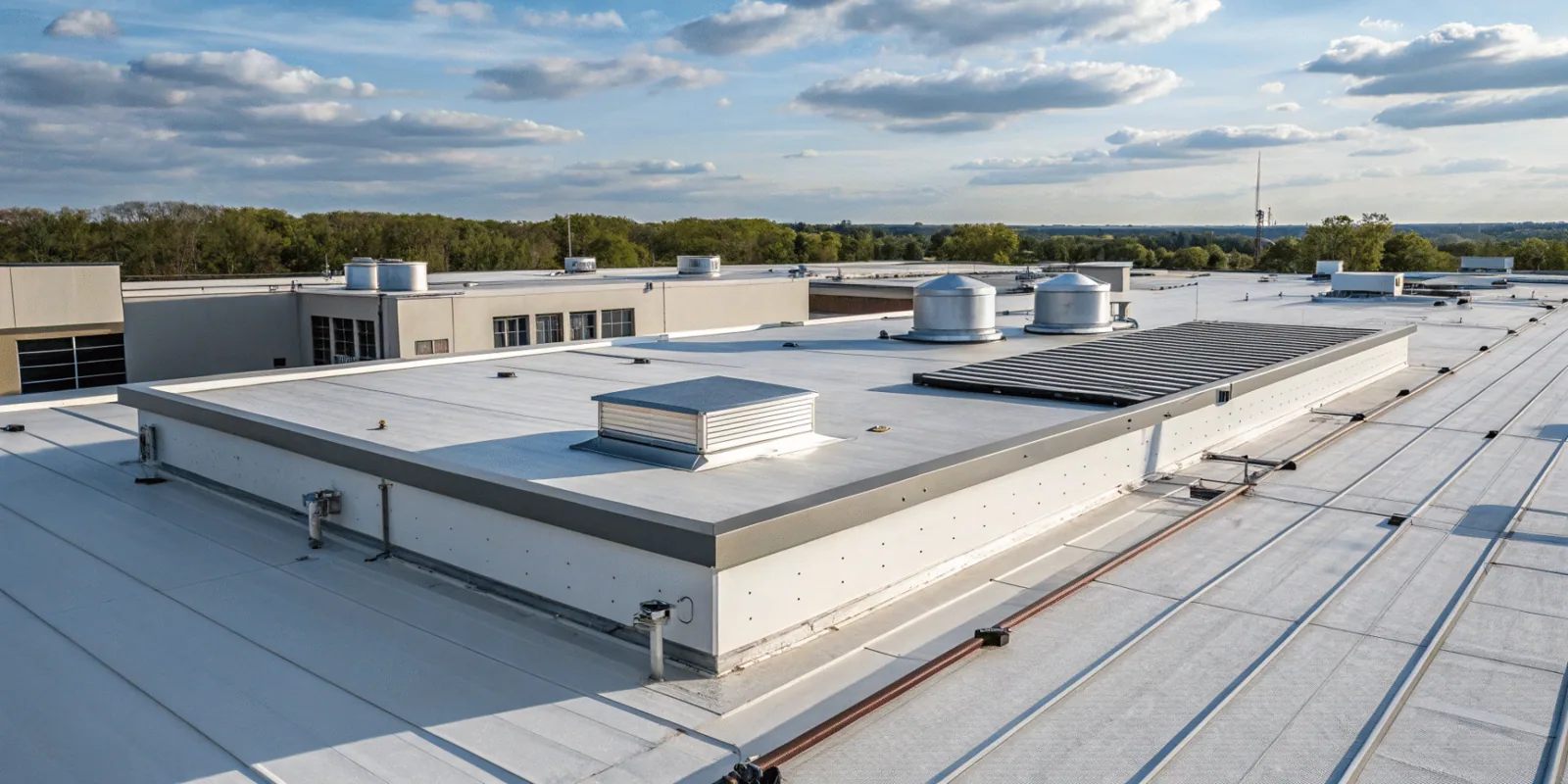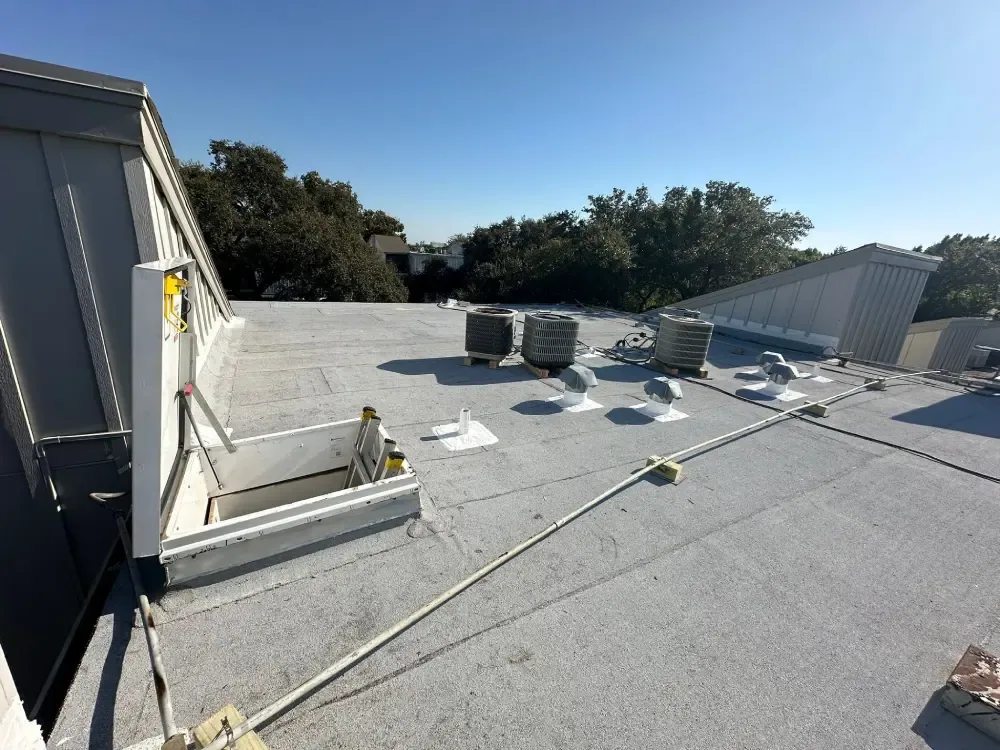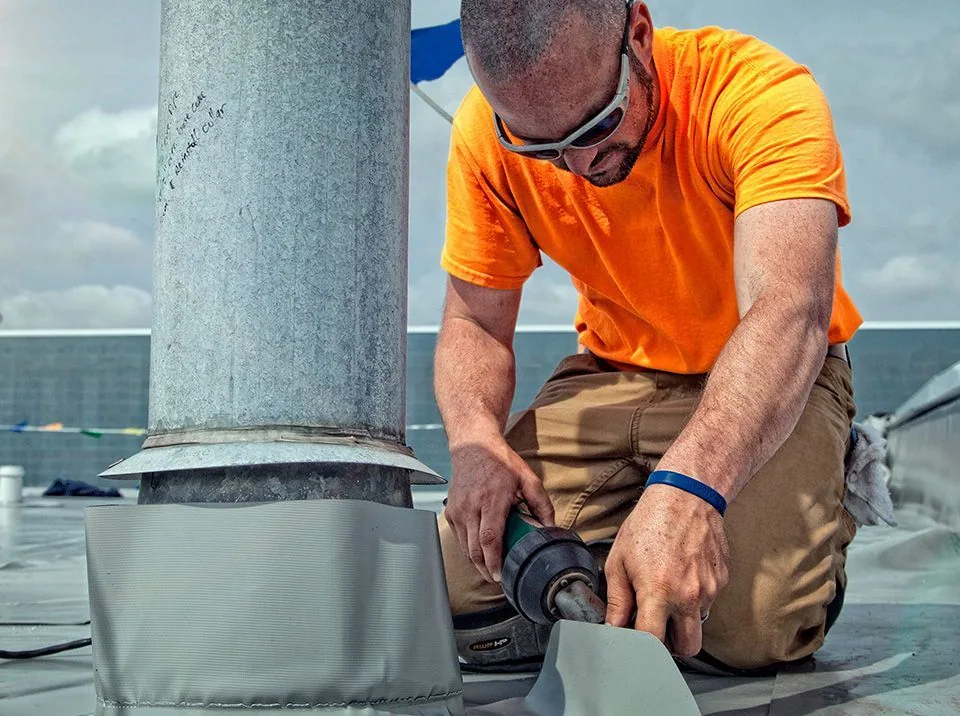
A manufacturer name matters only after the roof assembly and the repair need are identified. We inspect the membrane, seams, flashing, insulation, and edge details, then select compatible materials for the repair or renewal scope. We work with systems from GAF, Carlisle SynTec, Johns Manville, and Holcim Elevate. Product availability and system details vary, so the site walk and roof documents come before a material recommendation.
White membrane does not identify a manufacturer by itself. We compare markings, records, seam construction, flashing details, and repair history, then verify what can be seen at the roof. If the system cannot be confirmed, we describe the assembly type and investigate compatibility before selecting a patch. The Sika Sarnafil and Versico systems call for membrane-specific checks; we identify installed materials before selecting repair methods or reviewing warranty terms.
A local failure can be repaired when the surrounding membrane and substrate remain suitable. We prepare the surface, use compatible material, and document the area. If the roof has moisture or attachment problems beyond the opening, the estimate may compare a wider restoration or replacement. Product documentation, warranty status, and maintenance requirements are reviewed for the actual roof. Soprema and Duro-Last systems receive the same building-specific inspection before any repair method is chosen.
Replacement includes more than field membrane. We measure insulation, edges, curbs, drains, penetrations, staging, and disposal. A recover may fit when existing layers and deck conditions permit it; coating requires a compatible, dry, attached surface. Warranty terms are governed by the documents for the installed assembly. A commercial roof inspection can establish assembly condition before an owner compares repair and replacement costs.
Closeout should include system identification, material details, photos, repair locations, and manufacturer documents supplied for the building. Save service history and inspection findings with that record so a later crew can verify the system before making a tie-in. For commercial properties in Carmel City Center or Westfield, each building still needs its own assembly and condition notes. A condition report helps an asset manager compare the observed roof with the next capital decision.
No. We check records, markings, seam construction, and visible details. When identification is uncertain, we verify material compatibility before selecting a repair.
We describe systems and roofing work without claiming a manufacturer relationship or authorization. Any status or warranty term must be confirmed in the building’s actual documents.
We inspect the assembly and determine whether compatible repair materials and details are available. The scope records the system we can verify and any remaining uncertainty.
Keep product data, installation records, warranty documents, photos, maintenance visits, and later repairs together by building. Those records help support future inspection and service decisions.