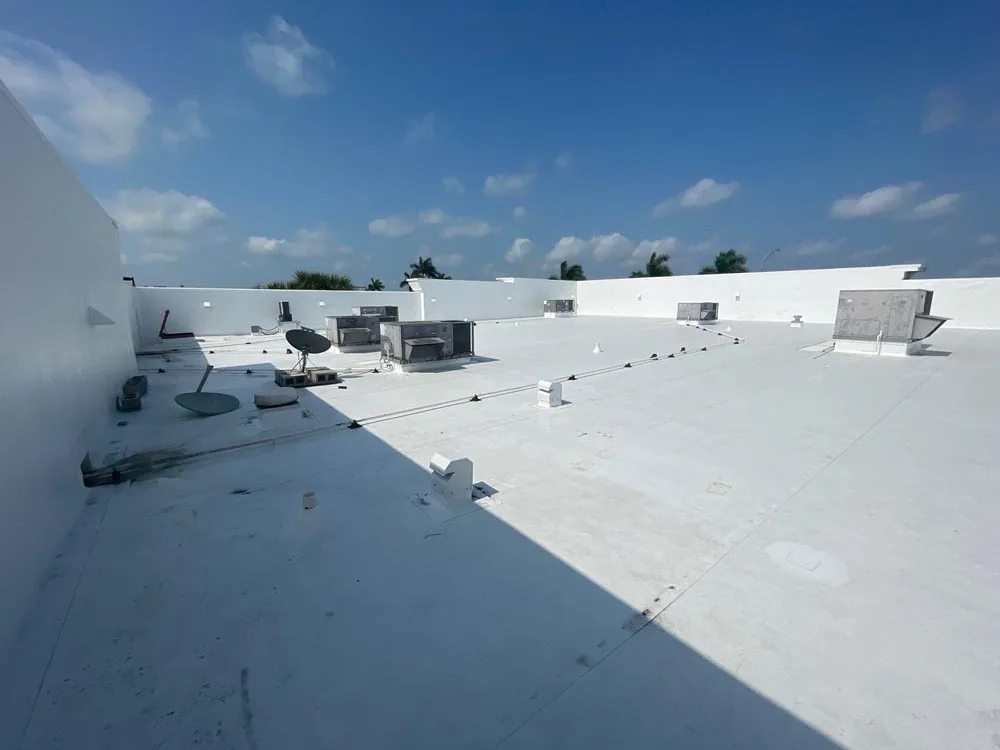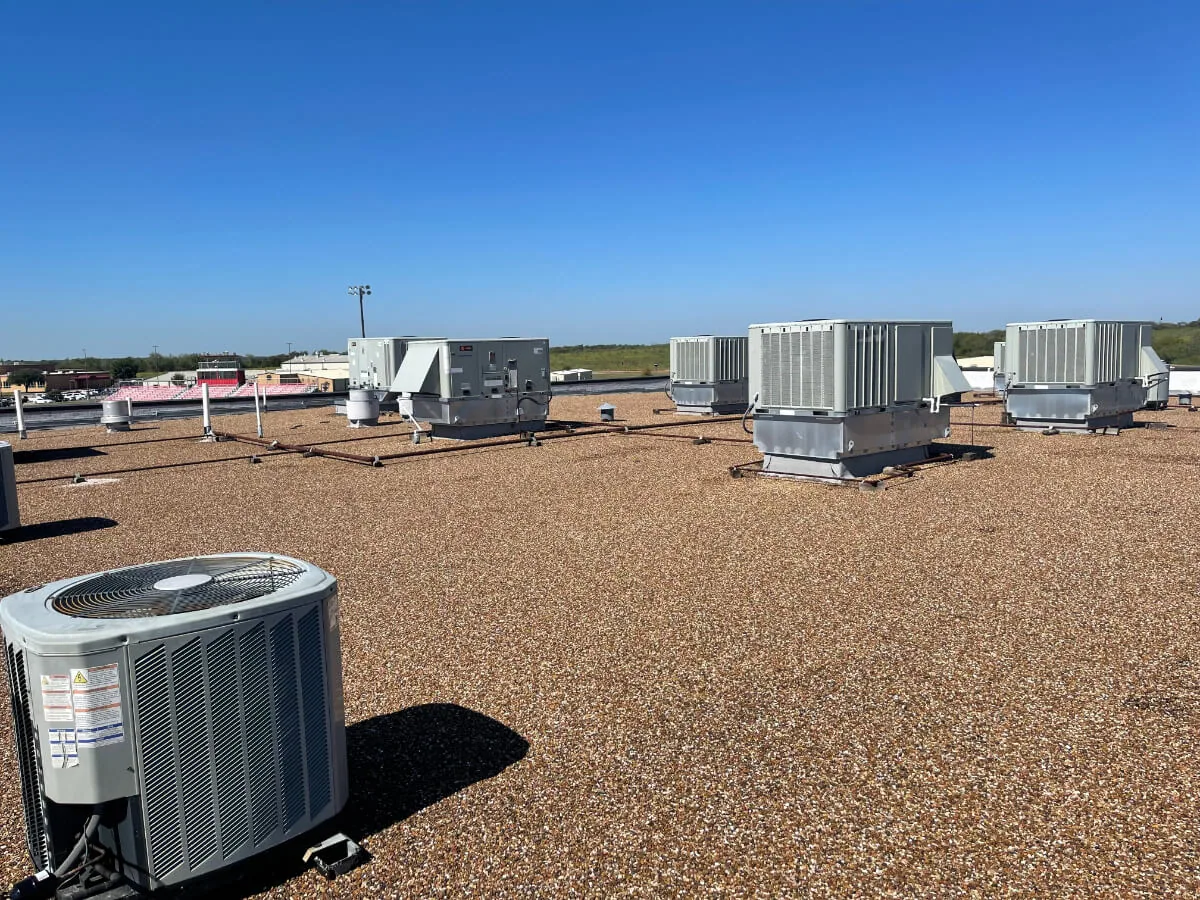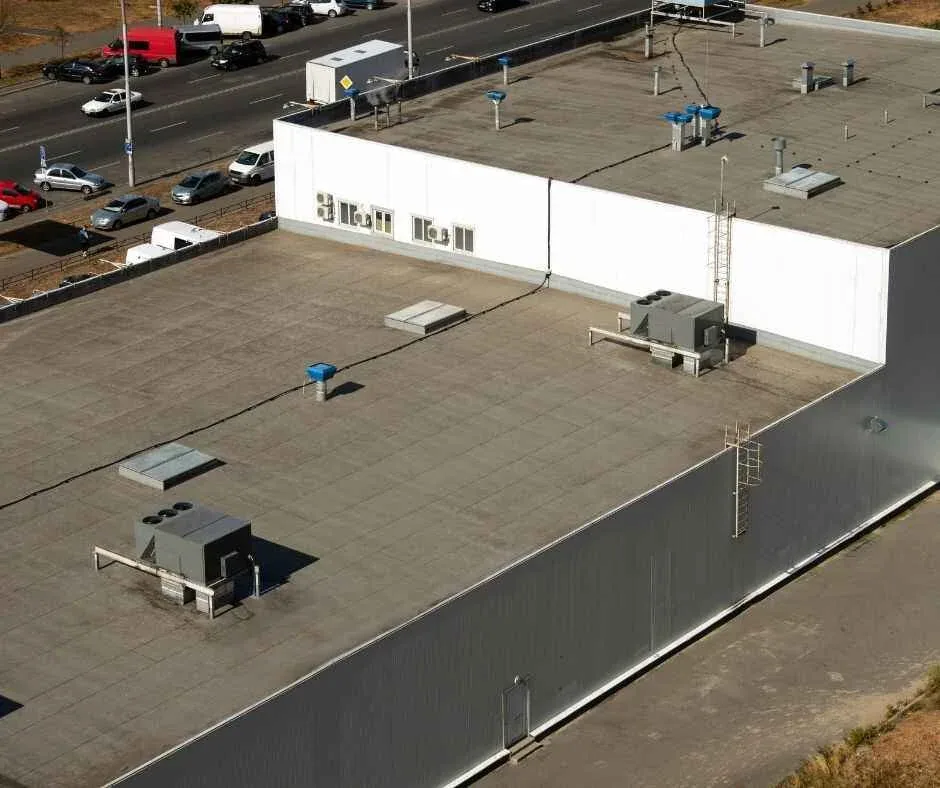
A Carlisle SynTec proposal should be checked against the deck, insulation, roof edges, and repair history before anyone settles on the membrane label. The manufacturer offers commercial EPDM, TPO, and PVC systems, with options that vary by attachment, reinforcement, accessories, and detail requirements. We inspect the roof section, then compare the specified assembly with what the building can support and how the owner needs the work scheduled.
Parkwood Crossing includes several office buildings along with hotel, restaurant, bank, and parking uses. That Carmel commercial setting can bring different access and operating needs from one structure to another. We confirm the system at the building, review available submittals, and map the details before recommending an installation or repair scope.
Carlisle's Sure-Seal EPDM is a synthetic-rubber membrane with a wide range of assembly choices. Sure-Tough is an internally reinforced EPDM option, while FleeceBACK adds an exterior reinforcement layer. For an owner, the practical comparison includes substrate, attachment, rooftop traffic, insulation, repair history, and how seams and penetrations can be maintained. The label alone does not determine how the finished assembly will perform.
Sure-Weld TPO and Sure-Flex PVC offer heat-weldable thermoplastic seams. The material selection should account for rooftop use and exposure, while attachment and perimeter design follow the deck, building conditions, and project requirements. PVC may be relevant where grease or chemical exposure is a concern; that possibility calls for an inspection of actual rooftop discharge and the applicable product requirements, not a blanket choice based on building type.
When comparing proposals, we can review a GAF system schedule or Johns Manville assembly against the same roof information. Each system type carries different seam, attachment, and detail considerations. We list membrane and attachment assumptions separately from contractor scope and the actual warranty terms, so the owner can compare each part of the project.
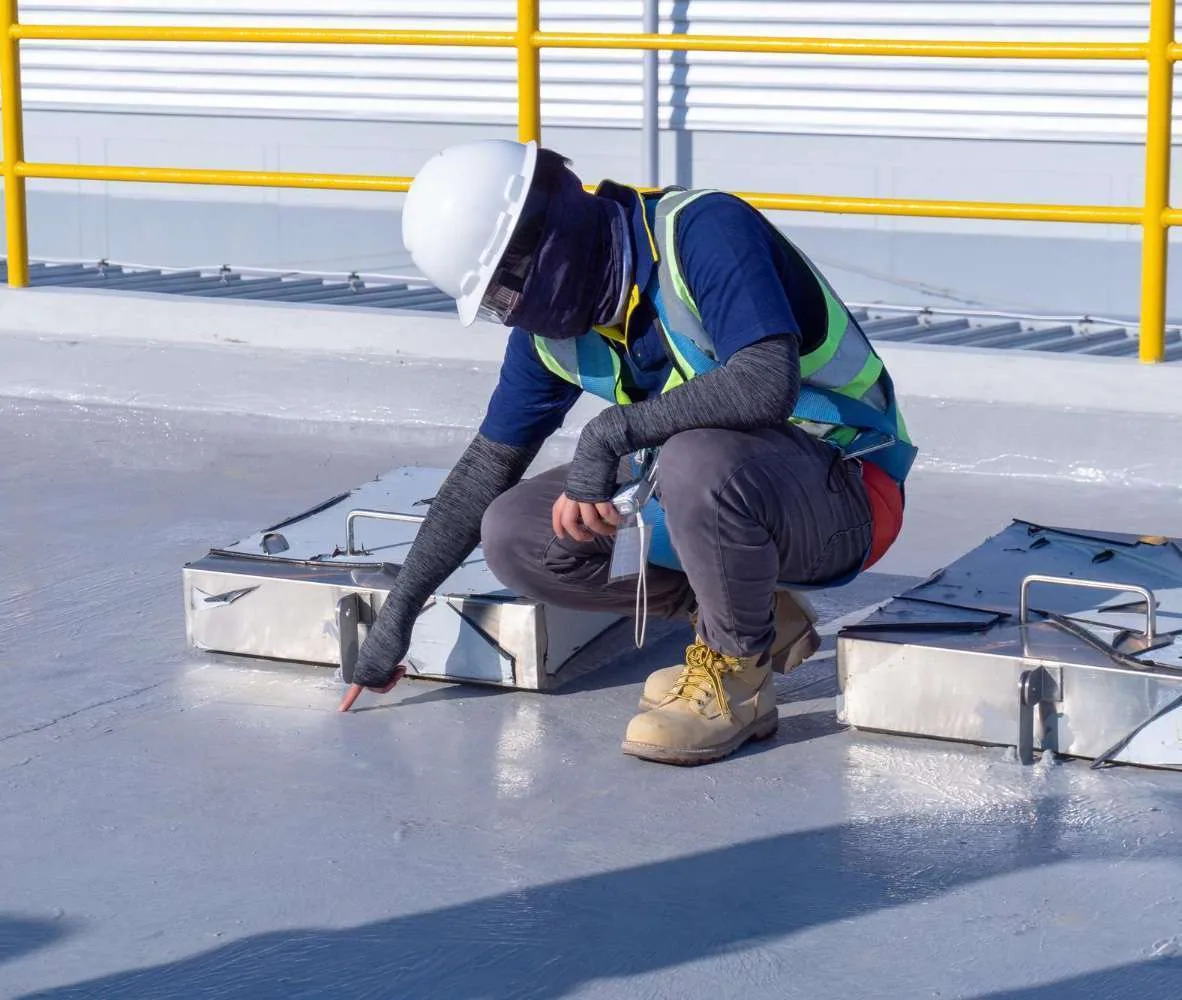
We check seams, wall transitions, drains, scuppers, curbs, edge metal, expansion joints, and penetrations. On EPDM, repair planning depends on the membrane surface, seam condition, and appropriate preparation. On TPO and PVC, hot-air welding quality and clean tie-ins matter. Every membrane also needs compatible flashing at the places where roof planes meet walls, equipment, pipes, and outlets.
A condition report should mark the roof sections and show which details are open, patched, or inaccessible. If moisture may change the scope, we identify a confirmation method before putting quantities into the proposal. A commercial roof inspection can map the visible conditions, with photos and location notes for follow-up and closeout.
Carmel City Center contains office and retail areas, residences, and public parking. A roof job in that mixed-use setting may require staging and delivery coordination; none of those uses establishes the roof assembly. We identify which building is included, who controls access, and what operations must remain available before selecting a sequence or attachment approach.
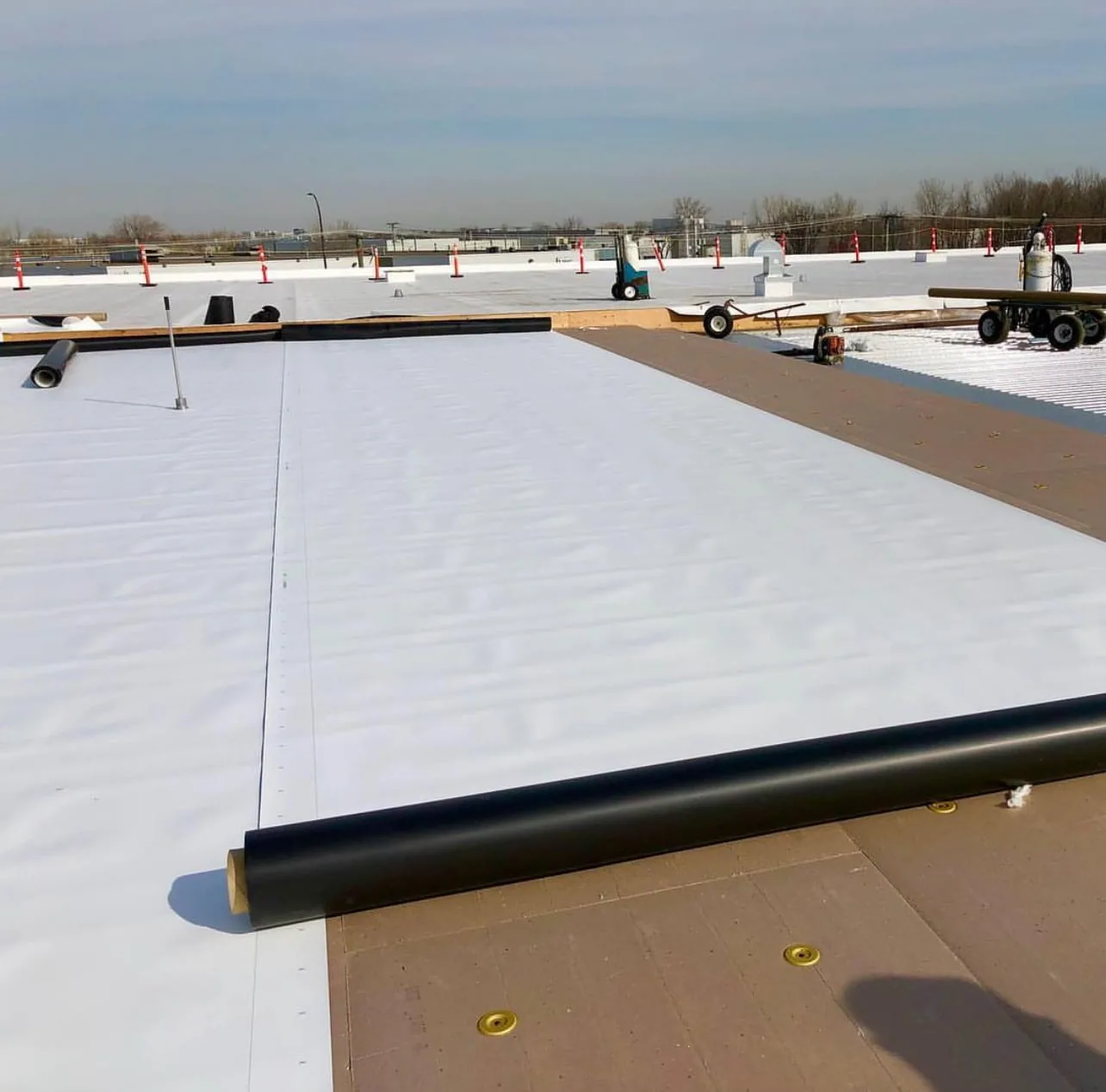
Adhered, mechanically attached, and ballasted arrangements are not interchangeable shortcuts. The deck, insulation, cover board, perimeter, building height, and project wind design inform the choice. A reinforced sheet, fleece-backed option, or pressure-sensitive accessory changes how the system is installed and repaired. We verify the specified configuration, fastening pattern, and compatible components rather than carry a membrane name across an assembly that differs from the approved details.
Central Indiana has recorded damaging wind, hail, and tornado activity, including events tracked in Hamilton County. We inspect edge securement, seams, penetrations, and reported impact directly at the building, then map each condition to its roof section. When a storm report triggers a visit, the wind-damage review documents the building's observed condition instead of assuming the entire property needs replacement.
If the existing roof may be recovered, we check whether the assembly is dry, stable, compatible, and within available perimeter height. The recover assessment also considers drains, curbs, wall terminations, and equipment clearances. Where removal is more suitable, a replacement scope should account for the layers and details exposed once the old system is removed.
Before work, we confirm the staging zone, delivery route, roof access, dry-in steps, and areas that need to remain open. EPDM installations may include taped or adhered seams and different bonding details than a thermoplastic system. TPO and PVC use welded seams, so weather conditions and sequencing affect when each area can be closed. The schedule should show transitions and temporary protection, not just a start date.
Regional snow and rain patterns make drainage checks and safe winter access part of planning. We measure roof slope and review actual outlets, overflow paths, and known leak locations before setting the system details. Work proceeds when conditions support safe installation and the specified materials can be applied properly.
For office or mixed-use buildings along the Meridian and U.S. 31 corridor, the access plan can account for employees, service traffic, and multiple building contacts. We coordinate the construction area with the owner and record any condition that changes the sequence. That keeps operations planning separate from technical roof decisions.
Closeout should show the membrane and assembly installed, the roof sections completed, photographs of details, and any follow-up still open. We keep product submittals and the approved details with the building record. If the project includes a warranty document, we identify its stated area and requirements, then leave the coverage determination to the terms and issuer.
Later repairs should start with the installed system and the actual defect. We inspect the surface and adjacent details, choose compatible materials, and document preparation and tie-in. If a previous patch uses a different membrane or the system cannot be confirmed, that question should be answered before a new repair hides the interface. We can keep the result within a roof asset file and track any required follow-up through warranty record management.
A roof decision can also be revisited after maintenance or a tenant improvement. Photos and measurements help the next manager compare what changed without assuming that a nearby roof has the same construction. The goal is a record that supports the next repair, renewal, or budget review with the correct system and detail in view.
Carlisle offers EPDM, TPO, and PVC systems, with product families and attachment choices that vary. We identify the installed membrane from records and field conditions, then compare proposed materials with the specified system and roof details.
Sure-Seal is Carlisle's EPDM membrane family, while Sure-Tough is an internally reinforced option. The right fit depends on the full assembly, attachment, traffic, and design requirements rather than the product name alone.
A recover requires a dry and stable assembly, compatible layers, adequate perimeter height, and suitable drains and curbs. We inspect those conditions and identify testing needs before comparing recover with tear-off.
We review roof use, exhaust or chemical exposure, existing details, substrate, and project specifications. An office or retail label is not enough to select PVC; the exposure and assembly need to support the decision.
Record the roof section, membrane family, preparation, materials, seam or flashing work, photographs, and any open item. That lets the next service visit distinguish the repair from original construction and follow the appropriate detail.