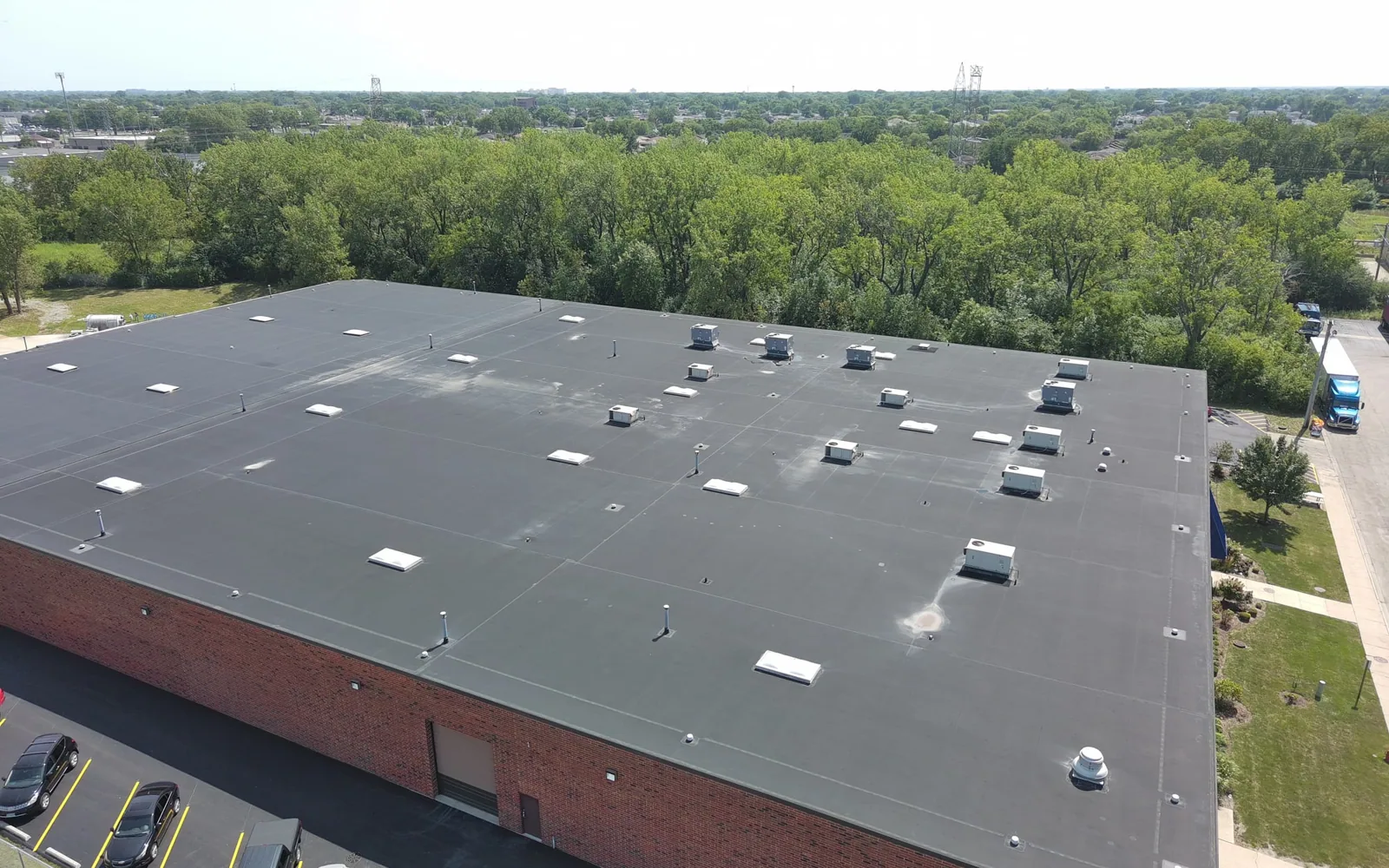
A rubber roof can look quiet from the parking lot while a seam or penetration is already taking water. EPDM is a flexible single-ply membrane, but the age of the sheet alone does not tell us whether to repair or replace it. We inspect seams, adhesive, flashing, drains, surface damage, and moisture below the membrane. That assessment is useful across Carmel's commercial mix, from offices on the Meridian corridor to retail properties at Clay Terrace. The local building type helps plan access; the roof inspection sets the repair boundary. We can begin with a commercial roof inspection and record what is confirmed before pricing a larger scope.
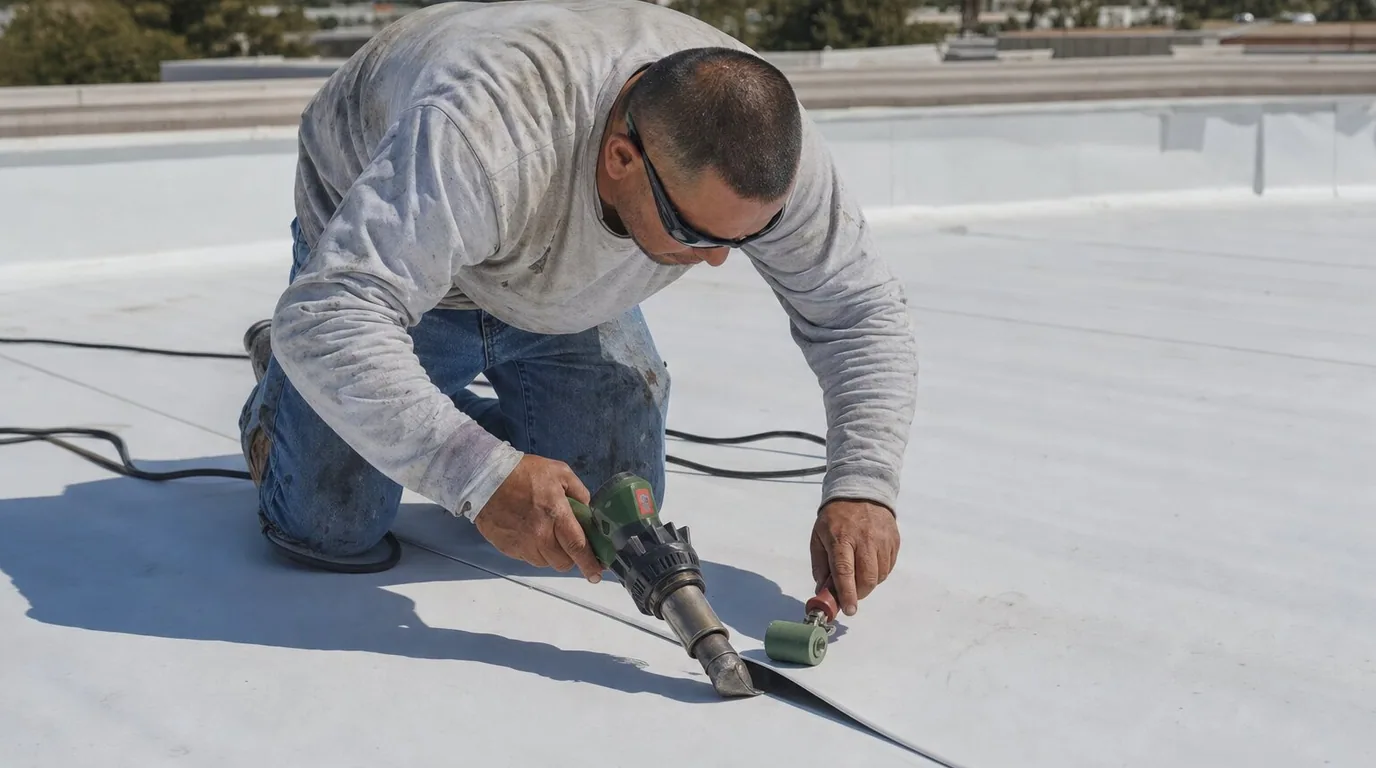
EPDM seams may use tape or adhesive systems, depending on the product and installation. A repair needs compatible primer, cover strip, or flashing material, applied to a properly prepared surface. We check laps for edge lift, dirt, wrinkles, loss of bond, and earlier patches that have opened. A dark line is not automatically a failed seam, so we probe where appropriate and photograph the actual condition.
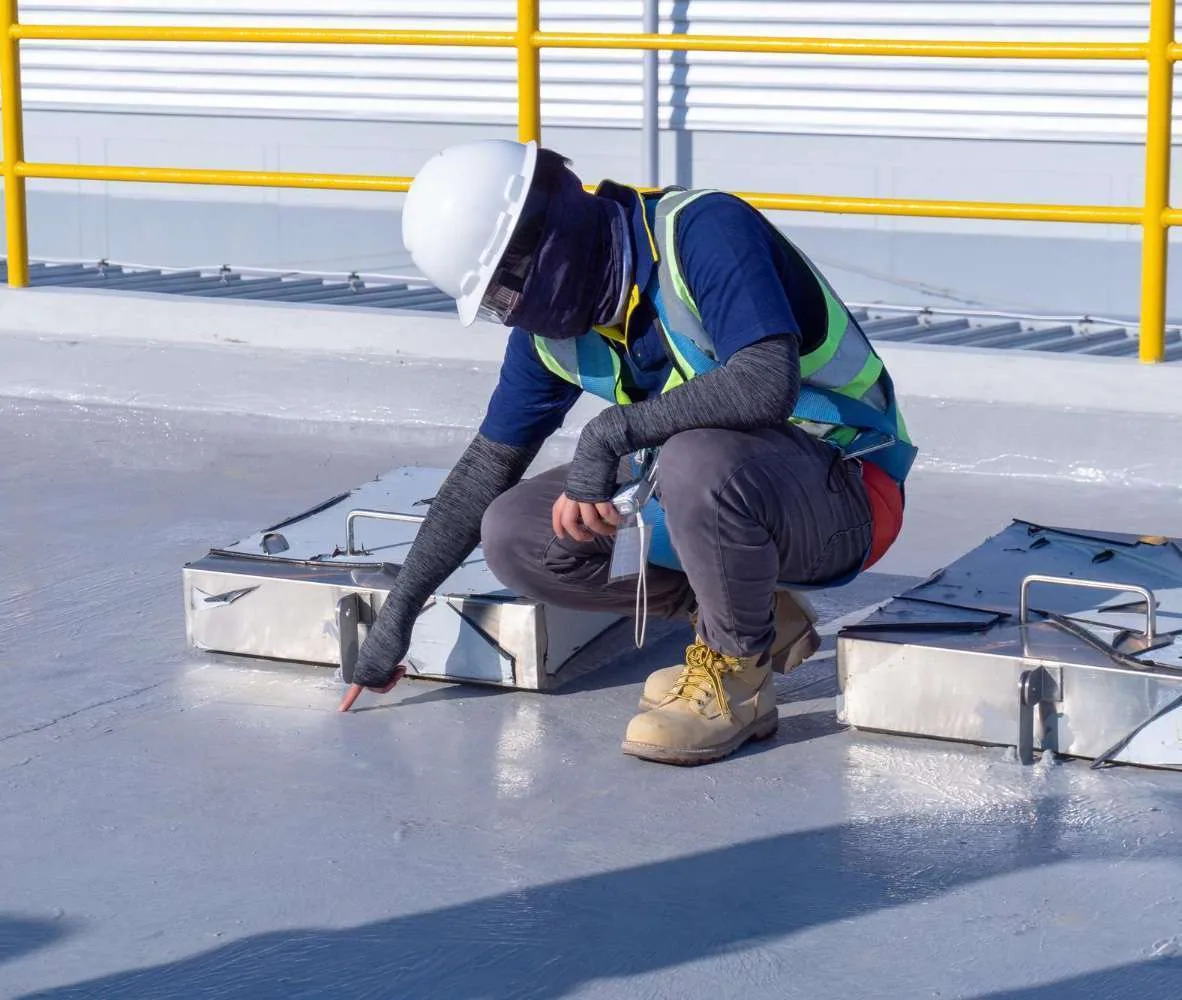
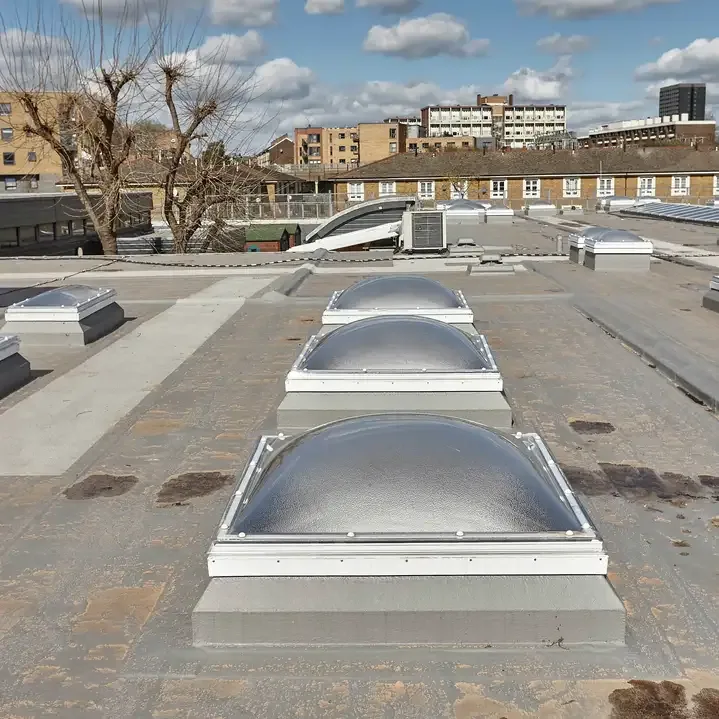
Transitions carry a different load than the broad field. At curbs, pipes, skylights, and rooftop supports, the membrane turns up or ties into flashing. Movement, sealant loss, a loose counterflashing, or a small cut can let water pass behind an otherwise serviceable sheet. We inspect the whole detail, including corners and terminations, rather than placing a square patch over the easiest-to-reach surface. Where the edge or penetration is the issue, our flashing and penetration service can define that work.
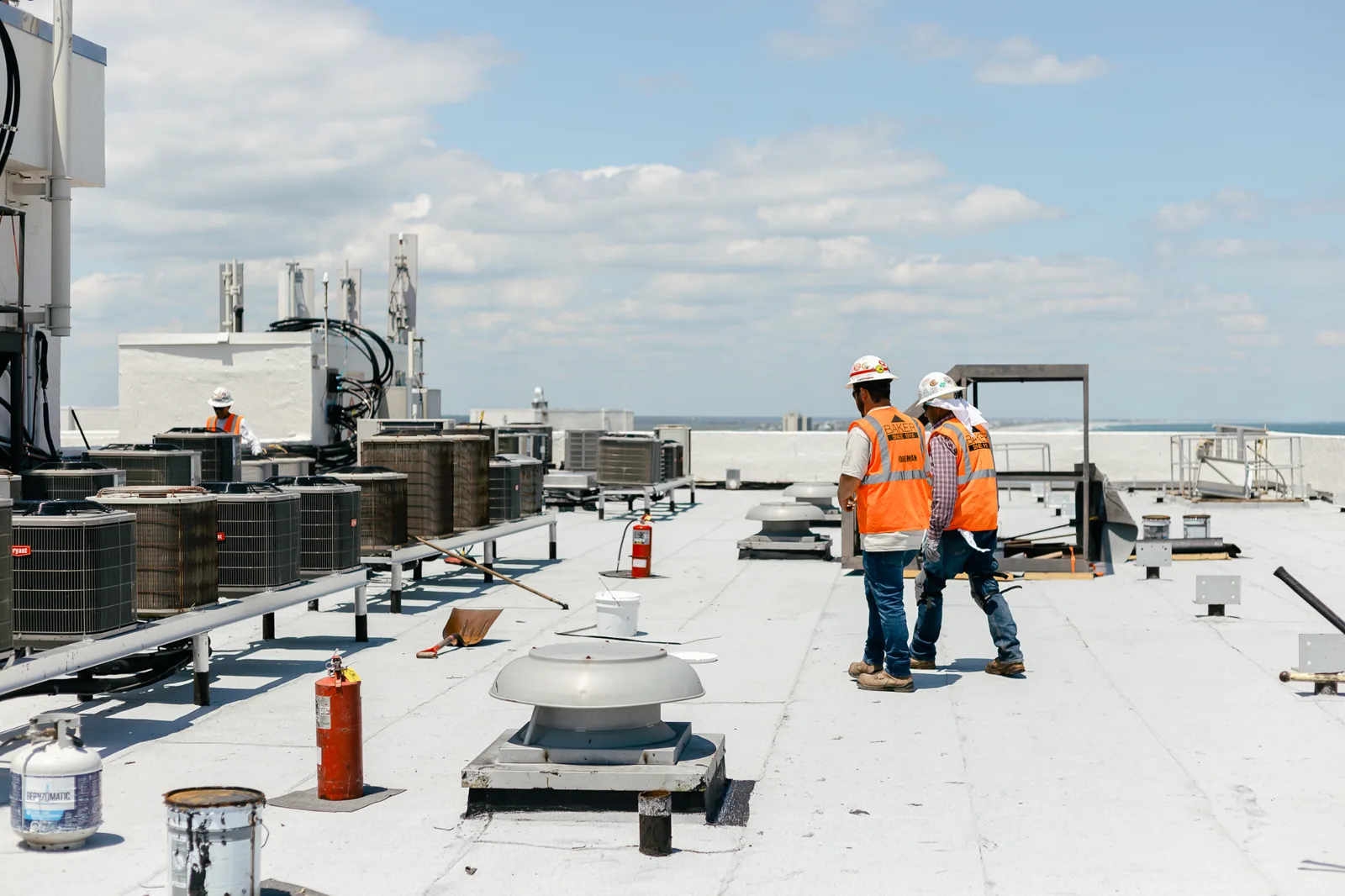
Mechanical traffic often leaves scuffs and punctures in paths between access points and equipment. We map those routes and check whether walk pads are present and attached. A puncture may be isolated; repeated damage near units can justify changing the access path or adding protection. For moisture concerns below the sheet, selective testing or an infrared survey can help target confirmation. The survey does not establish moisture content by itself, so its findings need interpretation with roof conditions.
EPDM can be mechanically attached or adhered over an approved substrate. The fastening pattern, insulation, cover board, deck, perimeter details, and wind design influence how it performs. We identify the assembly before proposing replacement. If a coating or second membrane covers the original sheet, we document that condition and verify whether it is compatible with new work. A proposal that simply says “rubber roof” leaves too many cost and performance assumptions open.
Color affects solar response but does not decide the entire energy question. A black EPDM surface absorbs more sunlight than a white membrane. The building's insulation, air leakage, operating hours, equipment, and climate affect interior loads as well. Carmel's normal July high is 85.2 degrees, based on the nearest Indianapolis station, but roof-surface temperatures depend on sun, material, and conditions at the property. We compare the complete assembly rather than promising a cooling result from membrane color.
For a system comparison, we can lay out EPDM alongside TPO or modified bitumen. Those systems differ in seam approach, detailing, repair methods, and assembly options. We keep insulation and tear-off assumptions consistent so the owner can understand the cost difference. The right choice should fit roof geometry, exposure, drainage, access, and the next capital window.
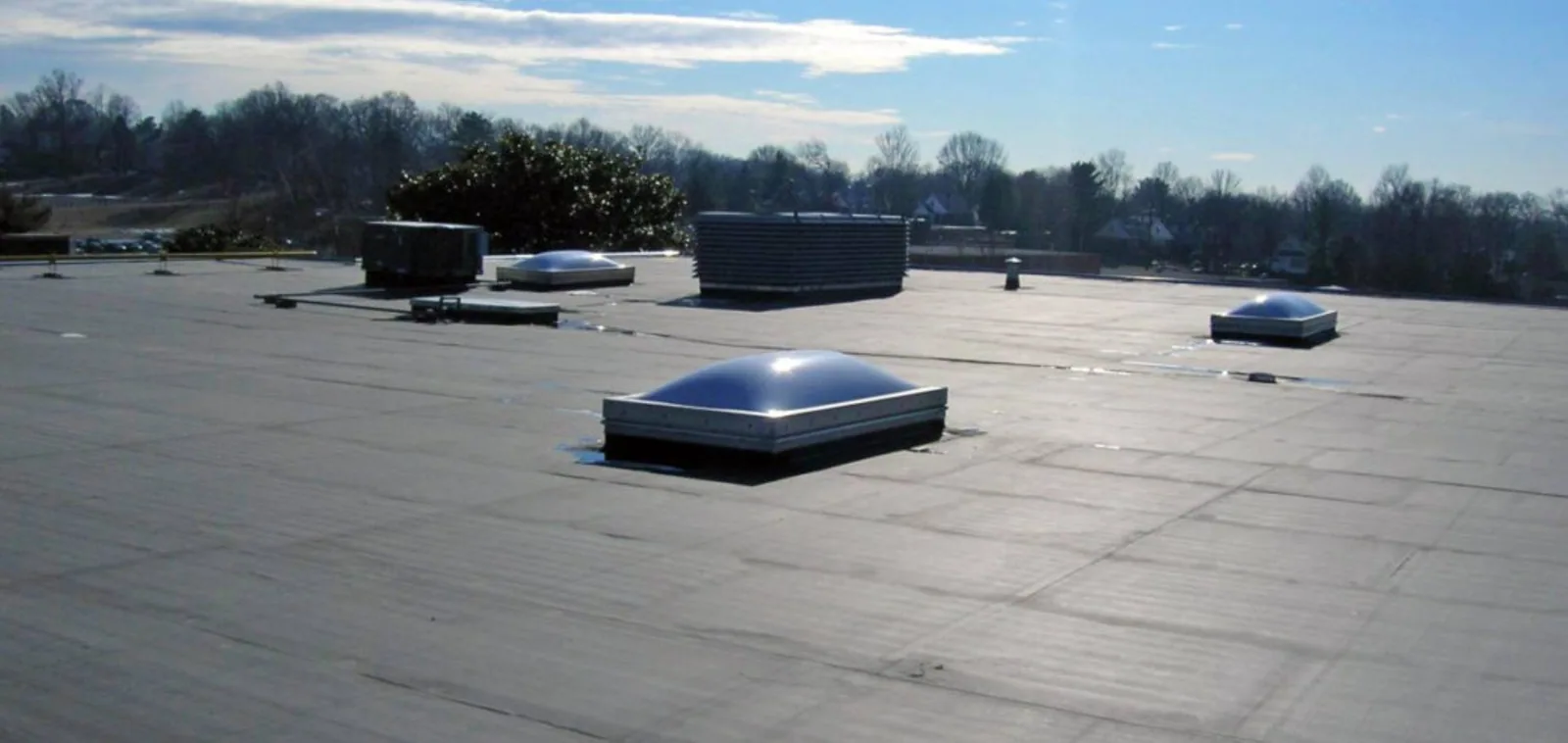
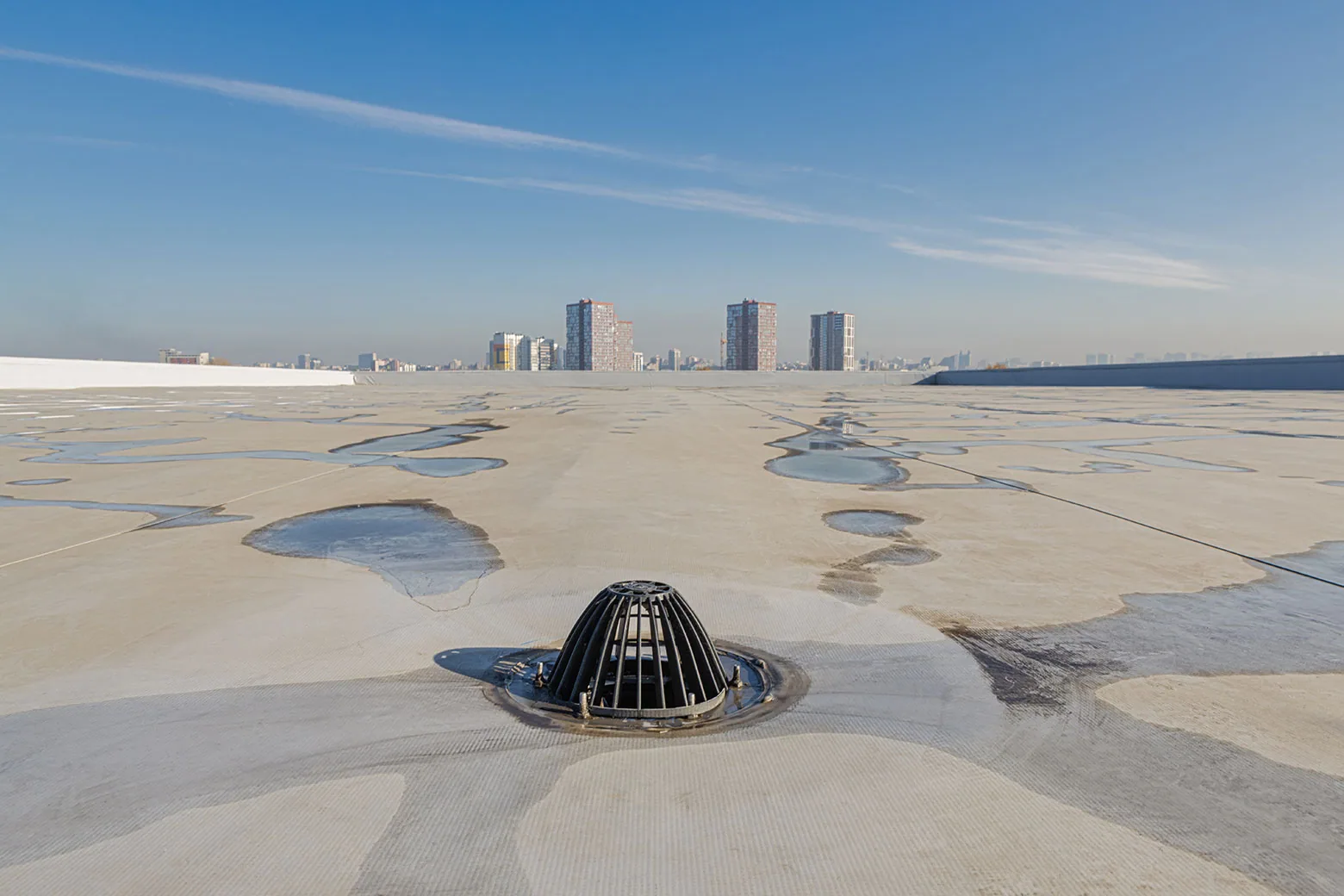
Water that remains at a low point can test seams, laps, and repairs repeatedly. We look at slope, drain bowls, strainers, scuppers, overflows, and water marks. If debris blocks an outlet, maintenance may be enough. If ponding returns after cleaning, the cause may be a deflected deck, a displaced insulation layer, or a drain detail that needs correction. We identify these separately so a membrane patch is not asked to solve a slope problem.
For Carmel, the nearest station averages 25.5 inches of snow each year and 43.63 inches of total precipitation. January overnight readings commonly fall below freezing. This regional picture informs access planning; drains, leaks, and surface moisture still need a direct roof check. We document whether a permanent seam repair can be completed under the conditions at hand or whether temporary protection is the appropriate step.
At Parkwood Crossing and Parkwood East, multiple commercial buildings occupy a concentrated area. We map each building's outlets and slopes individually. If an outlet needs service, a drain and scupper repair can be coordinated with the membrane work. Where repeated ponding requires a broader approach, we can define a ponding-water scope beyond routine cleaning.
A repair proposal should identify the roof section, seam or detail, preparation, material, and extent of work. If insulation is wet, we separate removal and replacement from the membrane repair. If moisture has not been confirmed, we list the testing step instead of pricing assumed damage as fact. The resulting scope lets the asset manager compare immediate work with monitoring or broader renewal.
Recovering an existing EPDM assembly depends on deck condition, trapped moisture, existing layers, attachment, available edge height, and code. New membrane cannot correct a wet substrate hidden below. We inspect and test where conditions call for it, then compare the recover option with tear-off. Carmel routes building applications and inspections through its Building Safety Office. We verify which permit steps apply to this roof before the final assembly is approved. A recover assessment can make the alternatives visible.
For replacement, measured quantities separate membrane, insulation, cover board, edge metal, penetrations, drains, and equipment interfaces. The roof scope must meet Carmel's current permit requirements. We confirm the adopted codes and inspection steps for the planned work with Building Safety before finalizing the assembly.
EPDM installation uses adhesive and seam products with surface and temperature requirements. Rain, frost, or a cold substrate can narrow the work window. We check the forecast and the actual roof surface before opening an area, then plan protection for the end of the day. If conditions do not support permanent work, a temporary measure should be identified as temporary and revisited when the roof is safe and dry.
Work sequencing also depends on access. Parkwood Crossing includes multiple office buildings and other commercial uses, while Clay Terrace is a pedestrian-oriented retail center with more than 70 retailers. Those facts do not tell us the roof layout, but they do remind us to coordinate loading, tenant movement, and noisy tasks for each property. We set staging, equipment access, and communication with the manager before materials arrive.
EPDM repair history matters because patches can hide earlier movement or water entry. We record new work by roof section and detail, note the material used, and add photographs that show the repair boundary.
We also record drainage, penetrations, traffic paths, and any access limitation. The maintenance log can then connect a recurring leak to previous visits instead of restarting the investigation each season. For Carmel properties, the report may cover different uses in City Center, Midtown, and office areas along U.S. 31.
A compatible repair may work when the sheet and adjacent seams remain sound. We inspect beyond the opening, confirm preparation needs, and check whether wet insulation or a damaged flashing expands the scope.
Color is one assembly factor, not a replacement test. We assess insulation, condition, energy objectives, drainage, and repair history before comparing EPDM with a reflective membrane.
Interior symptoms, surface conditions, and testing can help locate suspect areas. We separate confirmed moisture from areas that require a core or other verification before including removal in the proposal.
The existing layers, deck, moisture, attachment, and edge height shape both cost and disruption. We compare the work sequence and disposal assumptions instead of treating recovery as automatically simpler.
Keep the roof map, repair location, material information, photographs, and any access or moisture limitation. Those details help the next maintenance visit assess a recurring condition.