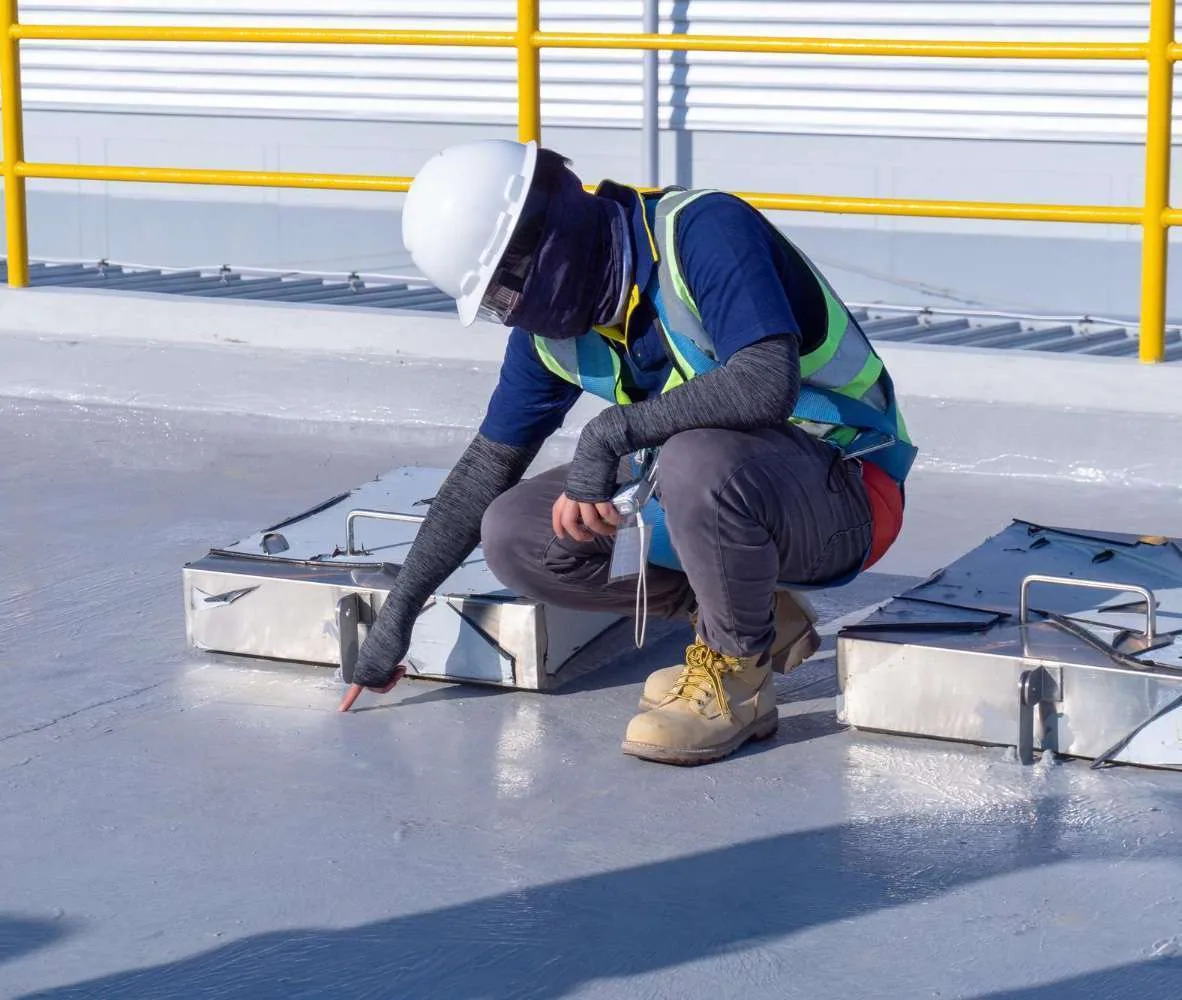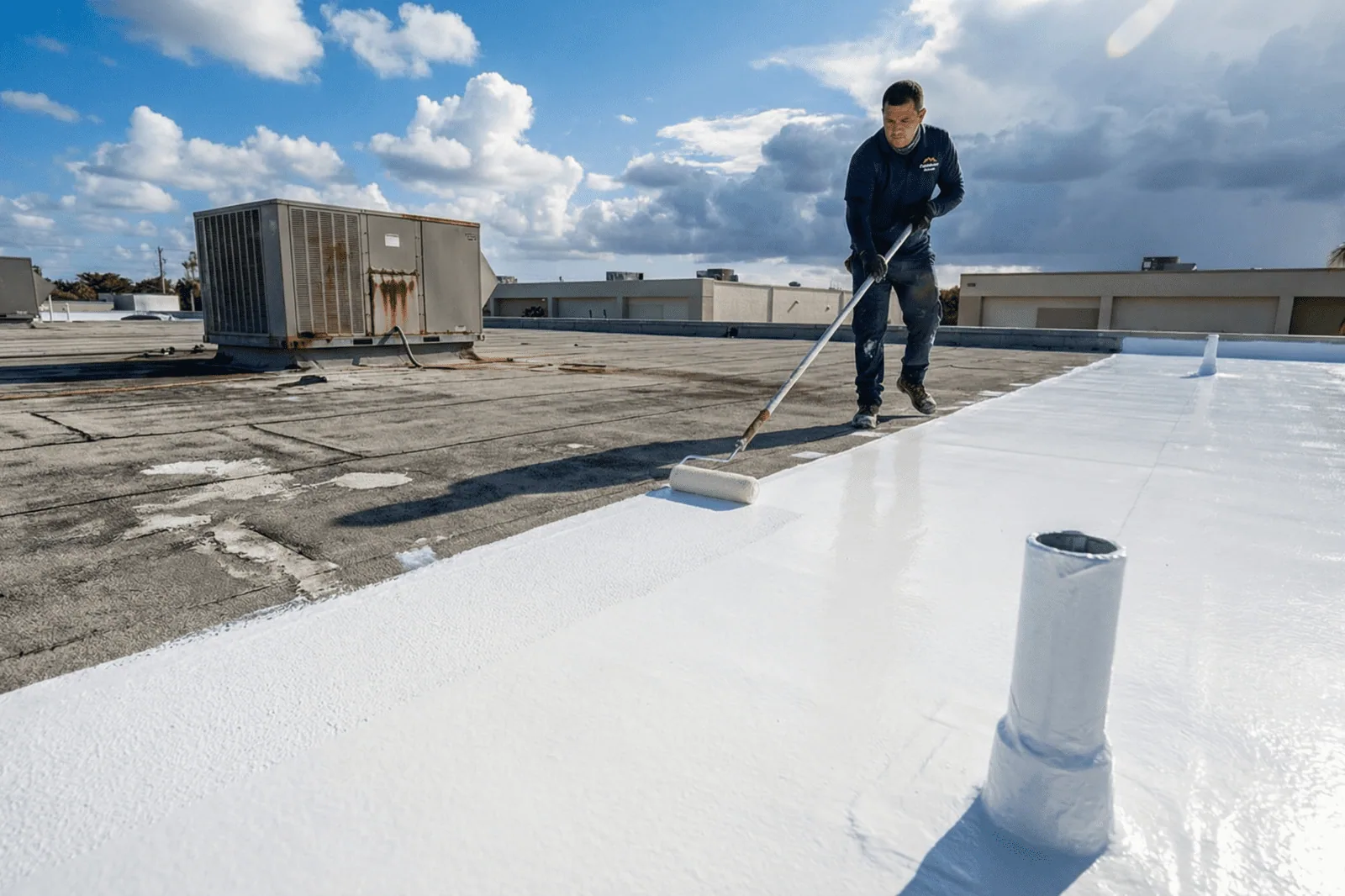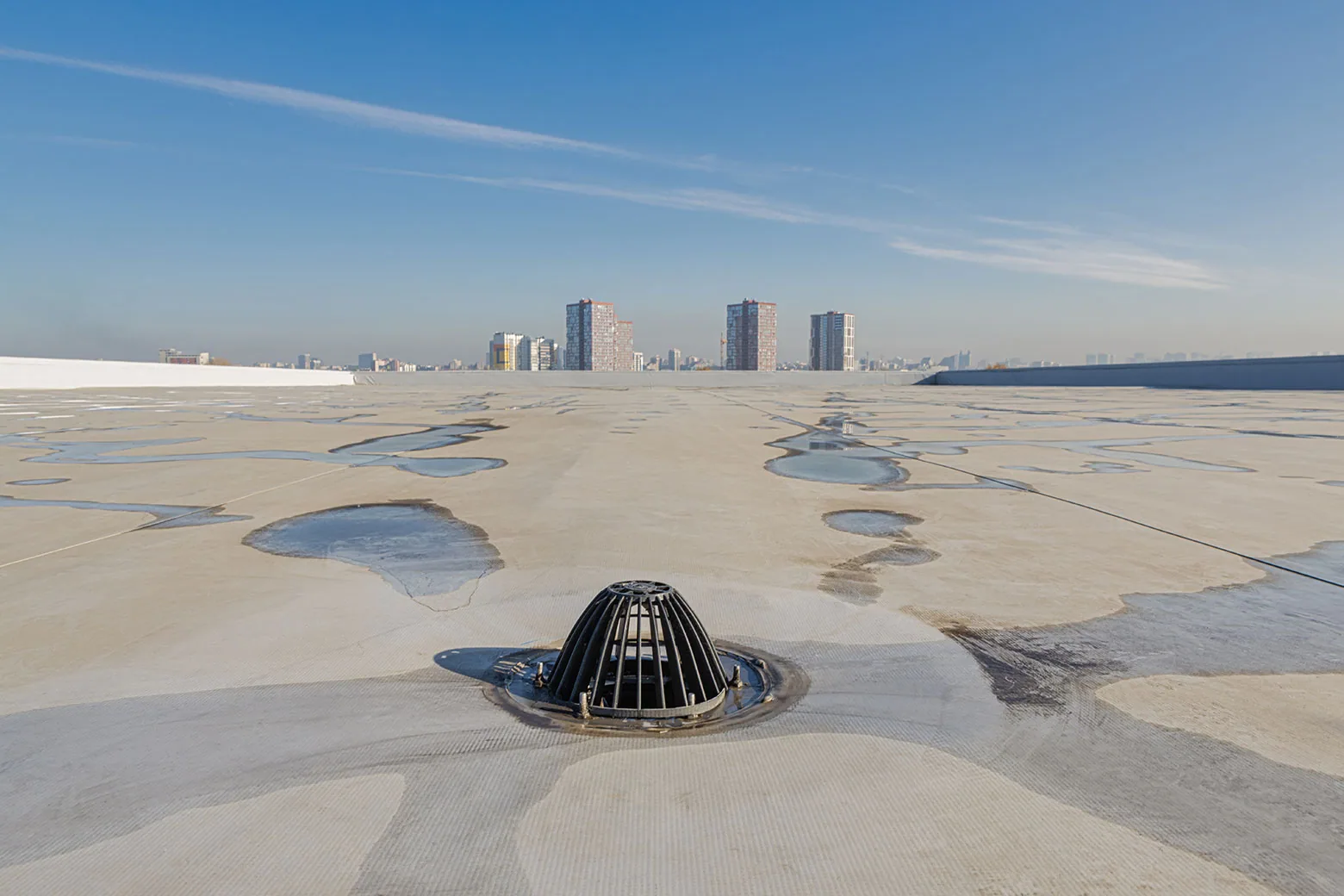

On an SPF roof, the protective coating is part of the assembly's weathering defense. A worn area can expose foam to sun and water, while a new coating cannot correct every saturated or poorly bonded section below. We inspect the foam profile, coating thickness and adhesion, penetrations, drains, and previous repairs before setting a restoration boundary. Carmel's summer sun and winter precipitation make those layers worth checking on a roof-by-roof basis. At a commercial property near Carmel City Center, access and tenant activity also shape the work plan. A roof inspection maps the conditions before coating is considered.
Spray polyurethane foam forms a continuous surface when installed over a prepared substrate. The coating above it protects the foam from ultraviolet exposure and weather. We look for erosion, exposed cells, cracks, blisters, punctures, loose coating, and areas where the foam has lost its shape. A small coating defect may be repairable; broad wet foam, poor adhesion, or repeated failures can change the scope.
Thickness and drainage profile matter. Foam can be shaped to improve slope, but later repairs, equipment work, or blocked outlets may leave low areas. We inspect drains, scuppers, crickets, and transitions, then record whether water drains as intended. Where coating is worn but the foam remains sound, a restoration may renew protection. Where the foam is saturated or damaged, the affected material may need removal rather than another surface layer.
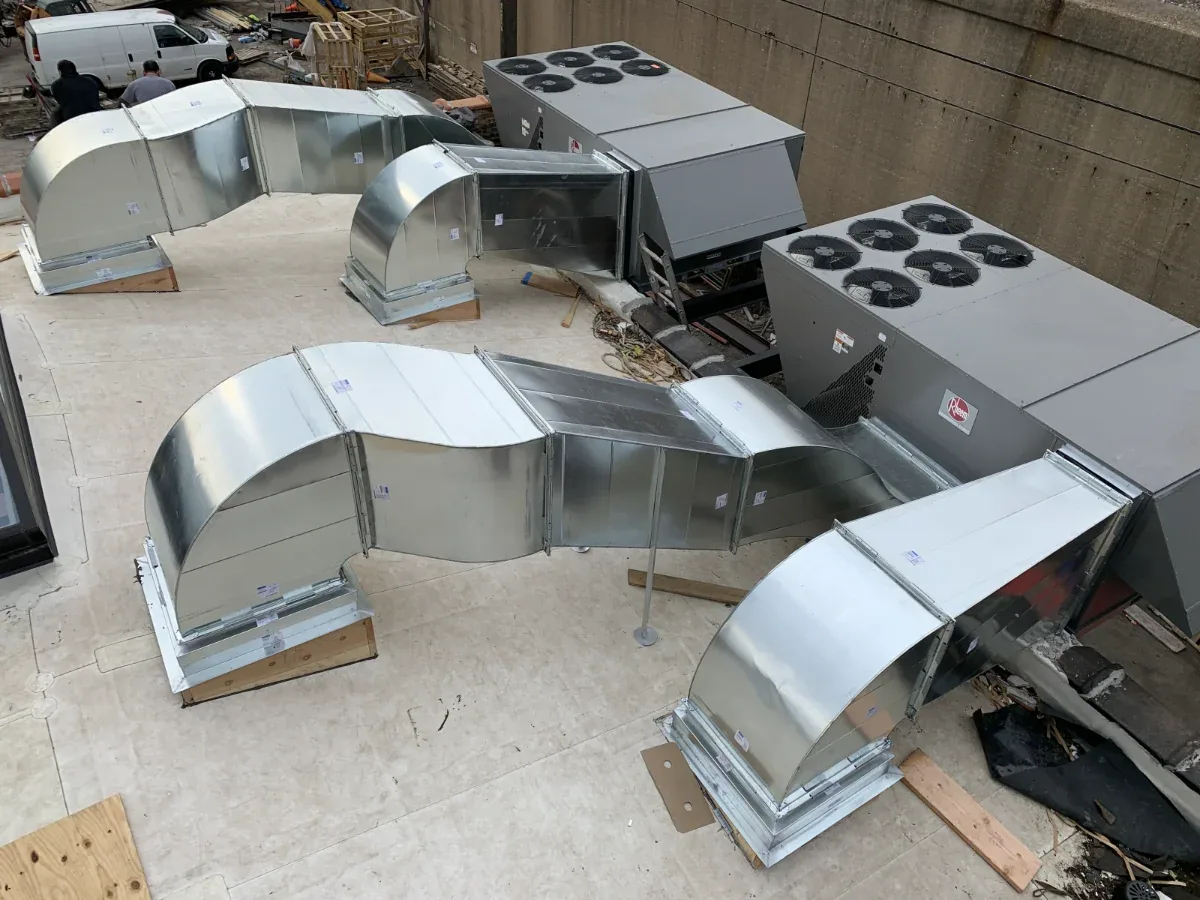
Penetrations and equipment supports interrupt the foam and coating. We check the transition for cracks, loose sealant, and signs of movement. Rooftop traffic can also cut or compress foam, especially where technicians repeatedly service equipment. We identify traffic routes and detail repairs in context. A curb and equipment support review can help keep new work clear of service access.
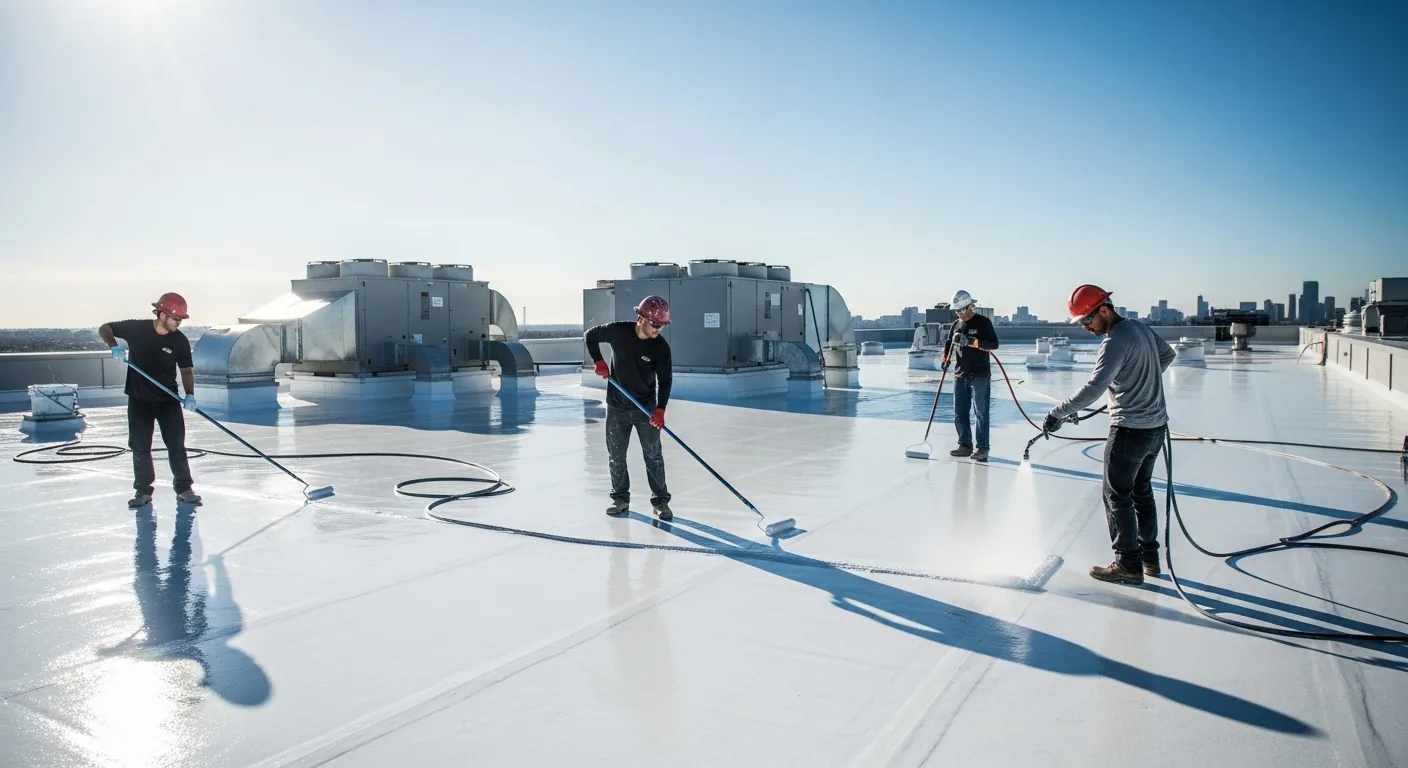
Coating over SPF requires a dry, stable, and compatible surface. We test adhesion where appropriate, identify the existing coating type when possible, and check for moisture or contamination. A topcoat that lifts from the old surface may fail even if its own application is correct. The renewal scope states preparation, repairs, coating product, reinforcement at details, and the application rate required by the product specification.
Not every roof can be restored the same way. Some areas may need removal to sound foam, while others can receive localized repairs and new coating. We map each condition, identify test locations, and separate confirmed work from an allowance for concealed damage. If the existing assembly cannot accept another layer, we compare replacement or a different recover assembly rather than stretching a coating beyond its limits.
For material comparison, an SPF roof can be evaluated alongside silicone coating or acrylic coating if the substrate and slope fit those systems. We review compatibility, ponding exposure, UV conditions, repair requirements, and expected maintenance. Carmel's roof renewal decision should reflect the actual foam and coating found, not an assumed system based on appearance.
Water can remain at a low spot even when the SPF surface appears continuous. We follow the slope to each drain, scupper, overflow, or gutter and note recurring pond lines. A blocked outlet calls for maintenance; persistent ponding may require shaping, a drain correction, or removal of wet material. Coating thickness alone will not correct a low point unless the work is designed to change the slope.
At the Indianapolis station, the typical July high is 85.2 degrees and the average January low is 20.9. Annual precipitation is 43.63 inches. A foam roof's coating and moisture condition must still be examined at the property before application. We assess the actual low points, outlets, and coating before scheduling application on a dry substrate.
At Carmel Midtown and the Arts & Design District, building use and access can differ, but roof performance comes down to the actual drainage and details. If outlets are part of the problem, drain and scupper work may be coordinated with SPF repair. If water continues to collect, a ponding-water review can clarify whether slope changes belong in the project.
A restoration proposal should name the areas to be washed, dried, repaired, primed, reinforced, and coated. It should include surface preparation and identify the product compatible with the existing coating. We detail cracks, penetrations, drains, and transitions separately because those locations may require mesh or additional flashing. The scope also notes weather conditions that could delay application.
Where foam has deteriorated, the repair may need removal back to sound material and replacement before recoating. If moisture is suspected below the surface, selective cuts or a moisture survey may help target confirmation. A survey is not a substitute for an opening when the assembly condition remains uncertain. We list test needs separately from confirmed repair quantities.
For work that changes the assembly or drainage, we confirm permit and inspection requirements with Carmel Building Safety before preparing the final scope. If a coating restoration does not fit, replacement quantities should identify insulation, cover board, membrane, drains, edges, and access. A condition report can capture those items for the capital file.
SPF application needs appropriate temperatures, low moisture, and manageable wind. Rain or dew on the substrate can affect adhesion, while wind can affect spray containment and nearby operations. We check conditions before work and protect equipment, openings, and adjacent surfaces. The plan identifies how the roof will be closed if weather interrupts the coating sequence.
Occupied properties need careful coordination. Spray work may require temporary controls around air intakes, doors, and rooftop units. We set notice periods with the manager and define which units or areas require coordination. At Carmel's commercial properties, service lanes and tenant routes can be as important as the roof access point, so staging should be settled before materials arrive.
Material selection can affect procurement. Existing coating chemistry, color, reinforcement, and repair compounds should be confirmed before ordering. If testing shows that a surface needs more preparation than expected, the schedule may change. We record those decision points and distinguish a temporary weather response from permanent restoration.
Closeout should record foam repairs, coating product, treated areas, detail reinforcement, and any excluded zones. Photographs of low points and penetrations help the owner plan later inspections. The maintenance log can then track coating wear before foam becomes exposed.
We note drains, equipment paths, repairs, and any test limitations. A roof map should distinguish new restoration from untouched SPF and retain the boundaries where the coating changed. A roof condition report can organize that record across a portfolio.
Share coating records, leak reports, previous repairs, and capital timing before the site walk. We can inspect the foam and surface, test where useful, and propose localized repair, restoration, or replacement with a clear boundary.
A new coating may fit if the foam is dry, stable, and compatible with the selected system. We inspect and test the surface, then identify areas needing repair or removal before coating.
Stains, soft areas, blisters, and interior symptoms can guide investigation but do not always confirm extent. We identify test locations and use openings where necessary to verify the assembly.
Poor preparation, moisture, incompatible materials, application conditions, or movement can affect adhesion. We inspect the interface and surrounding foam before specifying a repair product.
Foam can be shaped to improve drainage when the assembly and design support it. We measure the low area, outlet path, and structure before including slope work in the scope.
Inspection timing should follow coating condition, traffic, drainage, and prior repairs. We can document wear and recommend a maintenance interval for the actual roof rather than using a fixed assumption.