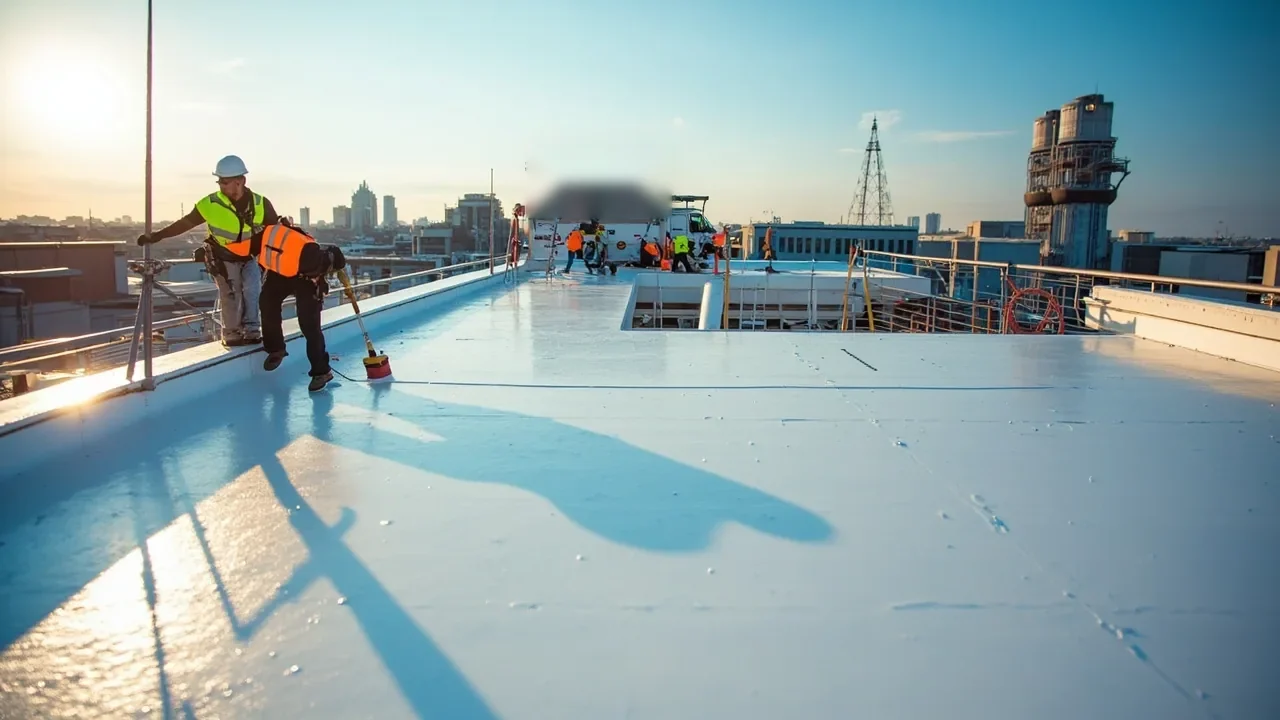
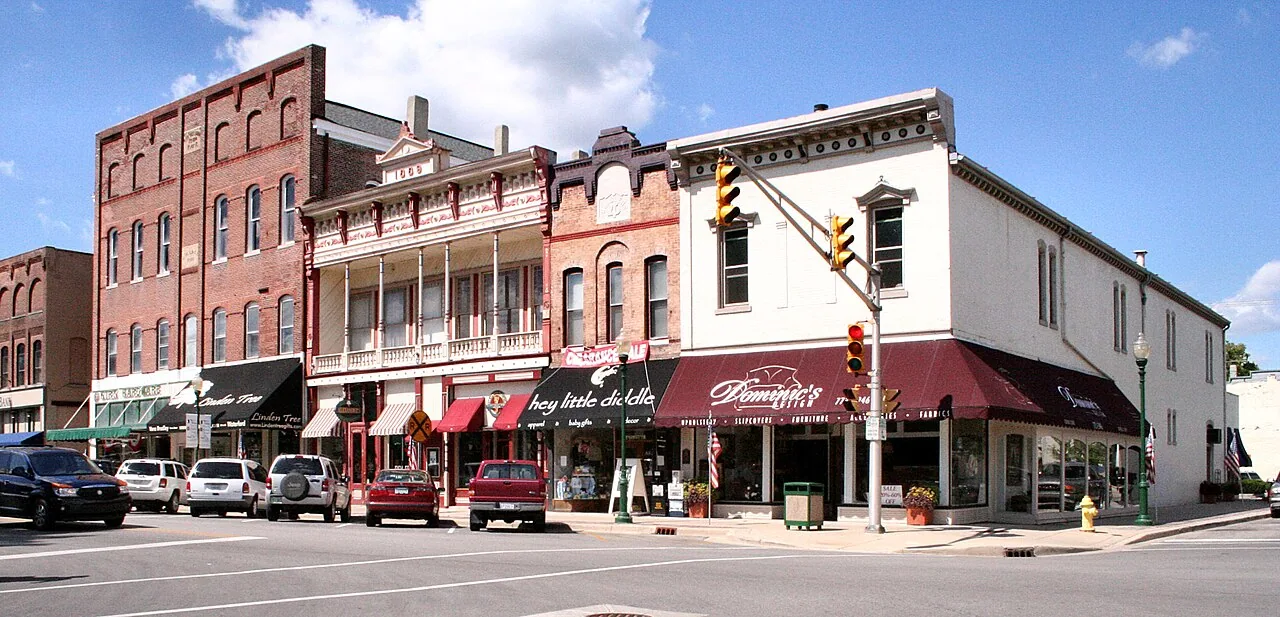
Downtown Noblesville roof work has to account for the building and the public activity around it. Downtown is a compact district with civic, cultural, retail, parking, and pedestrian destinations, including Riverwalk, Federal Hill Commons, Seminary Park, and the Maple Avenue arts corridor. That mix makes access, staging, and work timing part of the first conversation. We inspect each property directly and keep building-specific roof findings separate from the district's broader uses.
We begin with the owner’s decision: stop a leak, document condition, price a repair, or coordinate work around a tenant or event calendar. Then we check the accessible roof, map the water path, and note what is known versus what needs a test. A neighborhood context can guide logistics, but the roof evidence sets the scope.
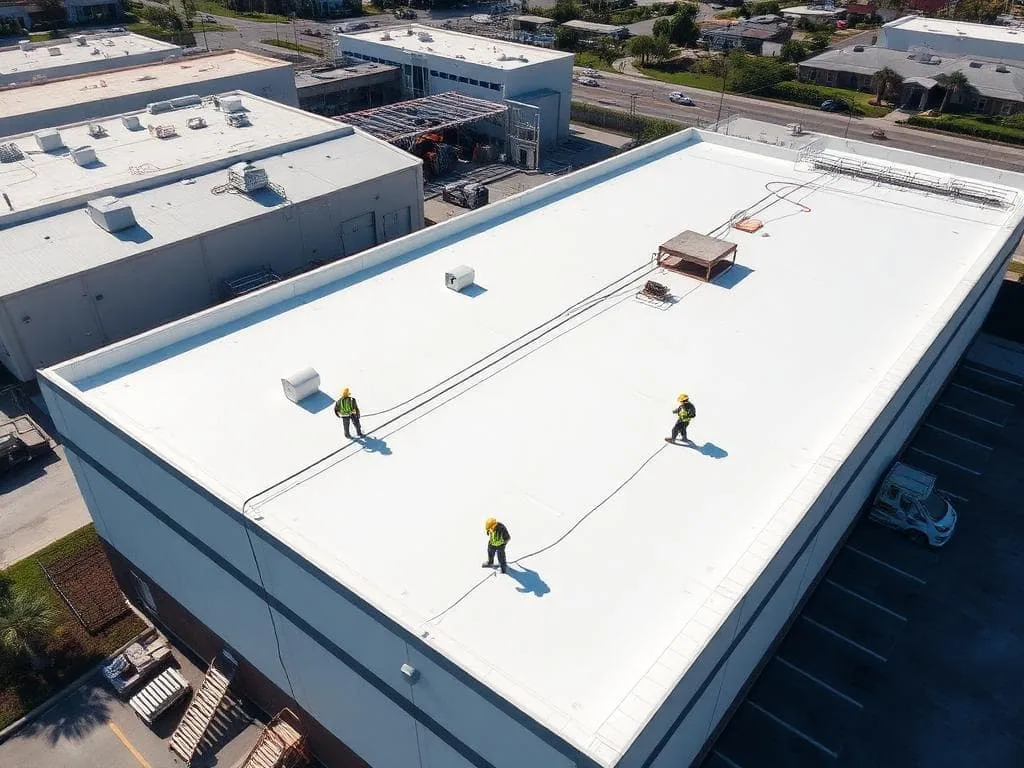
In a compact commercial district, a lift, delivery, or roof access route may overlap with parking and pedestrian activity. We ask which entrance stays open, where materials can be staged, when deliveries are permitted, and whether the building has a public event or tenant schedule to protect. Those answers shape the work sequence before a crew arrives.
Federal Hill Commons and Seminary Park are among downtown's civic destinations, alongside arts and retail uses. We confirm each property's actual access route and operating calendar before setting the work sequence. At the site walk, we verify the building contact, safe access, roof hatch, ladder location, and any area that cannot be reached without special arrangements.
A roof inspection can separate urgent defects from maintenance findings and document the work boundary. Where a public-facing entrance or tenant area is involved, an occupied-building plan can define daily limits, noise windows, pedestrian protection, and the roof area that will be closed before the site is left.
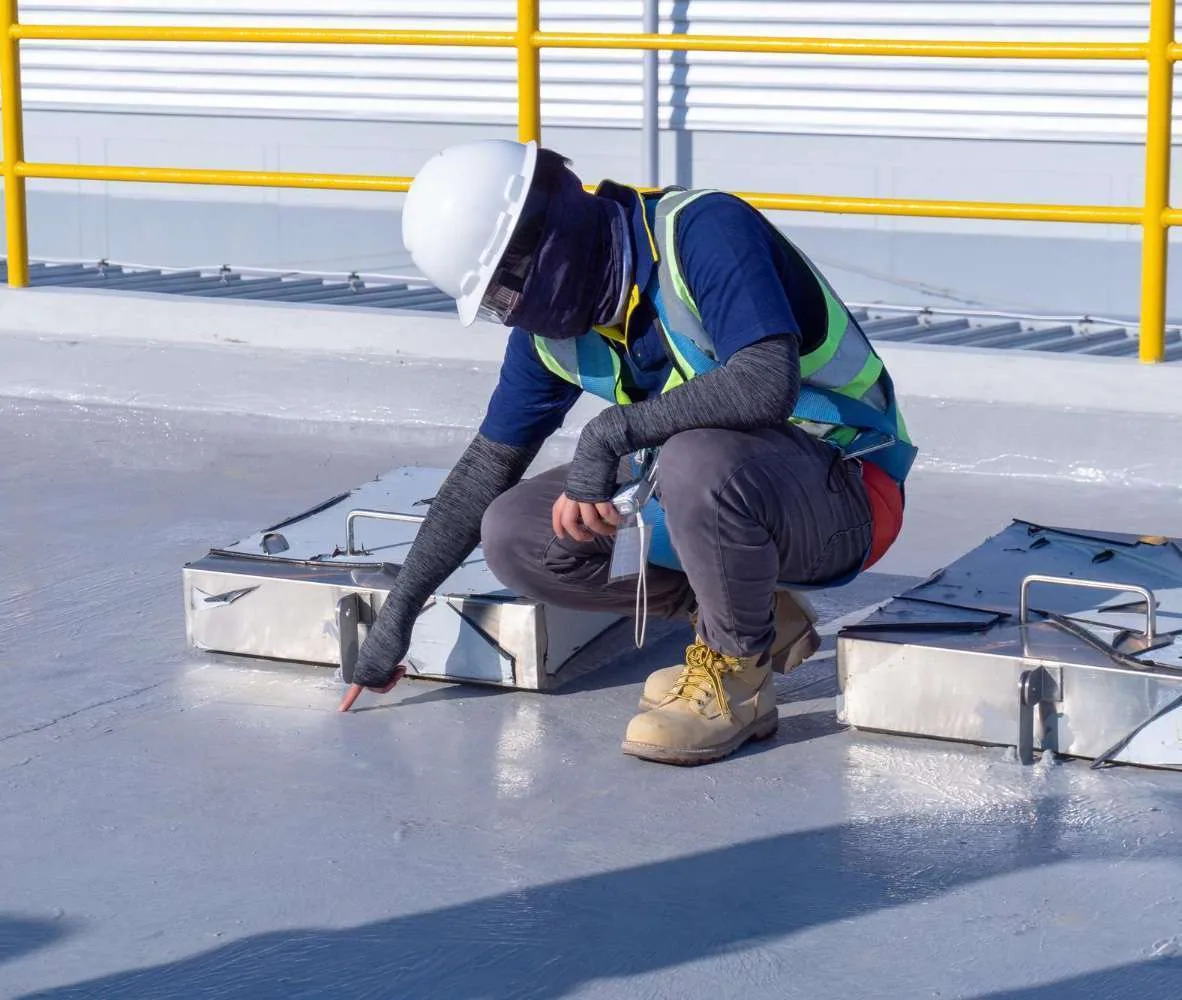
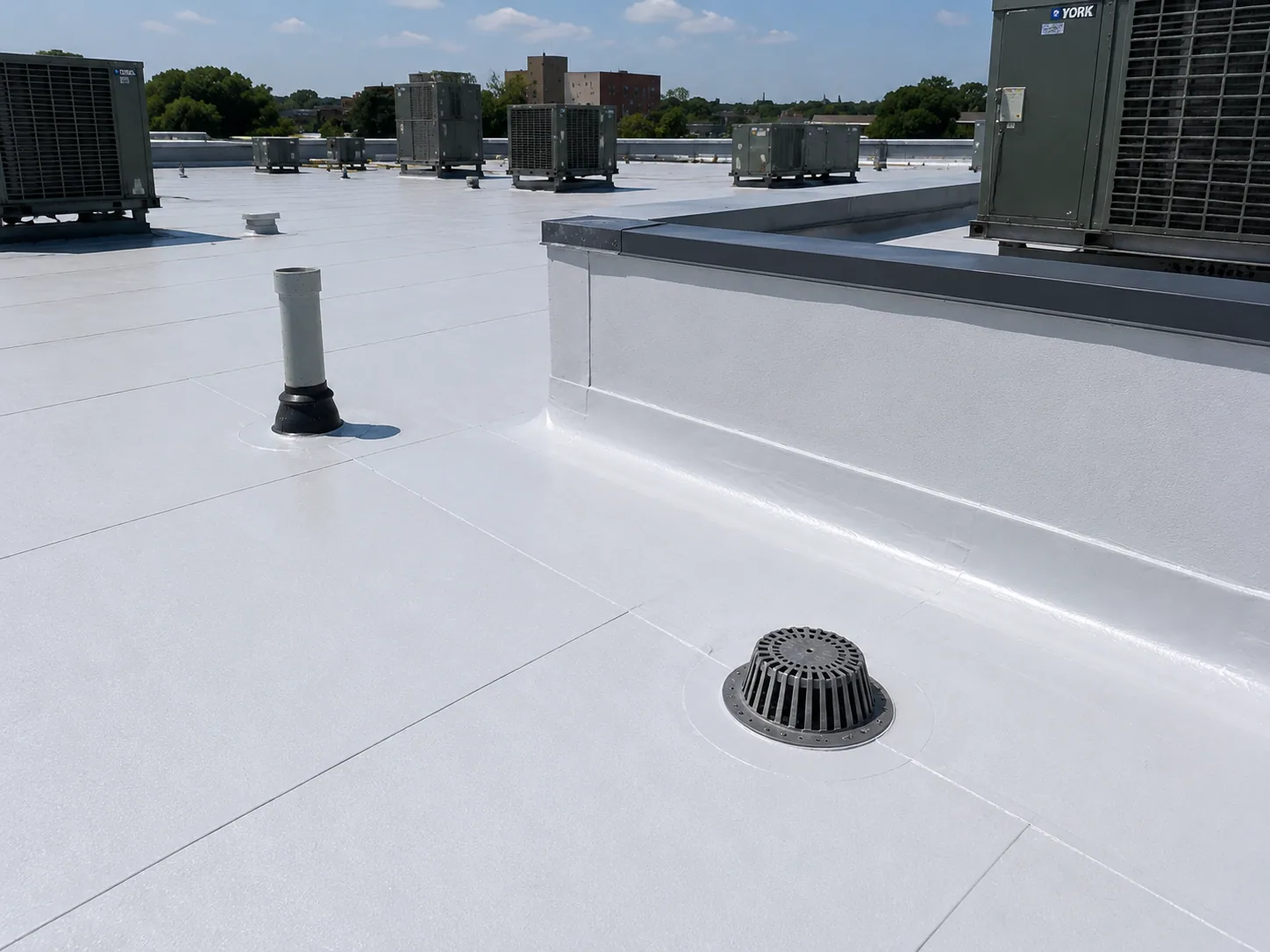
We record the roof surface, membrane or metal type, seams, laps, perimeter terminations, wall transitions, penetrations, curbs, drains, and earlier repairs. A photo should show the condition in context, not just a close view of a crack. We note its roof section, dimensions where measurable, and whether the detail can be reached safely.
The same inspection method applies whether a building supports retail, civic activity, professional services, or cultural use, but findings remain property-specific. We look for open seams, loose edge metal, split flashing, worn coating, punctures, and signs of water that has moved below the surface. If an interior stain is reported near a ceiling or wall, we compare its timing to details above rather than assume the nearest roof feature is the entry point.
When multiple roof areas show different conditions, we keep the notes separate. A photo condition record can connect each observation to its section and identify where testing is still needed. That gives the property manager a more useful comparison than a single overall label such as fair or poor.
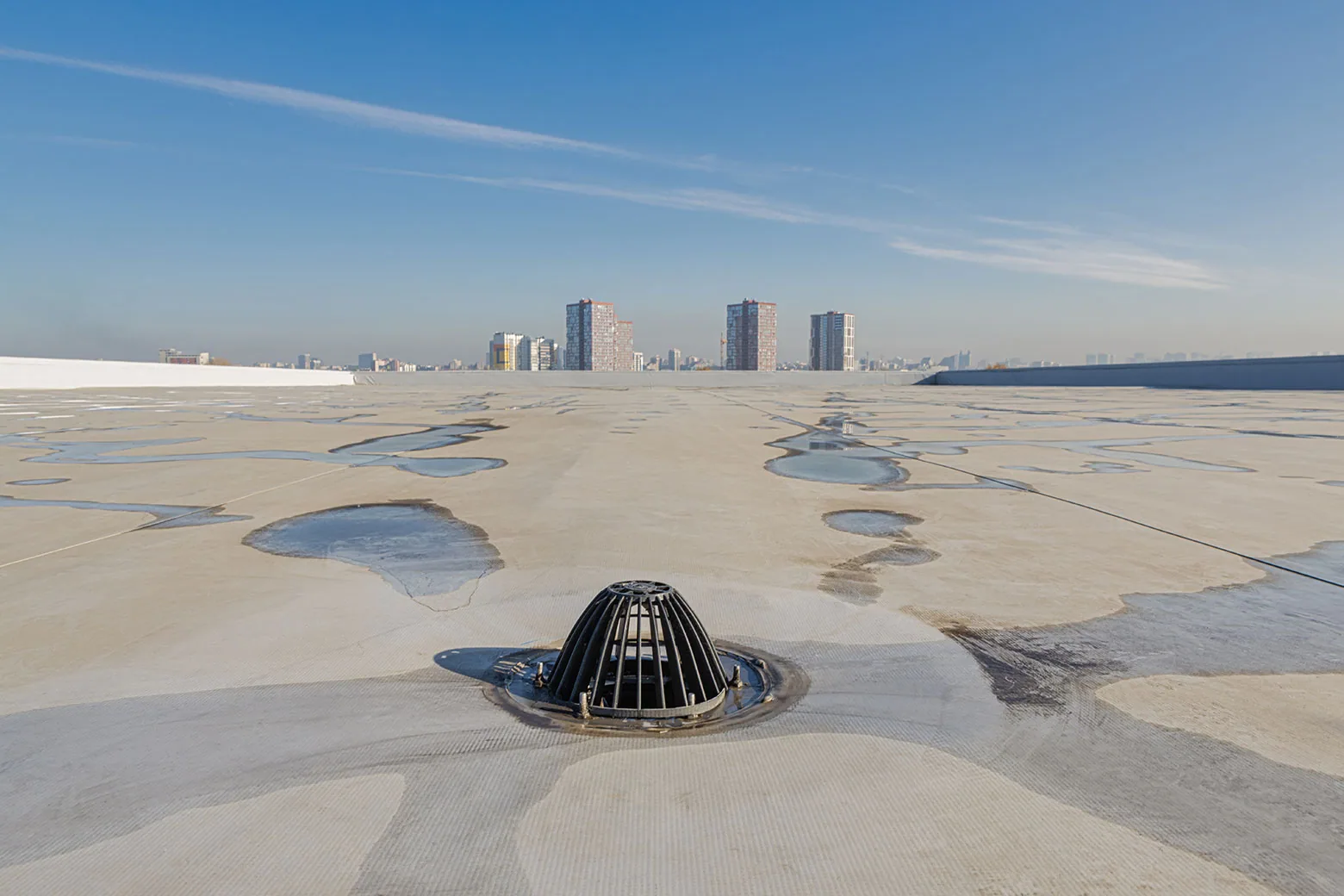
Downtown structures may be close together, but roof drainage still has to be read at the individual property. We check drain bowls, strainers, scuppers, overflow paths, low areas, and discharge points that can be seen safely. A blocked outlet may need clearing; a broken drain ring or split membrane at the bowl may need repair. We state which condition was observed and avoid pricing the two as one task.
Indianapolis January normals used for Carmel average a low of 20.9 degrees and 8.8 inches of snowfall. For a Noblesville roof, we review the actual slope, surface, and flow path before setting a drainage scope. We review the actual slope, surface, and flow path. If ponding is present, we determine whether debris, deflection, a clogged drain, or a wider design concern needs further review.
A drainage scope can identify cleanout separately from repairing a failed connection. If the water track begins elsewhere, a leak investigation can compare the interior report with seams, wall transitions, flashing, and prior patches.
A repair should reach material that can accept a sound tie-in. We inspect the damaged area and its surrounding membrane, then check whether the same failure appears at nearby transitions or drains. When it remains local, the proposal can identify the patch extent, preparation, flashing, and closeout photos. When conditions are broader, we explain what supports a section renewal or replacement review.
An owner can compare the repair window with public operating hours. We identify whether a noisy task or lift needs a timed closure, then list temporary signs, protected paths, and the point when a route returns to service. Those controls belong in the scope before the crew arrives.
Work in a busy district can carry staging and protection requirements beyond the roof itself. We account for lift placement, material movement, pedestrian separation, daily cleanup, access hours, and any temporary interruption to an entrance or service area. Schedule assumptions belong in the proposal so an owner can compare bids against the same operating window. If weather or unsafe surfaces delay a task, we define protection and the next safe work period.
For a larger scope, a replacement assessment checks assembly, drainage, edge conditions, penetrations, and transition details. A small defect may need only a targeted repair. We explain the evidence behind each option without treating a district-wide description as proof of a specific building condition.
When a detail cannot be inspected because of a locked area, fragile surface, or unsafe condition, we state that limitation. That prevents a clean-looking photograph from being read as approval of an unseen roof section and gives the manager a practical list for the next access window.
After work, the owner should have photos, area repaired, materials, completed quantities, and any open recommendation. If part of the roof was inaccessible, we record the limit. The next manager can compare the same sections and see whether the issue was repaired, monitored, or left pending.
Routine care can revisit drains, flashing, seams, and repairs before the next wet season. A maintenance visit can also note access limitations or tenant coordination that will matter during a larger project. If a portfolio includes an additional property in Noblesville or a facility at Washington Business Park, we can align visits while keeping each roof report separate.
Send the property contact, known leak locations, roof history, and any dates the building needs clear access. We will return a roof map and next-step scope that fits the structure and its operating calendar.
Yes. We confirm event dates, entrances, staging limits, access hours, and pedestrian protection with the property contact. The plan also states how the roof will be closed and the work area cleared at the end of each shift.
We trace plausible water paths from the reported interior area and compare the timing with seams, drains, penetrations, and wall transitions. If the entry point remains uncertain, we identify the test that could confirm it.
It can, if access and timing allow. We still document each building separately, with its own condition, quantities, photos, and limitations.
We agree on material staging, lift placement, protected entrances, and daily work boundaries before mobilization. Any change to an entrance or service route is listed as a coordination item.
We inspect each structure, identify its assembly, access route, drainage, and operating constraints, then set a measured repair boundary. Civic and retail activity can affect staging, so we confirm the work route with each property contact.