A restaurant roof has a working relationship with the kitchen below. Exhaust, make-up air, refrigeration, and plumbing all cross the roof, while guests and deliveries follow tight schedules. We start with the reported leak, roof plan, equipment list, and service hours, then check the nearby flashing and water path. Carmel's Arts and Design District includes restaurants, specialty shops, and galleries around Old Town; City Center also combines dining with retail, office, housing, and public spaces. Each property still needs its own roof inspection and service-access plan.
Kitchen exhaust can carry grease and heat toward roof openings. We inspect the fan curb, duct connection, flashing, surrounding membrane, and any walkway used for service. A stain near a hood does not by itself identify the failed detail, and a working exhaust fan does not confirm that its curb is watertight. We look for movement, open seams, cracked flashing, and residue that may affect preparation for a repair.
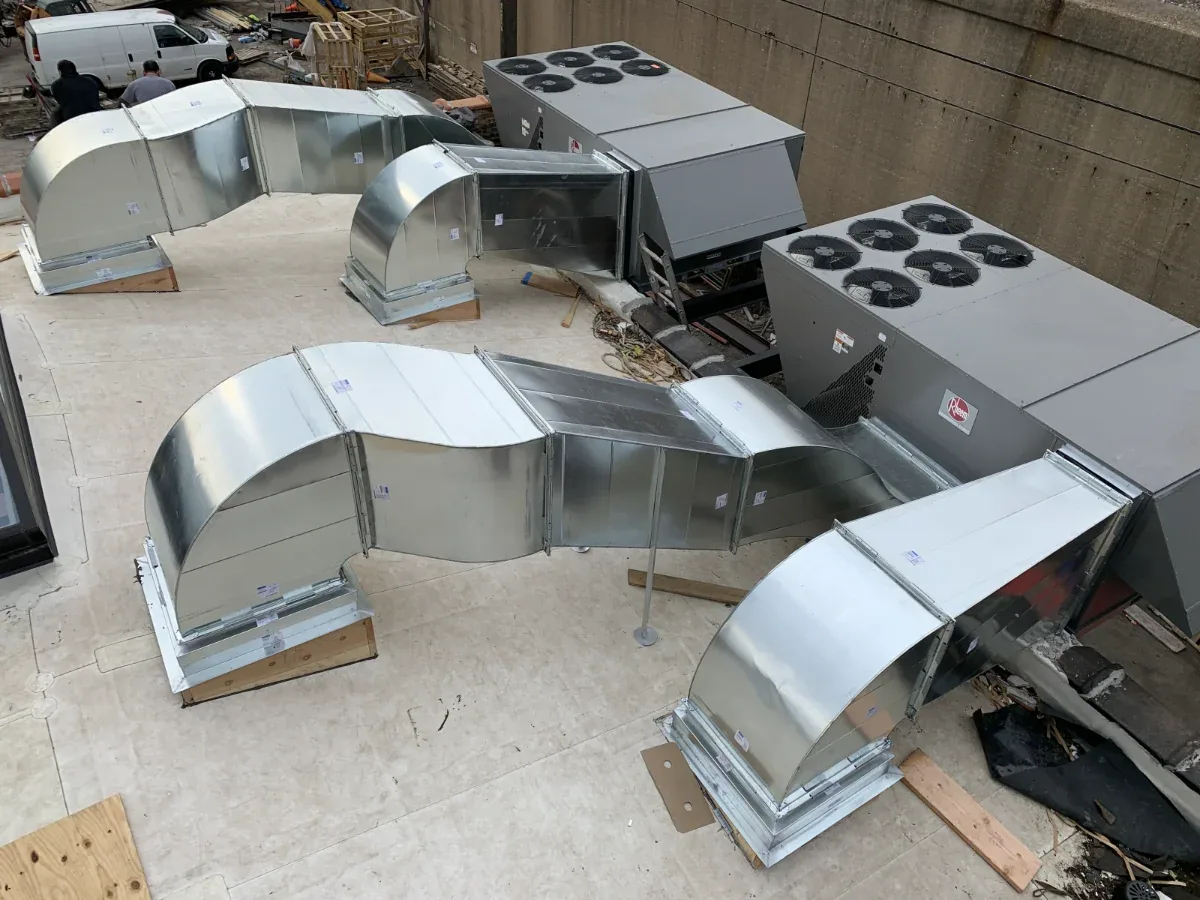
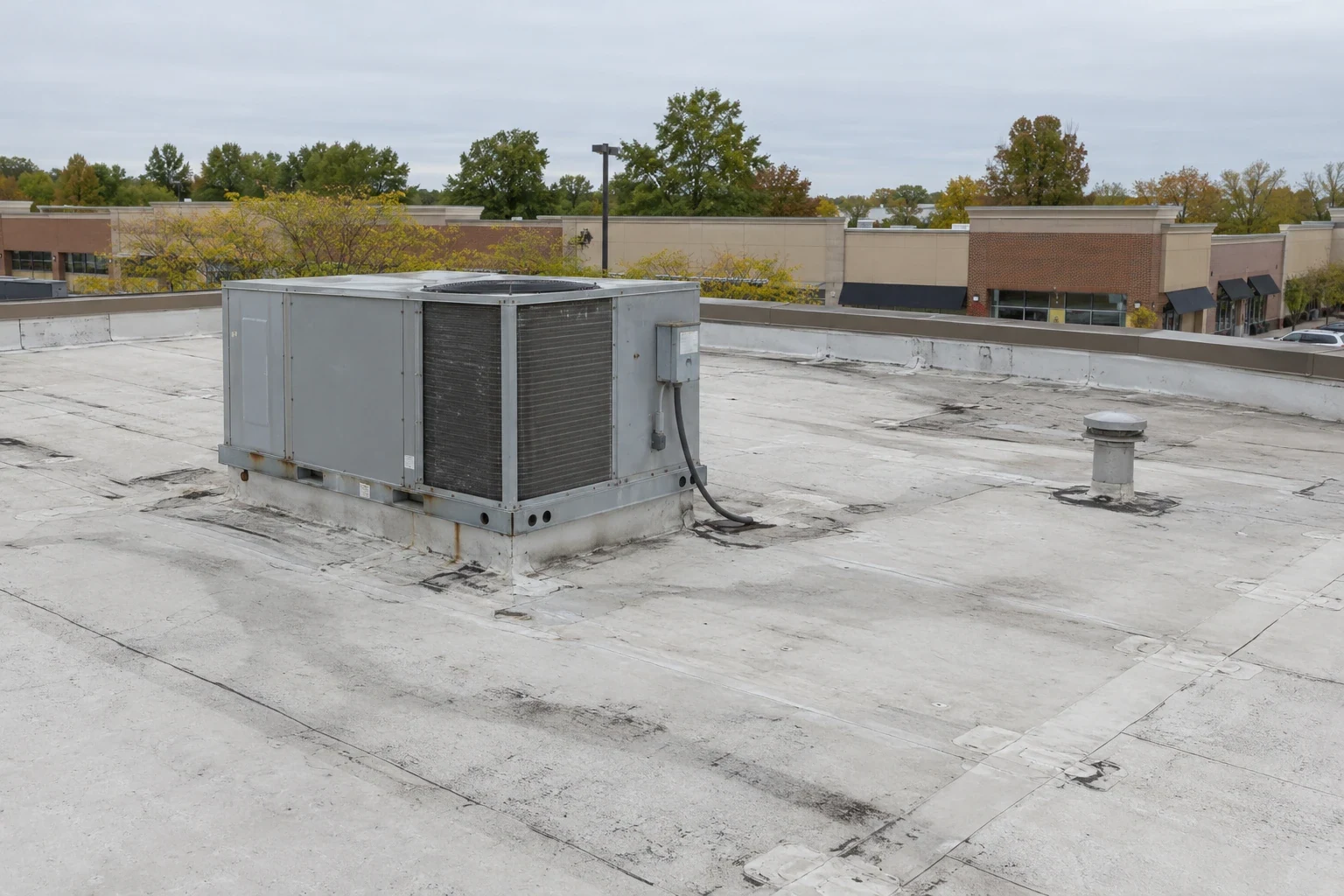
Rooftop units and refrigeration lines add other penetrations. Service calls can lead to repeated foot traffic or changes made by separate trades. We note the equipment location and the roof condition around its supports so the owner can coordinate the next maintenance visit. A curb and penetration repair can define the roof detail without combining it with mechanical service.
Food operations may continue through much of a roof project. We ask when deliveries arrive, when the kitchen is busiest, and which guest areas must remain available. A limited repair may fit a quiet window; broader replacement may need a phase plan and customer notice. For a connected retail property, a shopping-center roof program can also address shared staging and tenant coordination. Where a property includes a food market, a grocery roof scope accounts for cooler equipment and receiving.
We inspect membrane seams, edge metal, penetrations, drains, scuppers, skylights, parapets, and roof-to-wall transitions. Water can travel under a membrane or along a deck before it appears in a dining room. We record the interior location, weather, and previous repairs, then compare those details with roof findings. If the source is unclear, we explain what test or selective opening would help before expanding the repair.
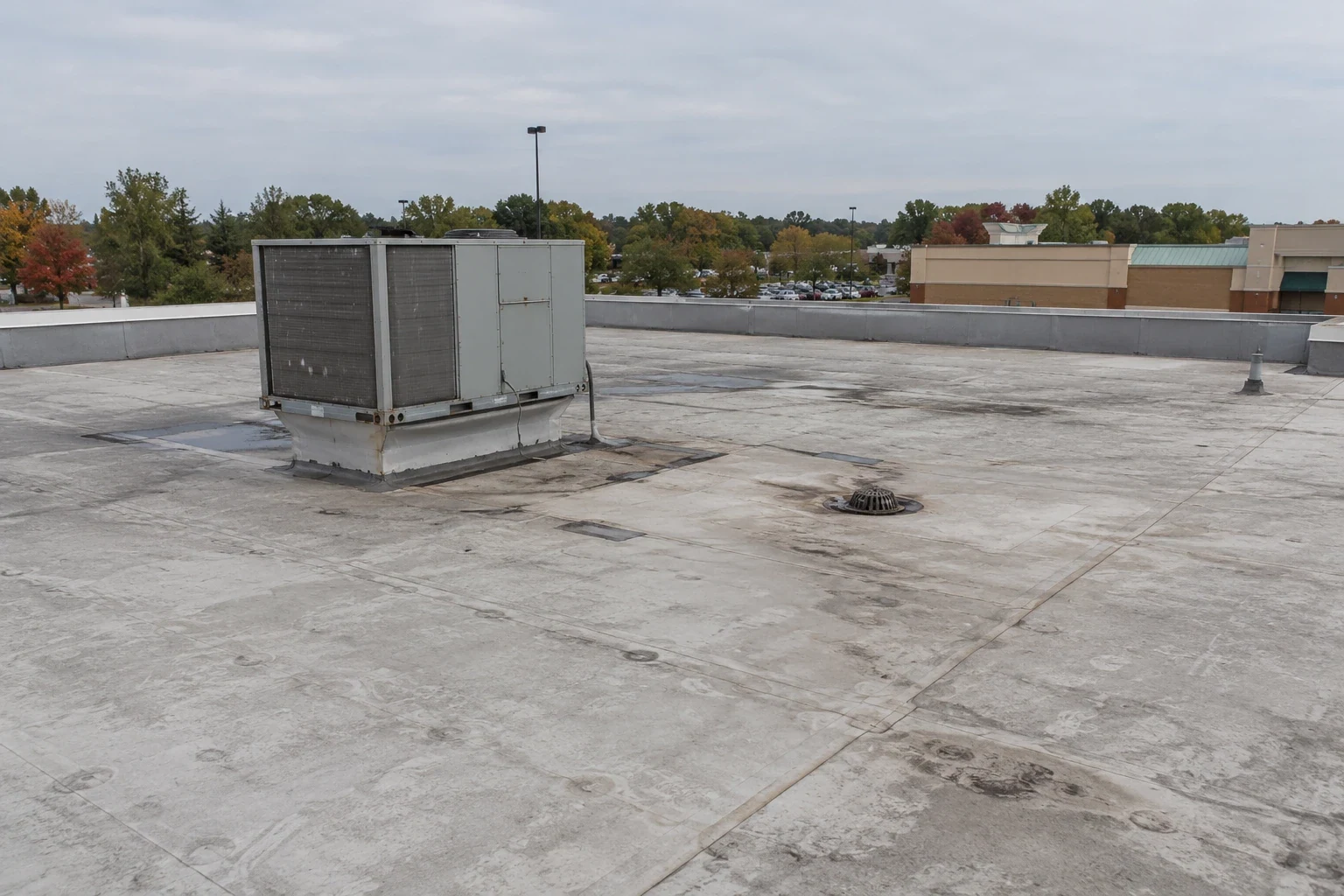
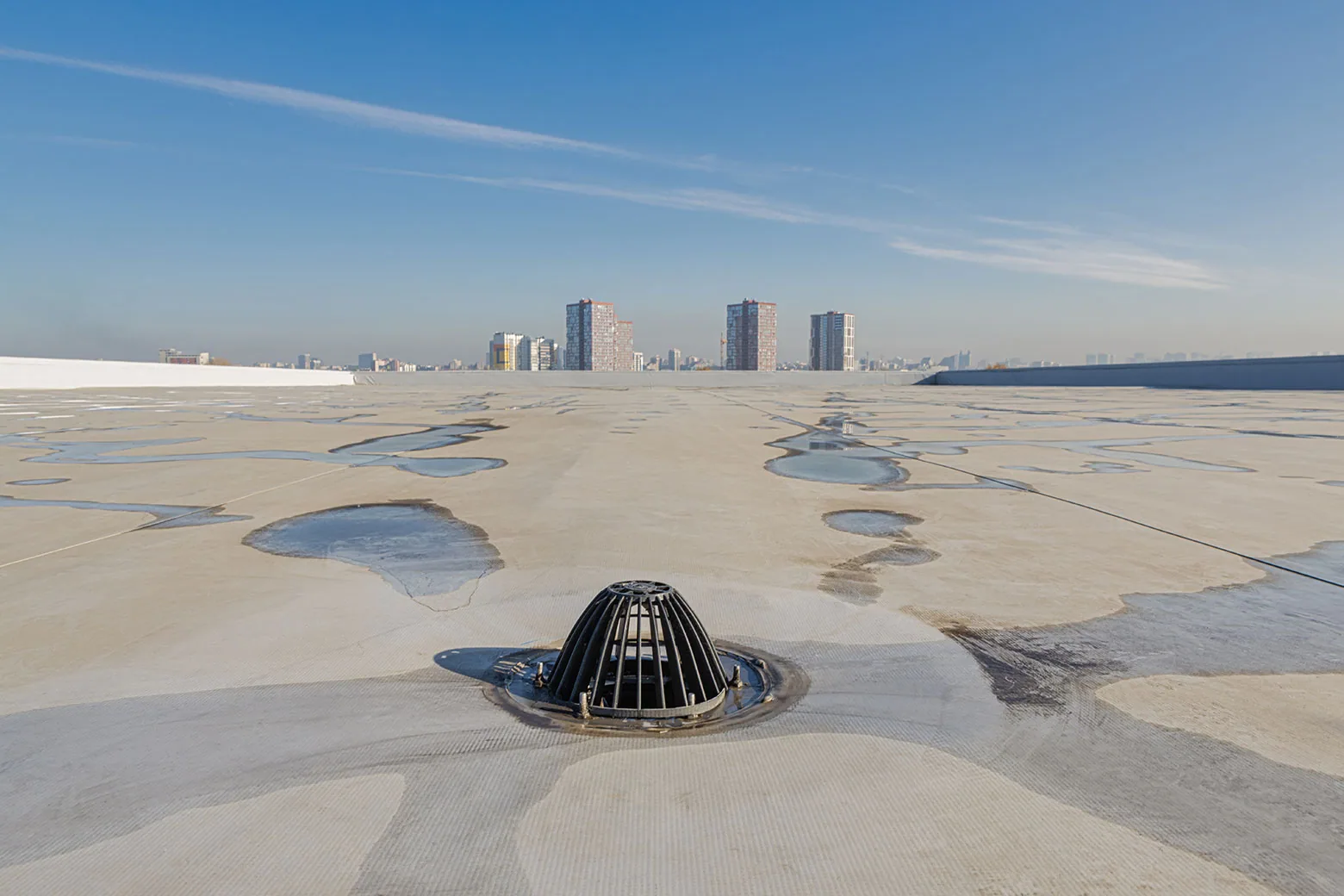
Drainage and grease are a practical combination to check. We look at drain bowls, strainers, overflow paths, and low areas for debris or standing water, including areas where service work has disturbed the roof. A clogged drain may need cleaning, while recurring ponding with an open outlet can point to slope, insulation, or deck issues. A drainage service can separate those findings from the kitchen exhaust detail.
Skylights and exhaust penetrations should be checked at their perimeter, not just sealed at the visible gap. We review flashing height, attachment, counterflashing, and nearby membrane condition. If the repair requires temporary closure during business hours, we agree on the interior protection and schedule before crews arrive. That keeps the roof scope connected to the actual restaurant operation.
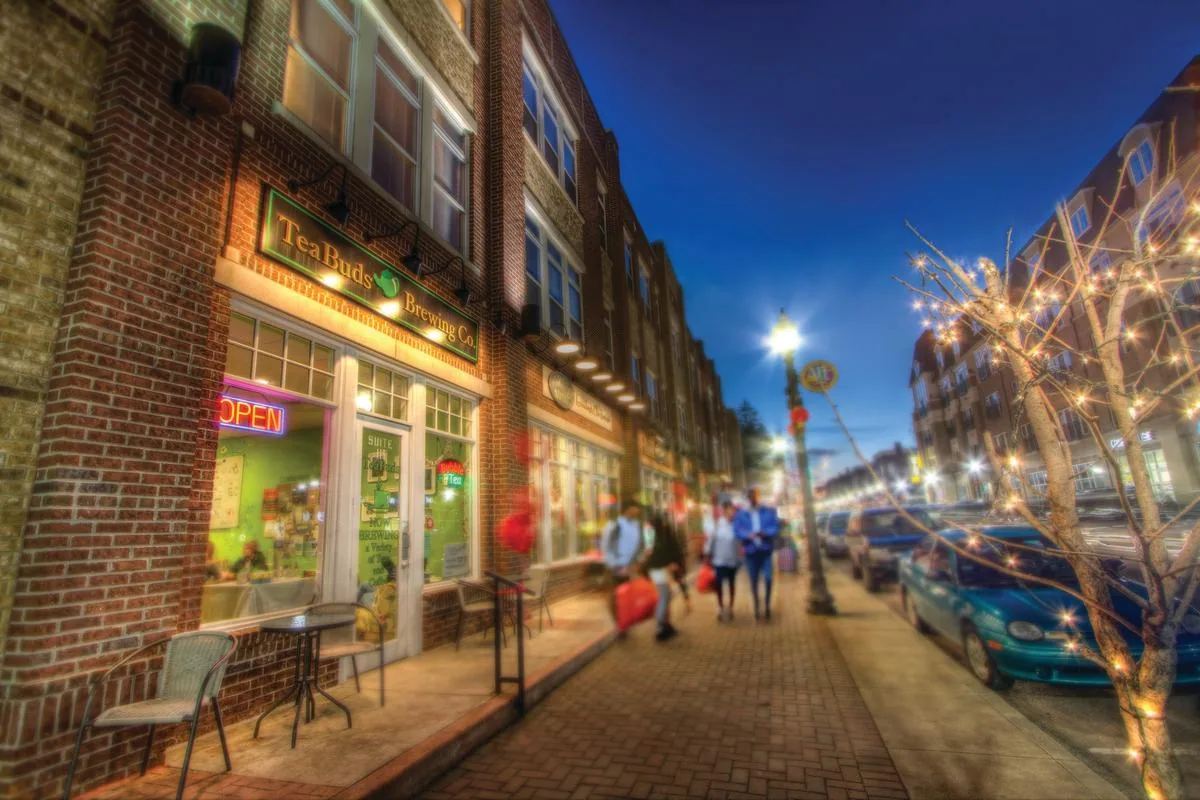
The Carmel Arts and Design District includes dining, retail, art galleries, design showrooms, and apartments along a walkable Old Town area. That context makes customer access and delivery timing a relevant part of a local restaurant project. The specific storefront, exhaust route, and roof access still have to be confirmed on site. A district roof visit can document those conditions without treating the whole district as one building.
Carmel City Center is a multi-phase mixed-use area with office, residential, retail, and public parking. Restaurants there share a broader access setting with other daily uses, so staging and temporary restrictions should be discussed with property management. We check the individual roof and note which entrances, sidewalks, or service lanes need protection during the work.
Indianapolis averages 25.5 inches of snow each year. Winter access and thaw can affect the timing of restaurant roof work, so we confirm site conditions before setting a repair window and check that drains and overflow routes are clear.
A restaurant repair scope identifies the affected penetration, preparation, material, protection, and work limit. If one curb is the source, a targeted correction may be enough. If several exhaust and service details show deterioration or leaks recur across separate areas, we compare repeated repairs with wider renewal. The owner should know which areas were inspected and what remains unconfirmed.
Before recovery, we review existing layers, moisture, attachment, deck, drainage, and equipment clearances. Before considering a recover, we verify moisture, deck strength, layer count, attachment, drainage, and curb clearance. A replacement scope can include tear-off, insulation, flashing, and coordination with new equipment when the existing assembly cannot be retained.
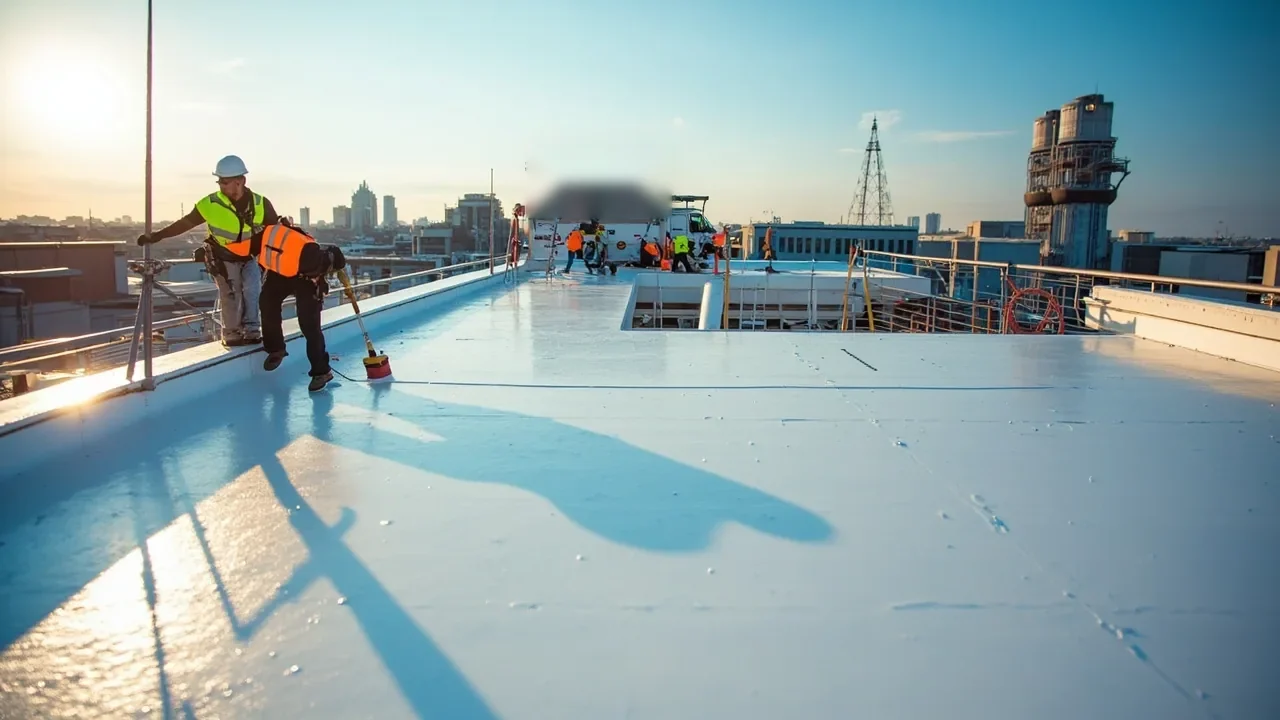
Timing depends on kitchen hours, guest access, exhaust use, delivery schedules, material preparation, permits, and weather. We plan where materials can be staged, how the crew reaches the roof, and when noise or temporary access limits may affect service. The schedule can split immediate leak control from permanent renewal when a full project cannot fit the first available window.
Before mobilization, we confirm the delivery door, grease-service schedule, guest entrances, roof access, lift location, and any fire-lane restriction. The restaurant contact can identify the hours when a service interruption would have the greatest effect. We set the work zone and communicate which path remains open.
Each shift ends with a secure roof. We identify a weather trigger, temporary cover, cleanup, and a point for the owner to review before the crew leaves. If a concealed condition changes the scope, the team should stop at a safe boundary and report the finding before opening more area. For a phased project, finished sections remain protected while work moves to the next location.
We confirm the permit path and inspection milestones with Carmel Building Safety, then place them beside kitchen hours, delivery timing, and equipment coordination. The restaurant can see any schedule conflict before a start date is set.
Closeout should show the roof detail repaired, materials installed, photographs, any area excluded, and the next observation date if follow-up is needed. We can label the exhaust curb, drain, or service route on a roof plan so a later contractor knows what was touched. If grease or another condition requires a different cleaning method, that should be noted before the next repair.
Parkwood Crossing combines restaurants with offices, a hotel, a bank, and parking structures within a commercial redevelopment area. That mix is a reminder that service access can be shared; it does not describe the layout of any other restaurant. A roof condition report preserves the restaurant's own roof findings, measured work, and repair boundary for the property file.
Share the equipment schedule, known leaks, roof plan, kitchen-service hours, and recent repair records. We can inspect the roof with the facility contact and prepare a scope that protects the dining operation below.
Often, if exhaust operation, customer paths, deliveries, and protection are coordinated. We define the active roof area and work window with the restaurant contact before mobilization.
It can change preparation and material bonding at the detail. We inspect the curb and surrounding roof, then specify cleaning and repair steps suited to what is present.
We inspect the flashing, curb, adjacent seams, and likely water path. The fan's operation alone does not identify the roof source, so we document findings before choosing the repair.
Yes, when roof access and weather protection allow separate work zones. We plan dry-in points and coordinate noisy or access-limiting work with dining hours.
Keep photos, the repaired detail, materials, exclusions, equipment locations, and follow-up items. Those notes help connect later service work with the right roof area.