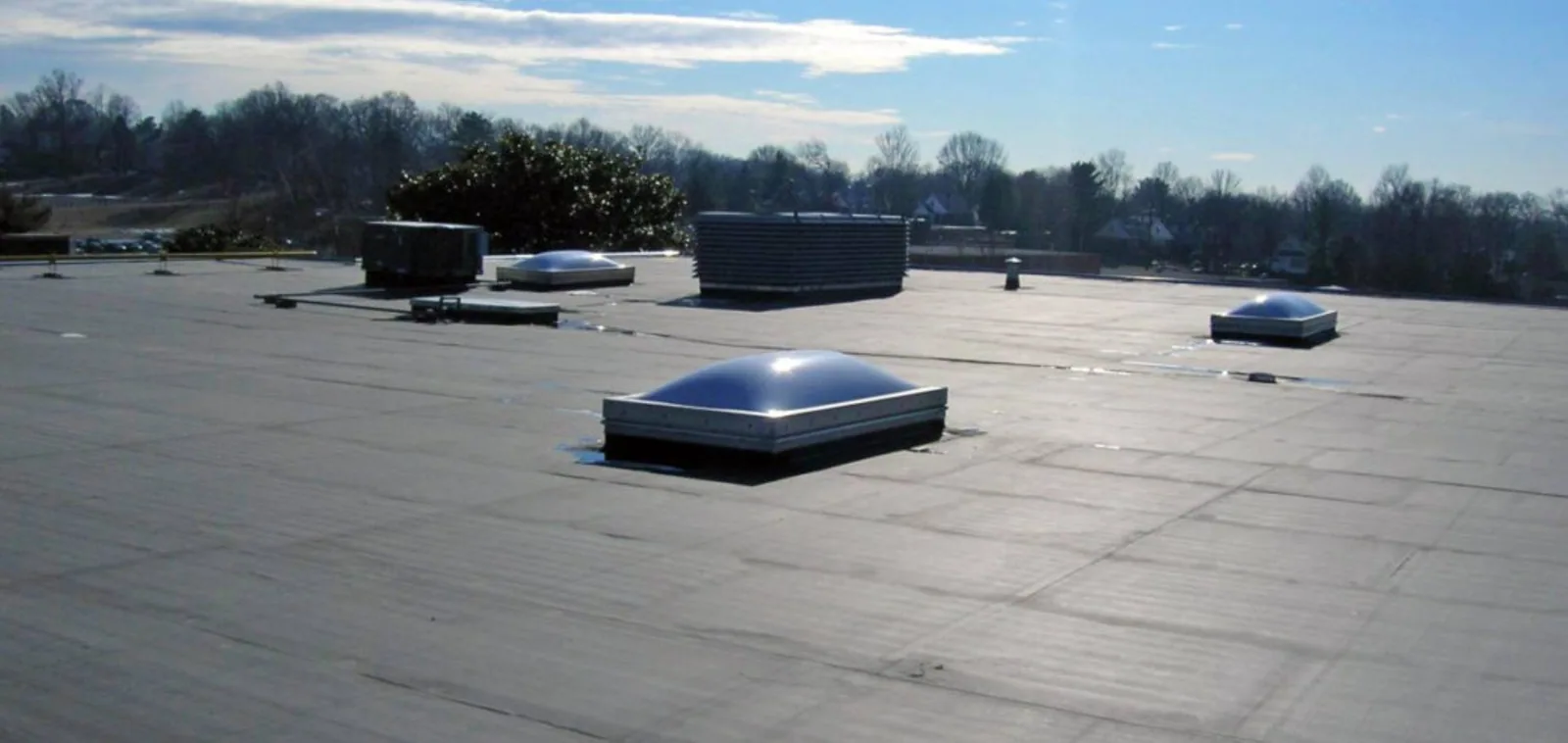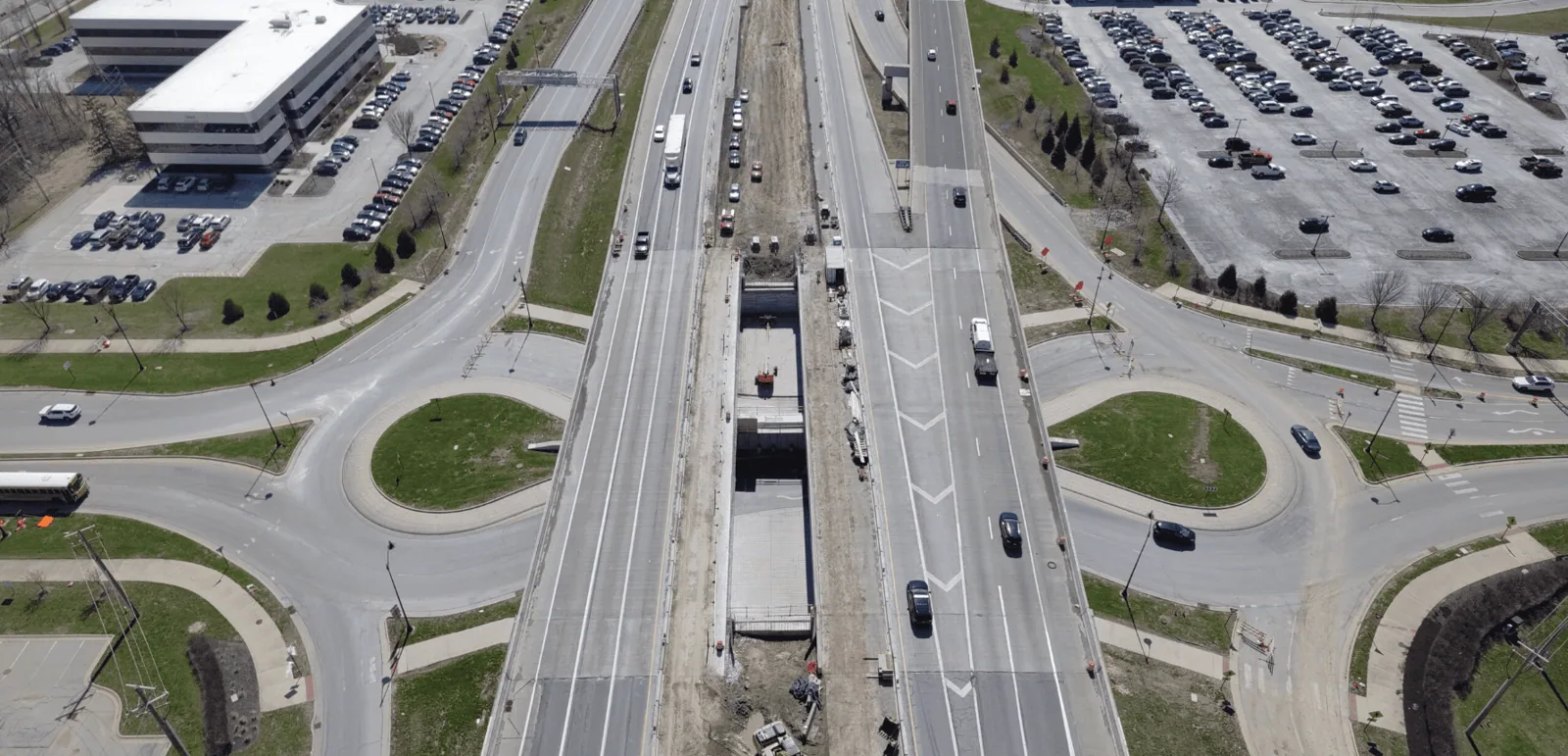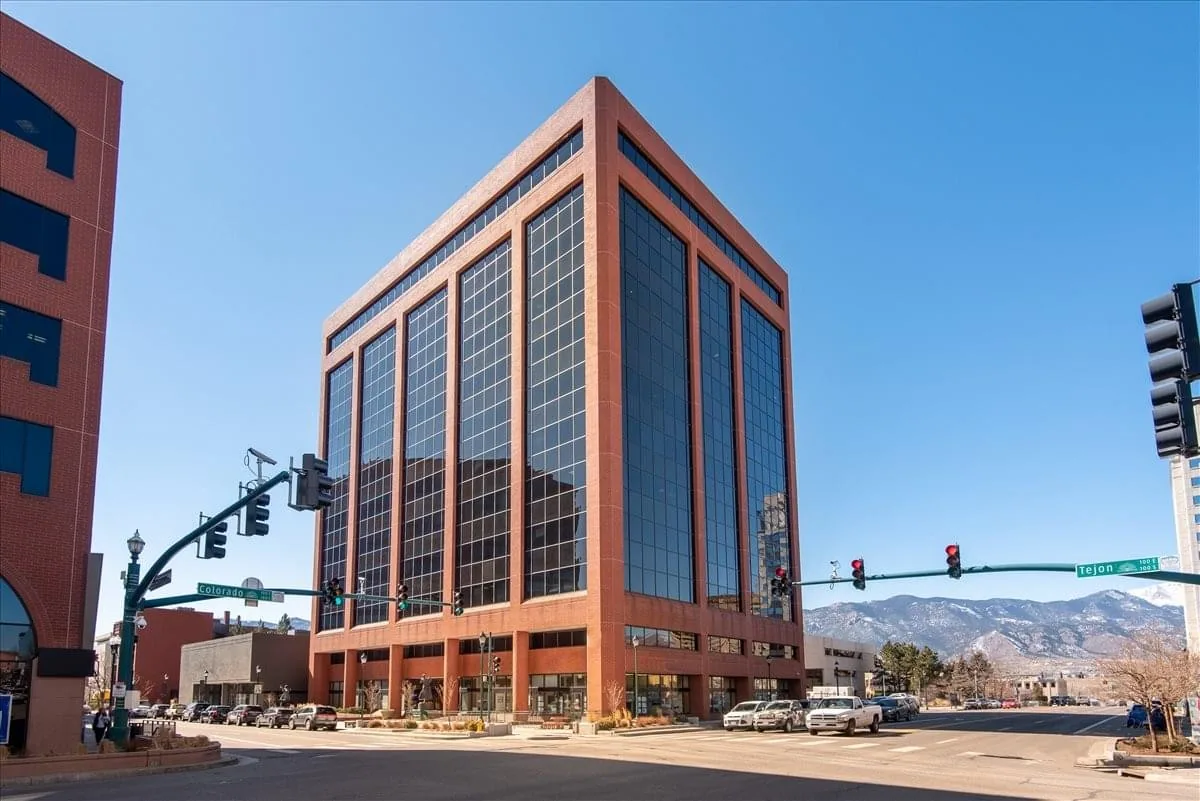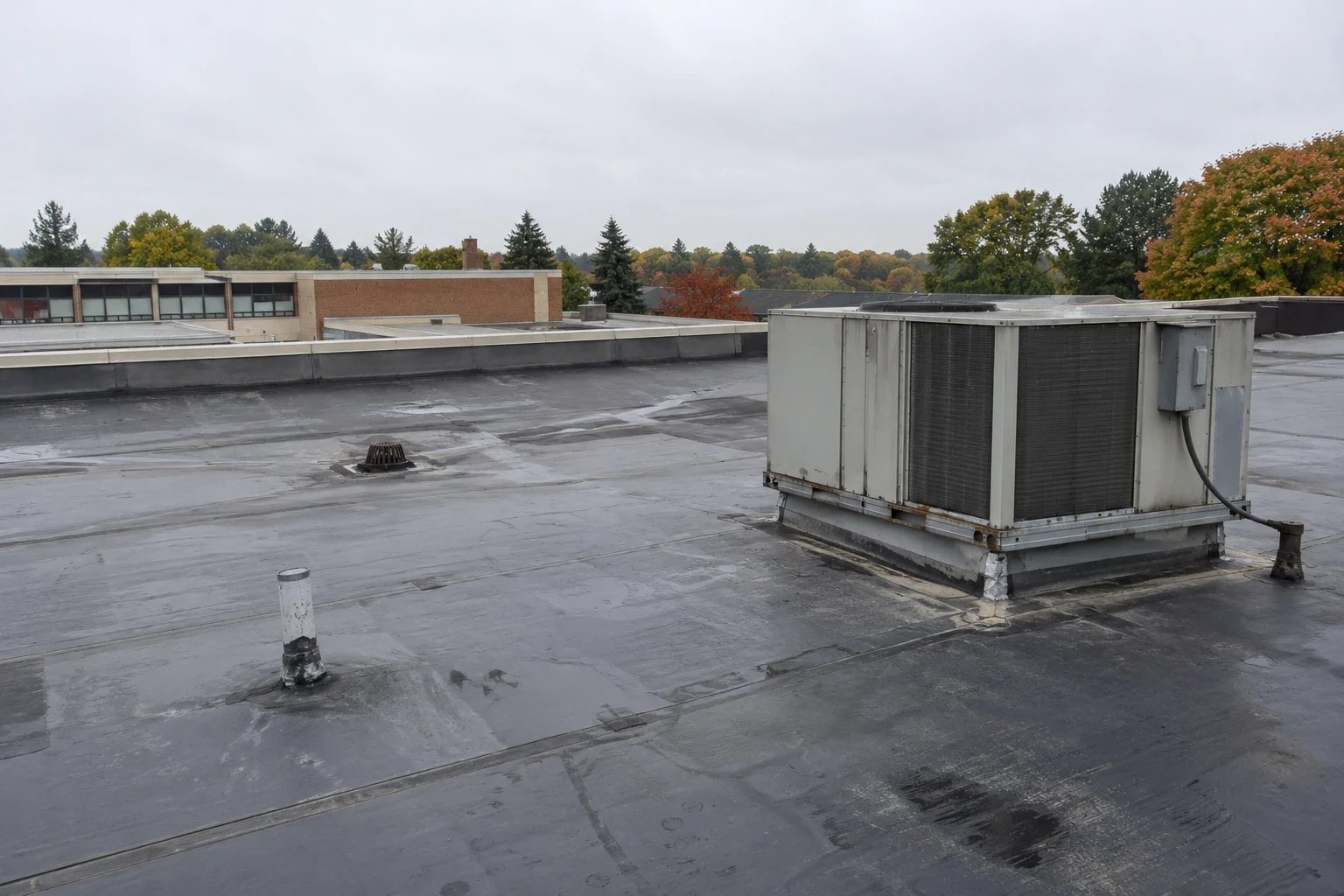
A public building roof decision has to account for the service counter downstairs. We start with the leak report, rooms affected, public hours, and any restricted areas, then inspect the roof section tied to the concern. Permit review and final inspection go through Carmel's Building Safety Office. We confirm the adopted code requirements and project steps before a crew opens the assembly. Carmel City Center adds a local example of offices, retail, housing, and public parking sharing a developed district, but each government property needs its own access and roof plan.
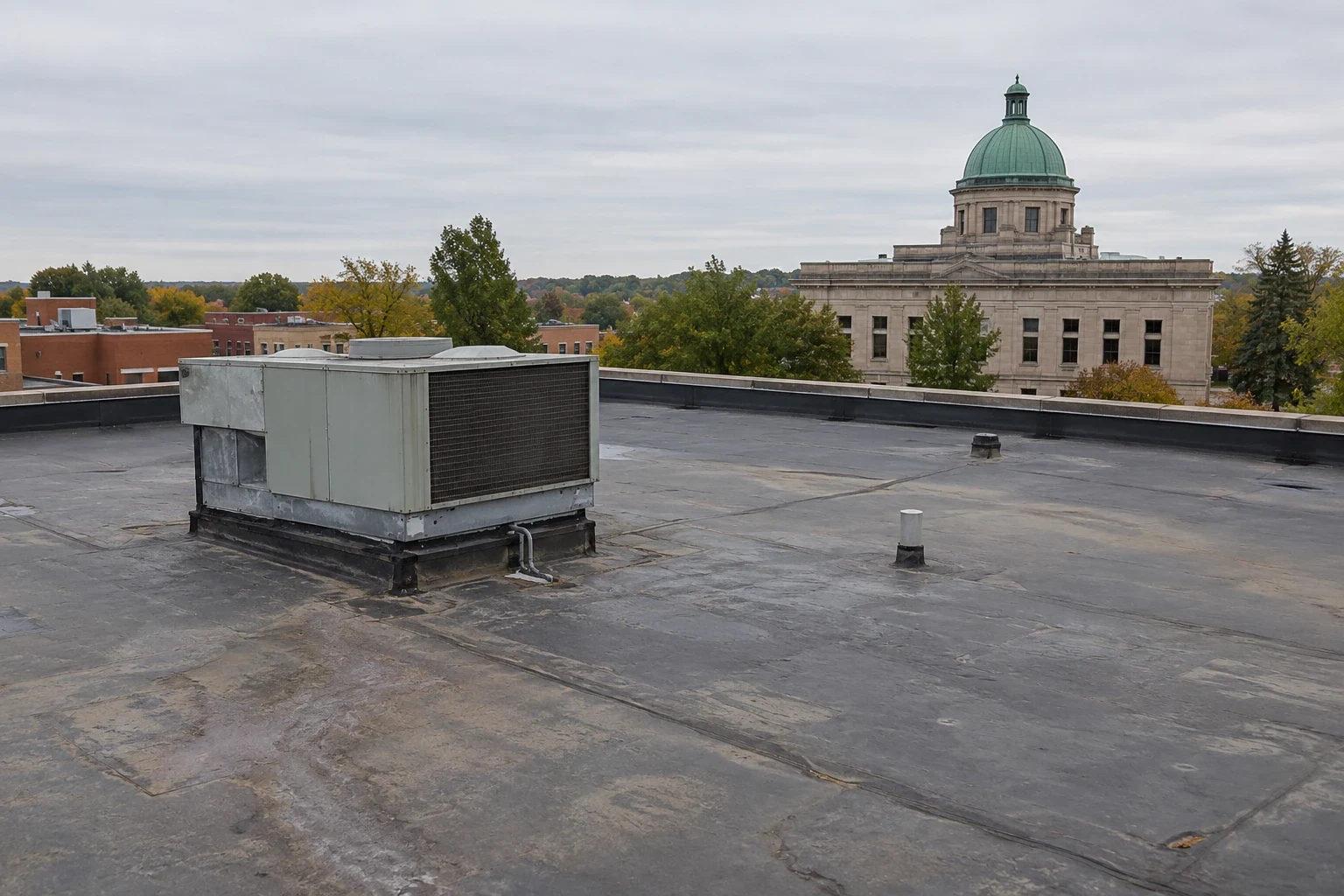
Municipal and government buildings may combine public offices, meeting rooms, records storage, mechanical space, and public circulation. We map the operating constraints before choosing repair or renewal. That does not replace roof inspection: membrane, metal, insulation, drains, edge conditions, penetrations, and prior patches still determine the technical scope. The result should give facilities staff a repair boundary and give procurement a measured quantity to compare.
We record where water appeared, when it started, and whether the room below houses records, equipment, or public services. A ceiling stain can sit away from the roof opening. Our site walk follows the water path through seams, walls, drains, curbs, and other penetrations, then marks the observed conditions on a roof plan. If the first report is uncertain, we keep that uncertainty visible rather than label a likely area as a confirmed failure.
Public access shapes the inspection route. We coordinate escorts, roof access, staff notice, lift placement, and any limits around secure rooms. On the interior, temporary protection may need to preserve counters, meeting space, or archived materials. We list those needs with the roof findings so a repair estimate does not omit the operational work required to complete it safely.
Where insulation may be wet or previous repairs conceal the membrane, visual review may not establish the full condition. We can recommend a selective test or an infrared moisture survey to identify candidate areas, then confirm suspected conditions before measuring replacement. A marked condition report ties observations, access limits, and recommendations to roof sections that a facilities manager can revisit.
The city's Building Safety Office reviews roofing permits and completes inspections using Carmel's adopted code requirements. The scope should confirm which requirements apply to the actual project rather than assume a permit is unnecessary or identical for every assembly. We identify the work type, roof sections, materials, and any inspection points that could affect the schedule, then confirm the current process with the city before mobilization.
A public owner may also need defined procurement documents, submittal dates, alternates, and a clear description of exclusions. We can separate measured roof quantities from allowances for concealed deck or insulation conditions. If testing is needed, its location and decision purpose belong in the scope. That gives reviewers a basis to compare bids without making an unknown condition look settled.
The Carmel Meridian / U.S. 31 Corridor includes corporate office and employment uses, while Parkwood Crossing includes multiple office buildings, a hotel, restaurants, a bank, and parking. Those places provide local examples of multi-building access and varied occupancy. A public project should still identify its own building contacts, secure zones, and public service hours. For an office component, an office roof plan can help frame equipment and records. A public school schedule has different constraints, which a school roof scope can help organize.
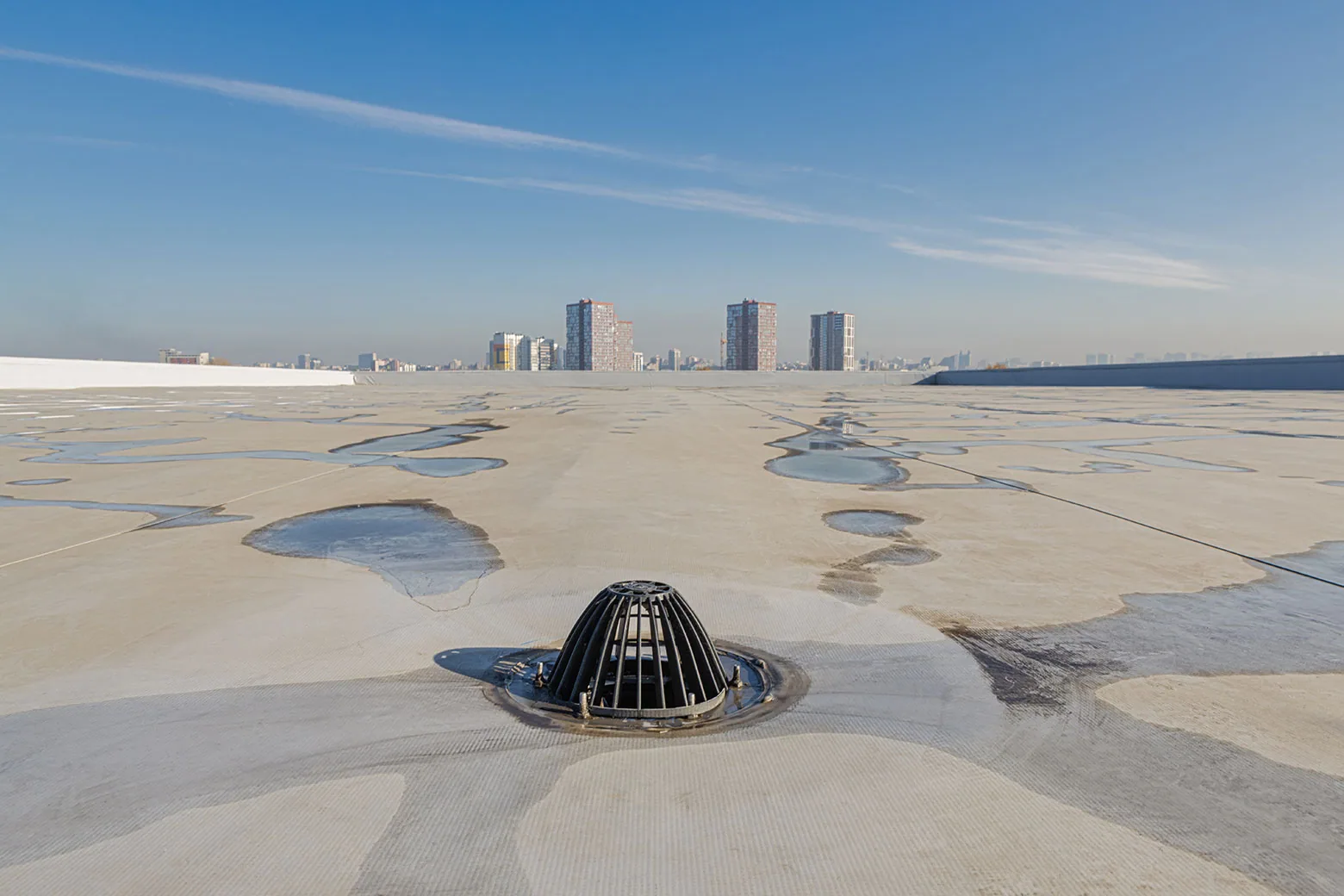
Water at a public entrance can affect both the roof and the daily route into the building. We inspect drains, scuppers, gutters, downspouts, and overflow discharge, then note whether water could reach a door, accessible route, or exterior equipment. If ponding recurs, we look for the cause rather than treating every low area as a blocked drain. Slope, insulation movement, a damaged connection, or a failed flashing can lead to different repairs.
Central Indiana sees steady rain and winter freeze-thaw. Carmel's annual weather profile includes 43.63 inches of precipitation, with snowfall near 25.5 inches in an average year. Indianapolis receives 25.5 inches of snow and 43.63 inches of precipitation in an average year. At a government building, we check outlets and edges, then set access around the conditions found that day. A drainage correction scope can separate clearing from repair of the membrane or drain connection.
For government offices that store paper records or operate sensitive equipment, interior protection may need to continue until the source is corrected and the assembly dries. We identify what can be moved, covered, or isolated with the facilities contact. If response must happen outside public hours, we describe that constraint early so the owner can coordinate staff and access rather than discover it during mobilization.
A targeted repair is defensible when the failed detail is localized and the surrounding assembly remains sound. We name the seam, edge, penetration, or flashing, the preparation and materials, and the limits of the repair. Repeated failures or confirmed wet insulation may justify comparing a wider renewal. That comparison should show which roof sections are included and why, with removal quantities measured separately from contingencies.
A recover can avoid some tear-off, but only when the existing layers, attachment, moisture, drainage, and edge height allow it. We assess those conditions before describing recovery as an option. A recover evaluation can be compared with replacement planning, including disposal, temporary protection, insulation, metal details, and access. The scope can also list schedule milestones and inspection points to make its assumptions reviewable.
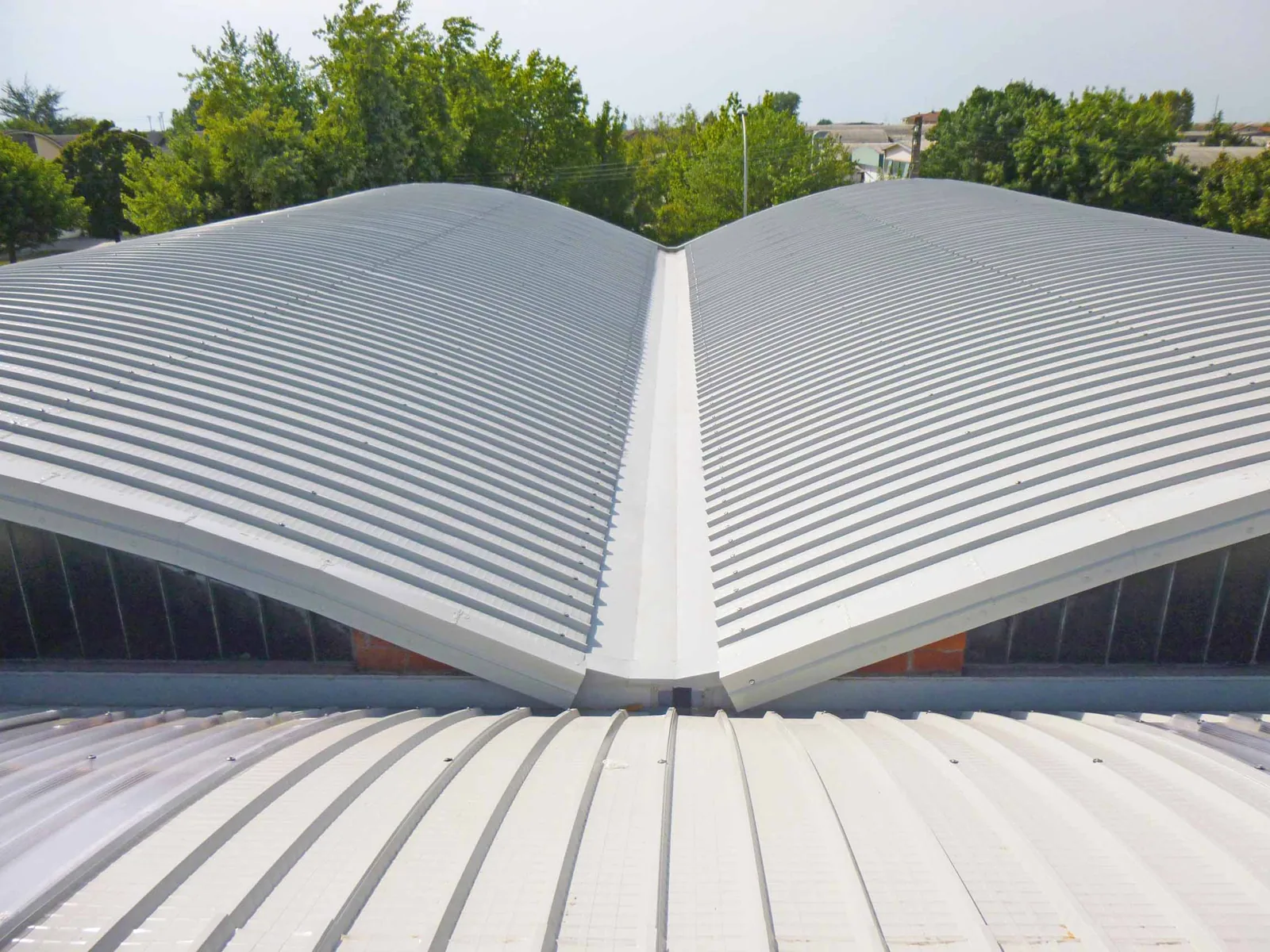
Government buildings can contain more than one roof system. A membrane area above offices may meet standing-seam metal over another wing. The transition needs inspection as a distinct detail. Our metal roof review covers panel movement, seams, clips, flashings, and fasteners, while the rest of the plan stays tied to the assembly actually present.
Closeout should include marked roof sections, photos, system and repair details, excluded work, permit and inspection records, and follow-up items. We note what was inaccessible or not tested so a later capital review does not treat an open issue as closed. If a repair changes drainage or equipment access, the revised condition belongs in the maintenance file.
Carmel Midtown includes office, housing, restaurant, commercial, and parking uses on former industrial land. Parkwood Crossing's seven office buildings form a larger multi-building setting. Such contexts make asset identifiers and roof maps important, but no district fact tells us what a particular public building contains. We keep every finding connected to the inspected property. If the owner manages several sites, portfolio tracking can keep the records distinct.
Bring leak logs, roof plans, access procedures, procurement dates, and the intended budget window to a site walk. We can identify immediate protection, confirm what testing is needed, and prepare a measurable scope for repair, recover, or replacement. The owner receives a clear account of the condition and the next decision, without mixing confirmed work with assumptions.
Identify roof sections, observed failures, measured quantities, access needs, testing, exclusions, and inspection points. We separate confirmed work from allowances so reviewers can compare the same assumptions.
The work type and adopted requirements determine the permit and inspection steps. Carmel's Building Safety Office handles review and inspections; we confirm the current project requirements before setting the sequence.
Often, if access routes, noisy work, deliveries, and temporary closures are planned with the building contact. We define work zones and daily roof closeout before mobilization.
We coordinate immediate interior protection, document the affected room, and trace the source on the roof. The permanent scope identifies the detail to repair and any testing still needed.
A pattern of failures, widespread moisture, or unsound attachment can support a broader renewal. We map each condition and compare measured replacement quantities with localized repair options.