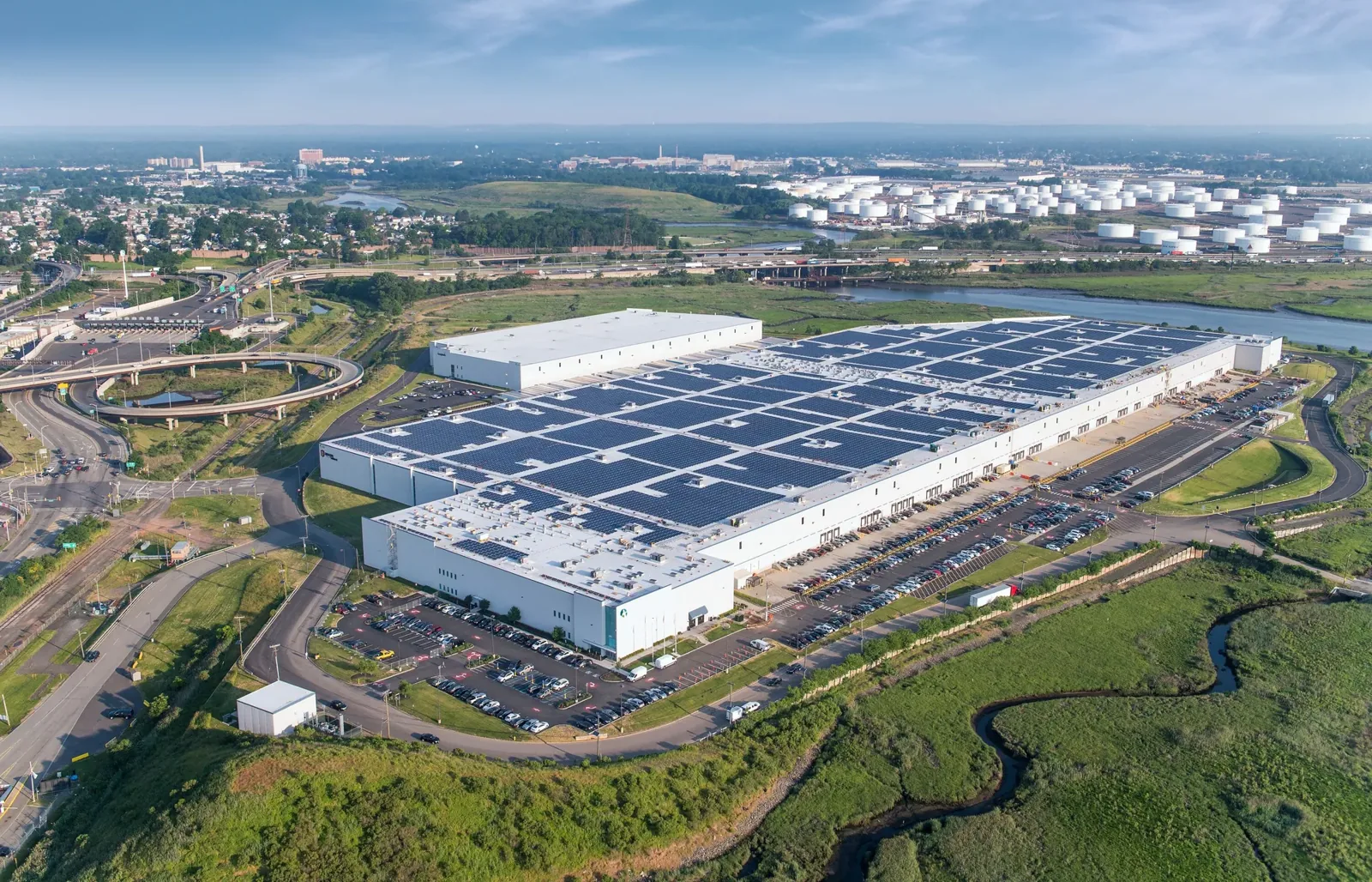
A dealership roof problem can reach the showroom, service lane, parts counter, or vehicle inventory, and each area affects the work plan differently. We start with the location of the report and what needs protection below, then inspect the roof section, curb flashings, seams, edges, and drains. Carmel's Clay Terrace is a large outdoor retail center between 146th Street and U.S. 31, while the Carmel Meridian corridor contains corporate office and employment uses. Those local commercial settings underline the need to plan around customer access, but a dealership's roof condition comes from its own inspection.
Showroom glazing, service-bay equipment, parts storage, and customer circulation can create several distinct roof details. The first estimate should not assume the same repair applies across every area. We map the assembly and maintenance history, define the repair boundary, and identify whether the immediate need is leak stabilization, a localized correction, or a longer-term renewal decision.
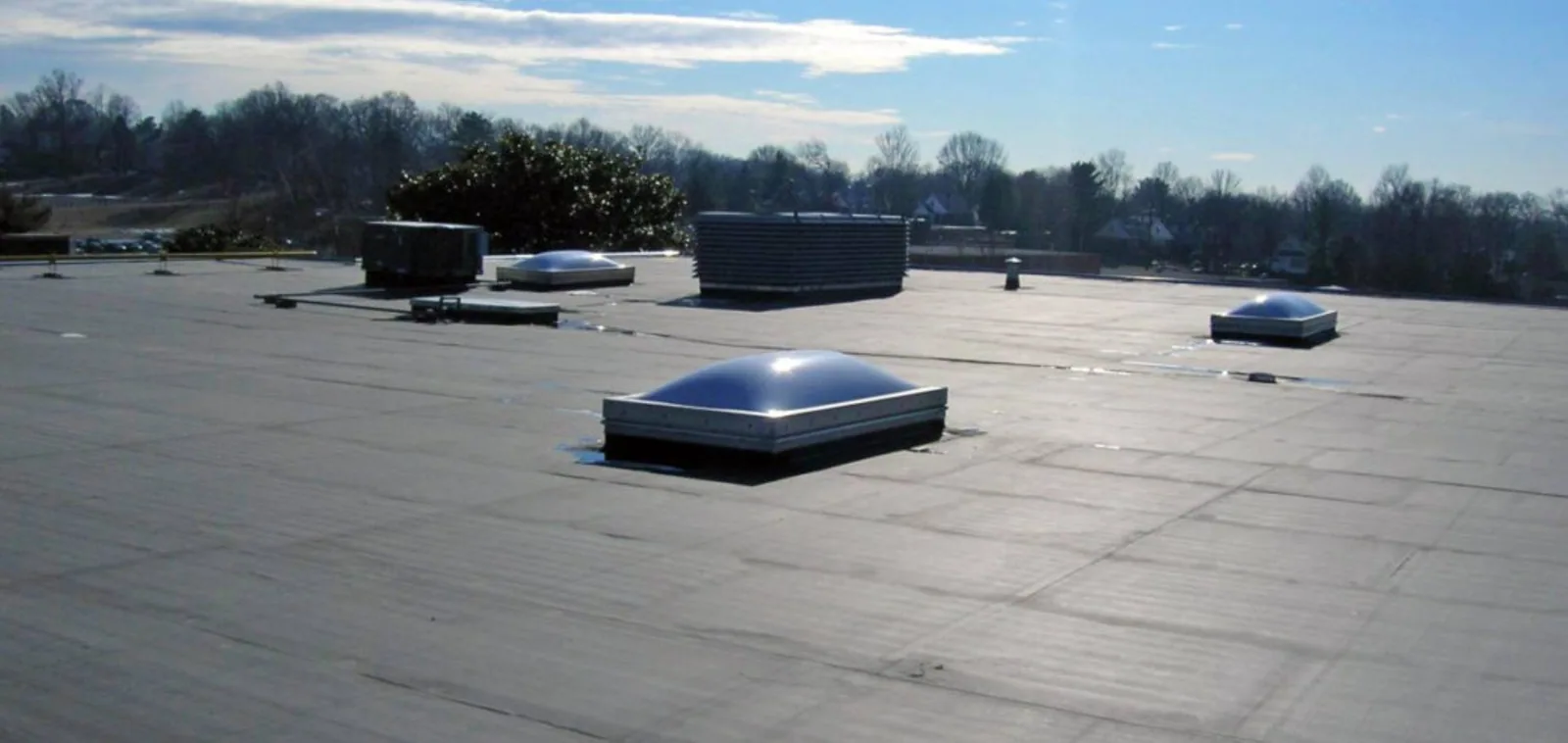
We ask where water appeared and what was happening at the time. A report over a service bay may coincide with equipment, lighting, or vehicle movement, while a stain in the showroom may require protection for displays and customer routes. We trace the water path on the roof instead of treating the interior mark as the opening. The inspection notes seams, rooftop units, skylights, drains, wall transitions, and any prior patch that may be carrying water to a different point.
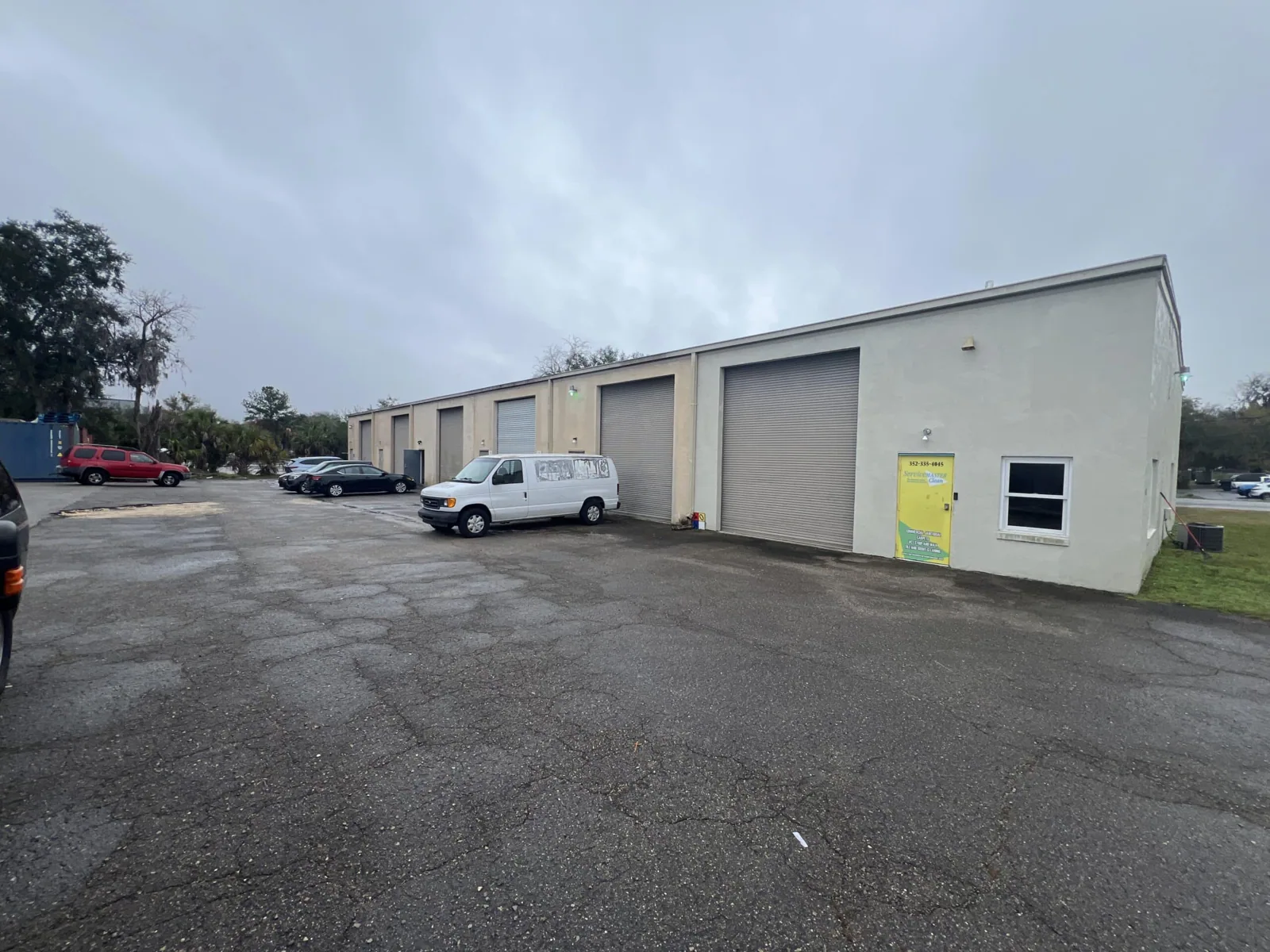
Vehicle inventory and customer parking affect lift placement and material delivery. Before a roof section is opened, we identify the service lane schedule, vehicle movement, parts deliveries, and areas that must remain accessible. We agree on a work boundary with the facilities contact and mark where the crew stages. Where customer-facing retail and service bays share a roof, large-format retail access requirements can affect staging, while vehicle paths and shop operations need their own work boundaries.
If a membrane has repeated patches or signs of trapped moisture, we determine whether additional testing will change the scope. An infrared moisture survey can help identify candidate areas in suitable conditions, but readings are not a substitute for confirmation. We may recommend a selective opening before assigning removal quantity. The proposal should say what is measured and what remains conditional.
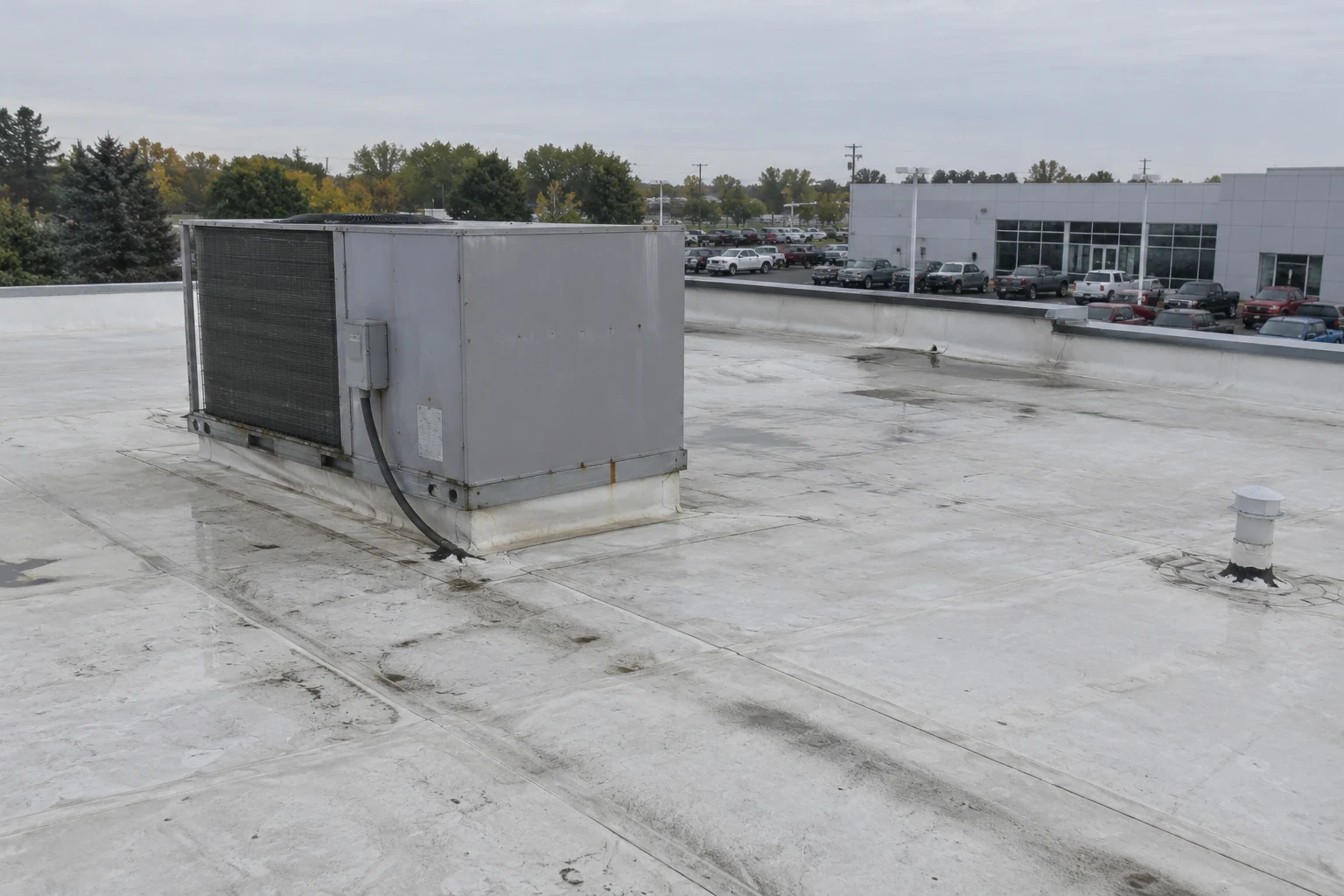
Roof leaks near a rooftop unit often involve more than the curb cap. We inspect the curb flashing, support attachment, service clearance, condensate path, and adjacent membrane. A technician's route can wear a walkway or create punctures, so we note whether the roof offers stable access to equipment. The repair detail should restore the roof while keeping future service in mind.
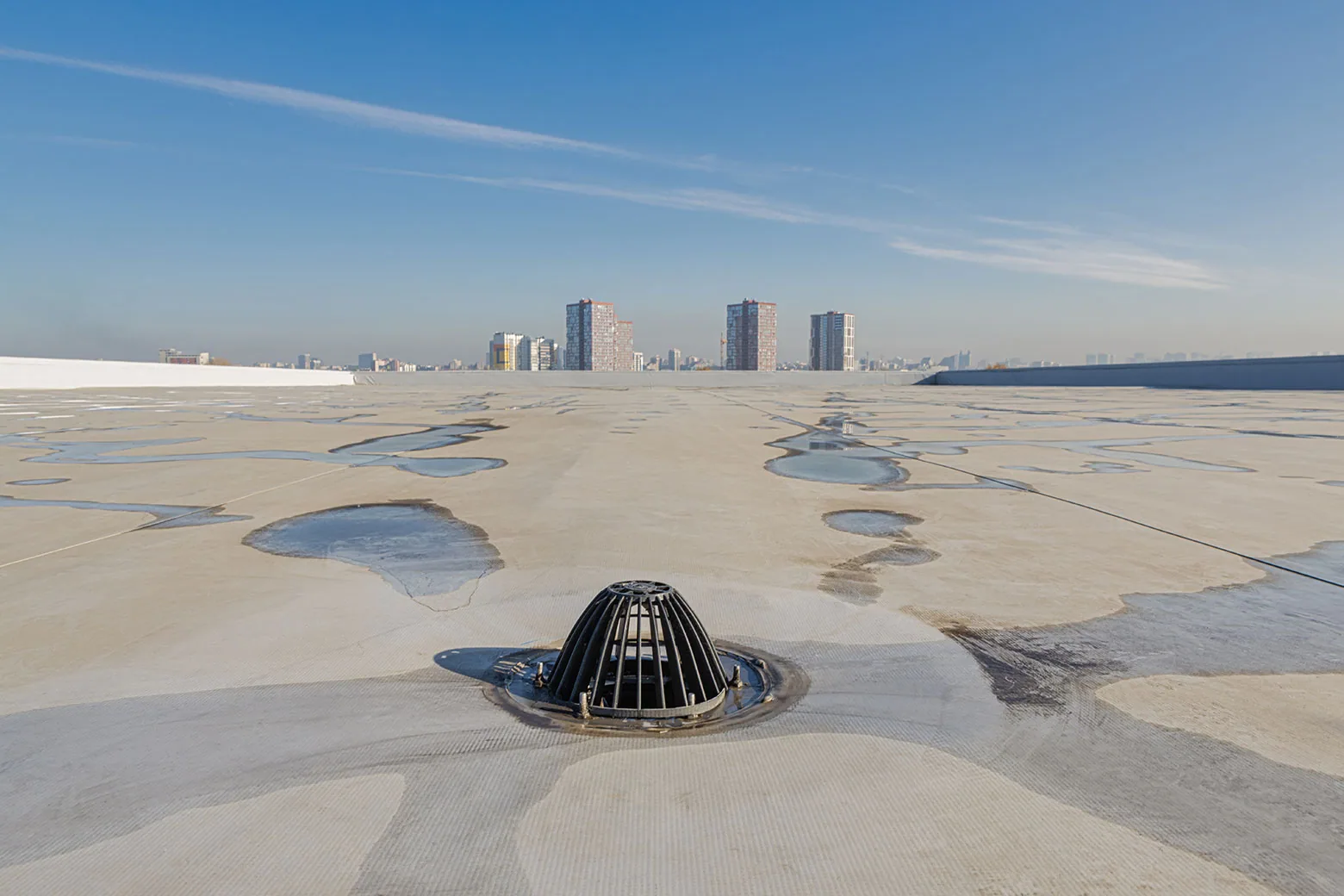
Drainage can affect a showroom as much as a warehouse. We check drain bowls, strainers, scuppers, gutters, low spots, and overflow discharge, then connect each outlet to a roof section. A blocked outlet may need maintenance, while recurring ponding may point to slope, insulation movement, or a damaged connection. The drain and scupper scope can separate those tasks instead of bundling them under a vague leak repair.
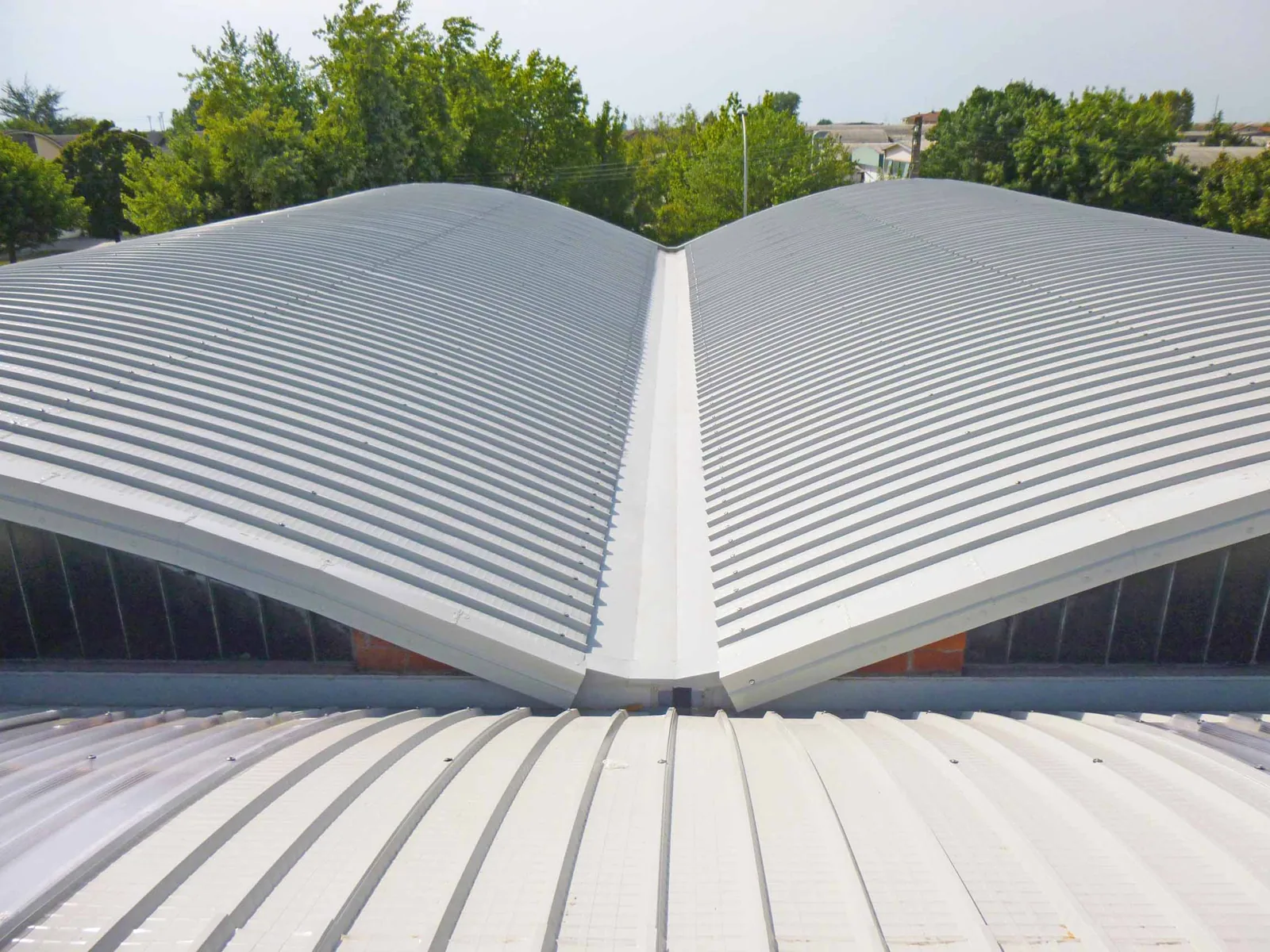
Central Indiana has recorded hail and damaging wind events in Hamilton County. After a storm report, we inspect panel edges, seams, flashing, and drainage for visible change; the regional event record alone does not show what happened at a dealership. We also consider whether winter conditions narrow safe access. If water discharges onto a customer entrance or service lane, we include that route in the protection plan.
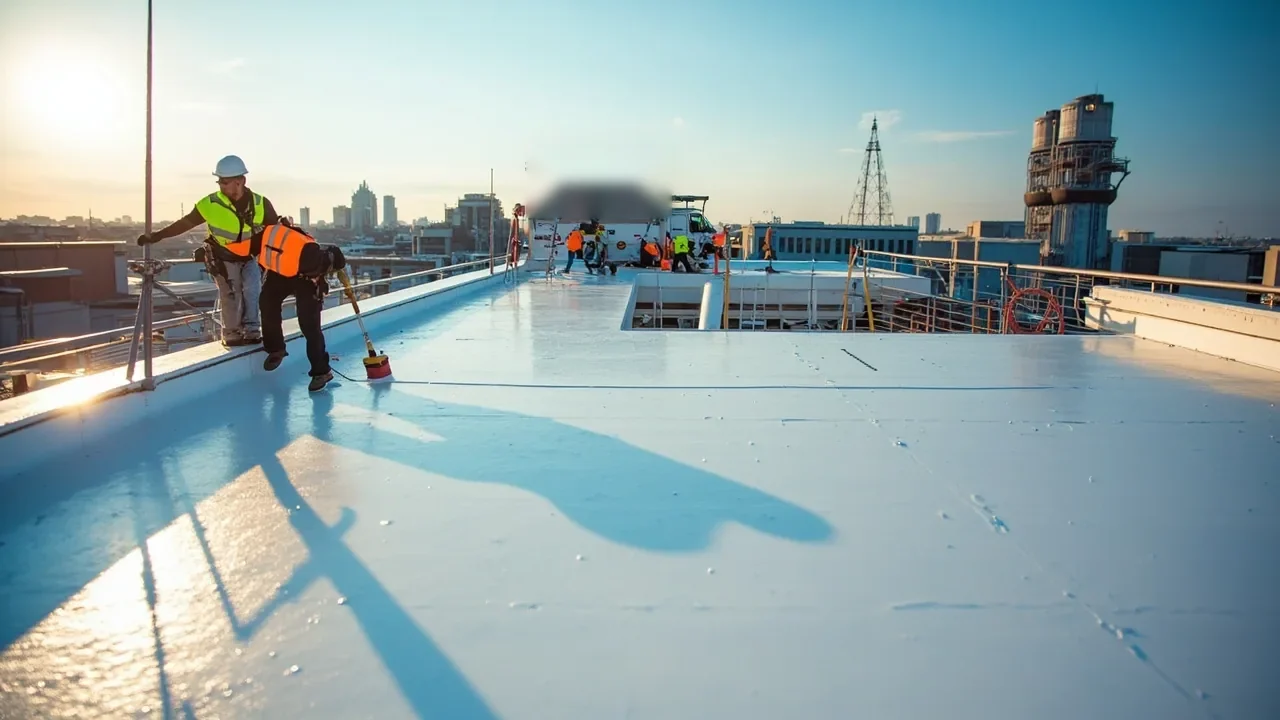
A focused repair makes sense when failure is local and the surrounding assembly remains serviceable. We specify preparation, material, tie-in, and whether the roof needs temporary protection before permanent work. If several areas show wear or the same leak detail has failed more than once, we lay out the affected sections and compare repeated repair with broader renewal. That gives ownership a measured decision rather than a blanket recommendation.
Recovery may work when the existing roof is dry, securely attached, and compatible with added layers. We review deck condition, existing layers, edge height, drainage, and the attachment plan. A recover evaluation should state where testing is needed and how the existing system affects the new work. If removal is required, replacement planning can separate tear-off, insulation, cover board, perimeter metal, penetrations, and disposal quantities.
Dealerships with office, service, and storage areas may share a roof but not a work sequence. On a dealership with office, service, and storage uses, flex-industrial roof details can require separate equipment access and staging zones. If a multi-property owner is timing several renewals, a capital plan can rank urgent protection, testing, and planned replacement by asset.
Work timing should reflect customer hours and shop operations. We ask when service-bay traffic peaks, whether appointments require certain doors, and where cars can be moved if a lift needs to occupy a lane. Material staging and deliveries need a separate path from customer vehicles. The daily plan identifies which roof section is open, how the interior is protected, and where access remains available.
Cold, ice, and wet surfaces can narrow safe roof access and change adhesive or coating work. We check conditions before mobilization, coordinate vehicle movement around lift and staging areas, and name the temporary protection and return window if permanent repair must wait.
For a larger replacement, work can be phased by roof section or operational zone. We coordinate equipment shutdowns, customer notices, vehicle protection, and access around the production sequence. A work schedule also names dependencies such as testing, permit review, material availability, and concealed deck repair. That makes it easier for management to adjust appointments or inventory placement before the roofing crew arrives.
Closeout should identify the repaired roof section, materials, photos, exclusions, and any follow-up inspection. We note whether the curb, drain, edge, or membrane was corrected, rather than recording only that a leak call was closed. If an area needs observation or testing, it remains visible as a separate item for the facilities log.
Carmel Science and Technology Park began at Meridian and 116th Street as a research and employment area; Carmel Midtown has offices, housing, restaurants, and commercial uses. Carmel Science and Technology Park began at Meridian and 116th Street as a research and employment area, while Carmel Midtown includes offices, housing, restaurants, and commercial uses. Near Clay Terrace, retail deliveries and pedestrian routes make staging a practical concern; we map the dealership's own service lanes and roof zones before setting its work boundary.
Share the roof plan, leak history, equipment list, service-bay calendar, and capital timing. We can inspect the roof, identify what needs immediate protection, and prepare a repair or renewal scope that states the quantities, access plan, and remaining questions.
Often, if service lanes, customers, vehicle movement, deliveries, and daily dry-in are coordinated. We set the roof boundary and access plan with management before mobilizing.
We identify the interior and exterior areas below the work, then specify covers, closures, vehicle relocation, or other controls where needed. The exact plan follows the repair location and work method.
Failed curb flashing, loose support details, condensate, service traffic, and adjacent membrane damage are all possible. We inspect the assembly and technician route before choosing a repair.
Moisture, attachment, deck condition, drainage, layers, and edge height decide which options remain viable. We compare measured recover and replacement scopes after checking those conditions.
Keep photos, the marked roof section, materials, exclusions, and any follow-up item with the maintenance log. That record helps connect the next leak report to what was actually repaired.