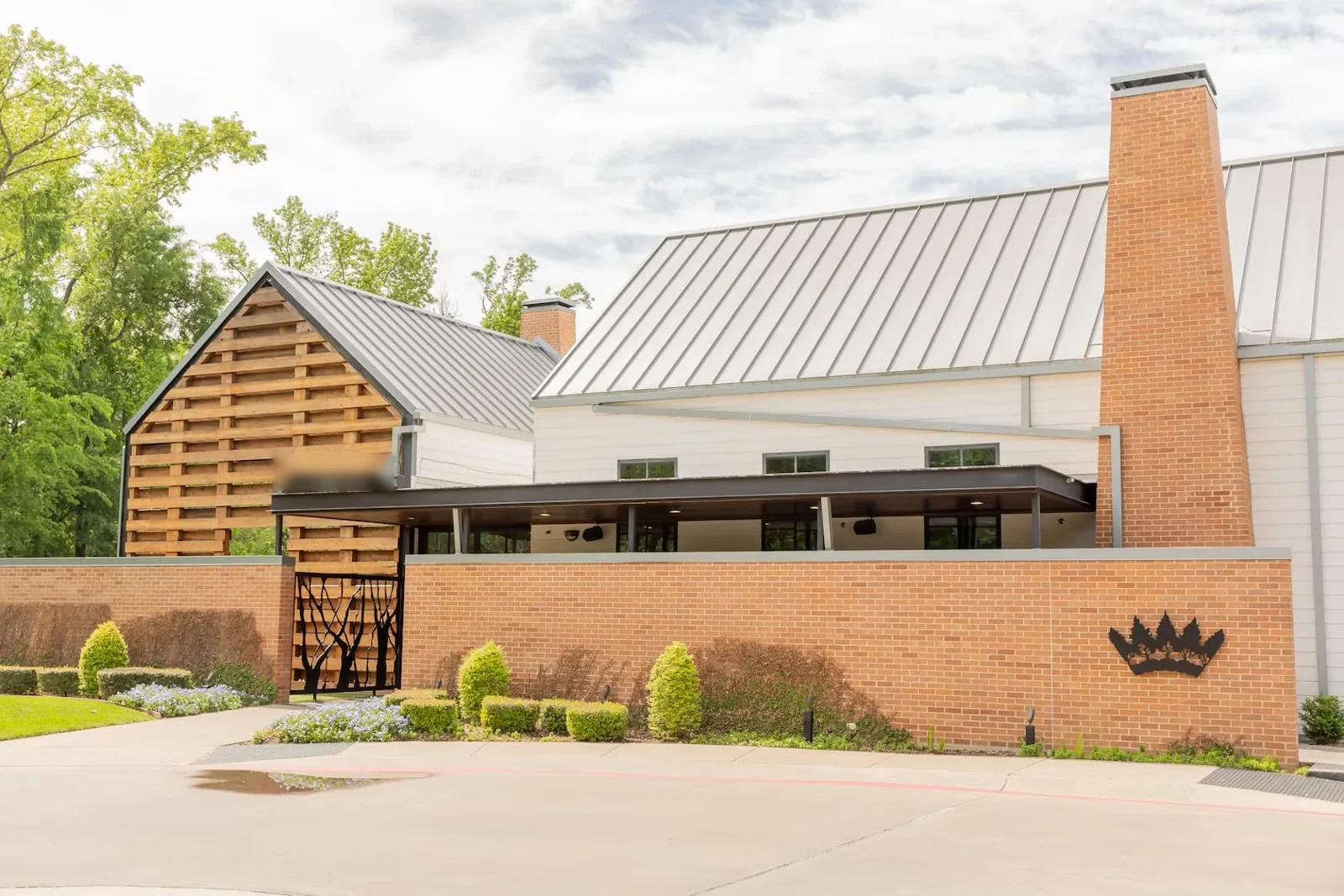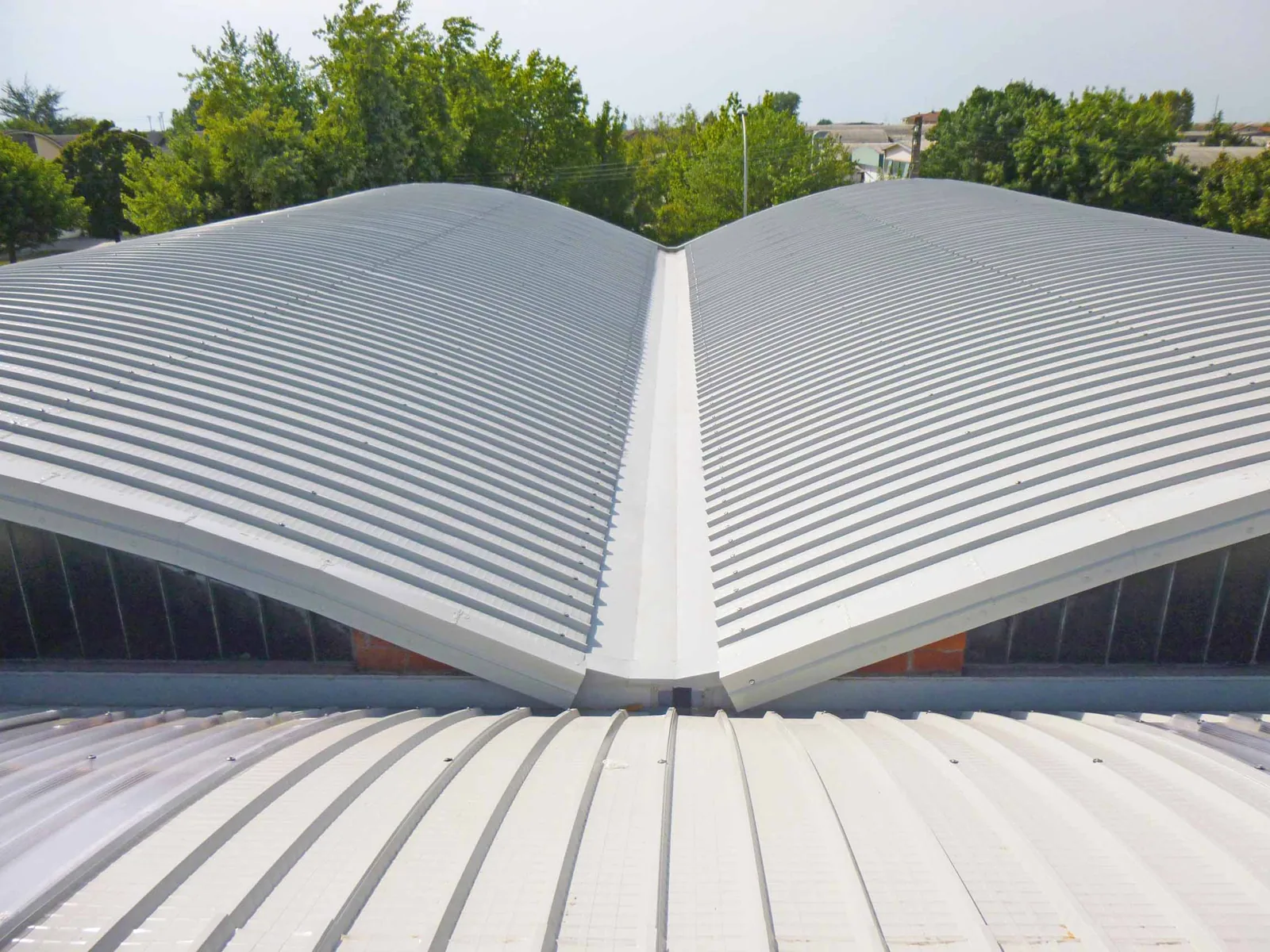
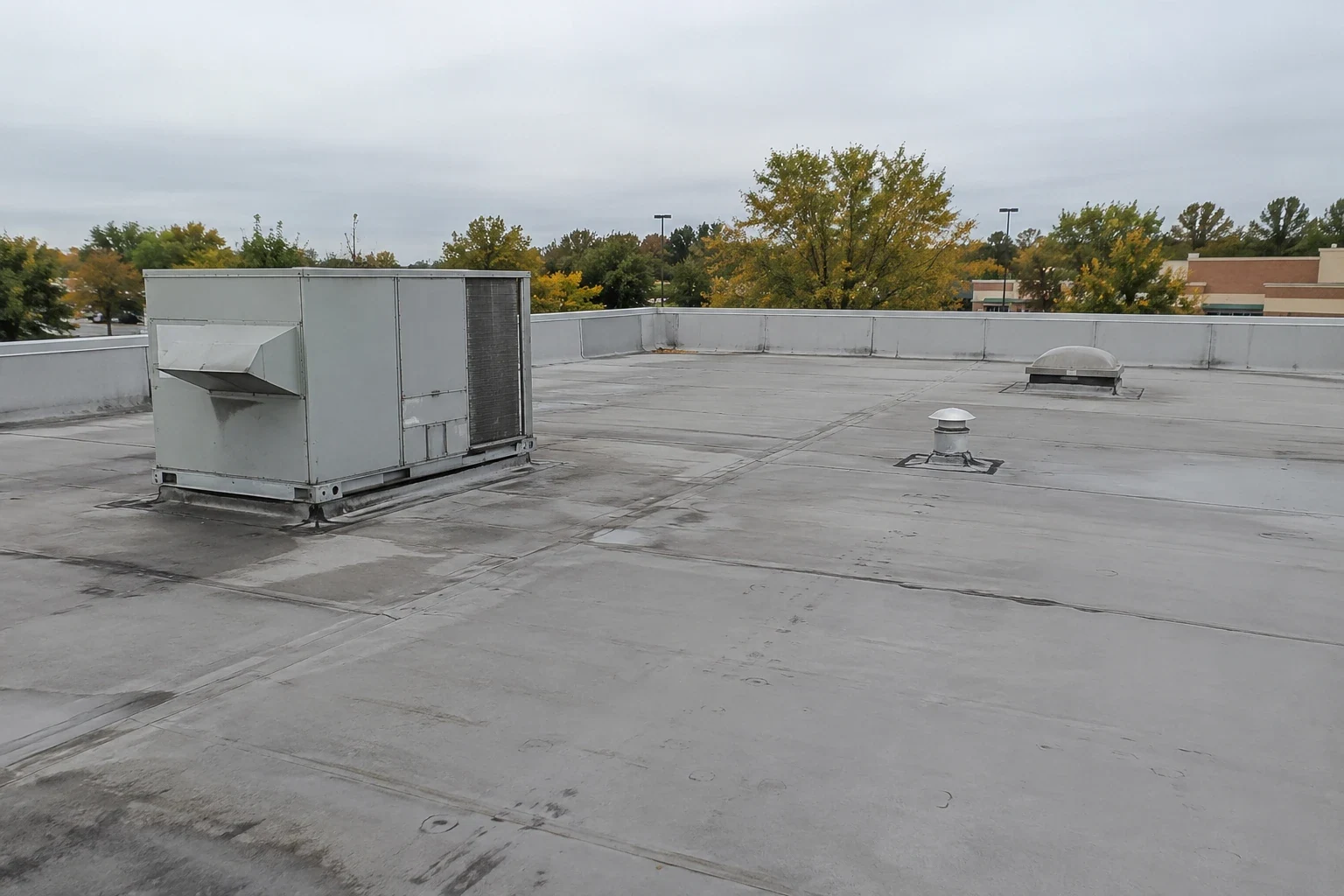
A roof leak in a restaurant dining room or retail aisle can affect sales before the property team knows which roof detail failed. We begin with the site, opening hours, tenant report, and the area below the leak, then inspect the roof section and trace the water path. Between 146th Street and U.S. 31, Clay Terrace brings more than 70 retailers together in an outdoor shopping setting. Carmel City Center combines retail, offices, housing, and public parking. These local settings show how customer access and mixed occupancy shape the work plan, while each store still needs its own roof record.
A chain may manage locations with different owners, leases, systems, and maintenance histories. We record roof condition by asset rather than applying a chain-wide assumption. The scope identifies the affected tenant area, membrane or metal detail, equipment, drainage, and access requirements so operations can decide whether to stabilize, repair, or schedule renewal.
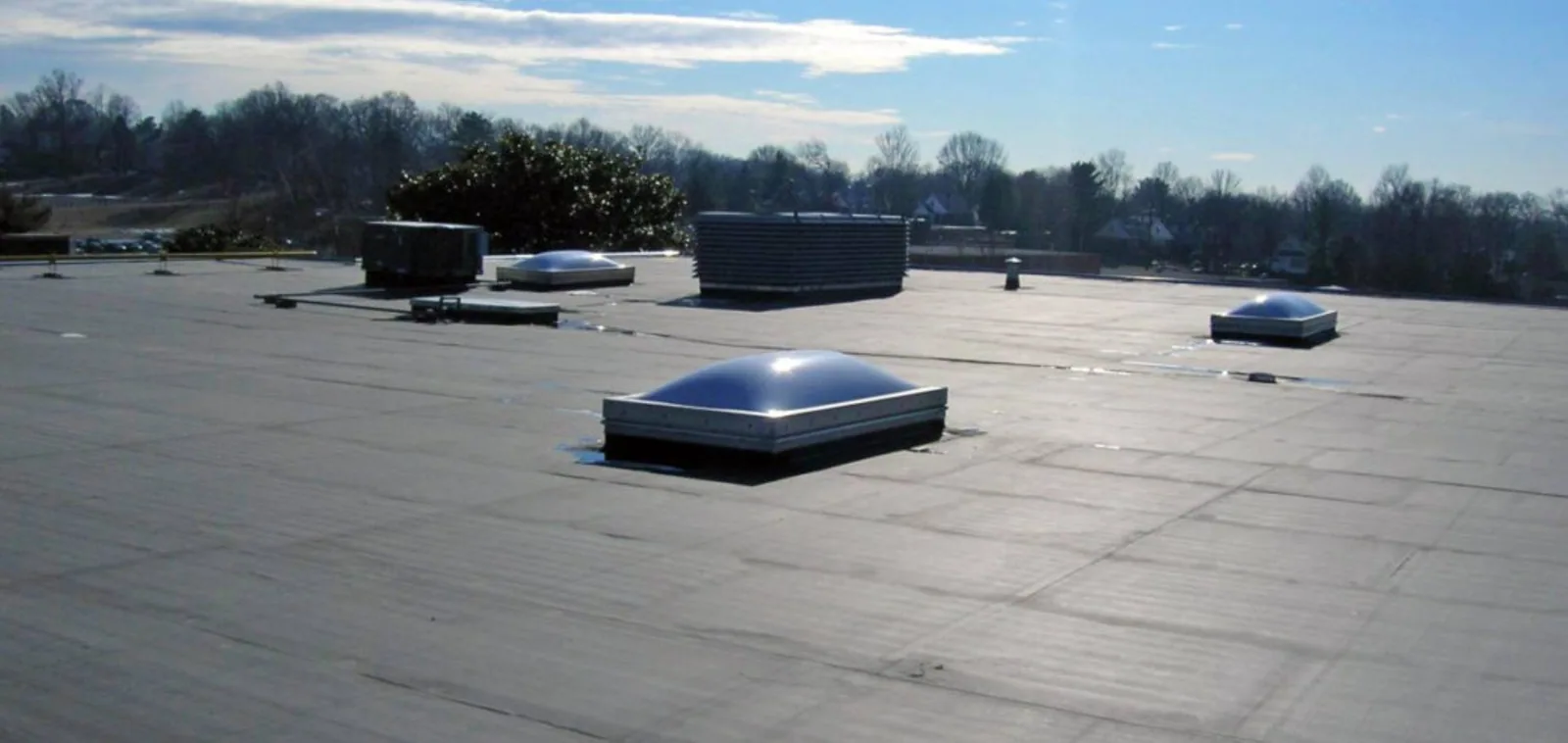
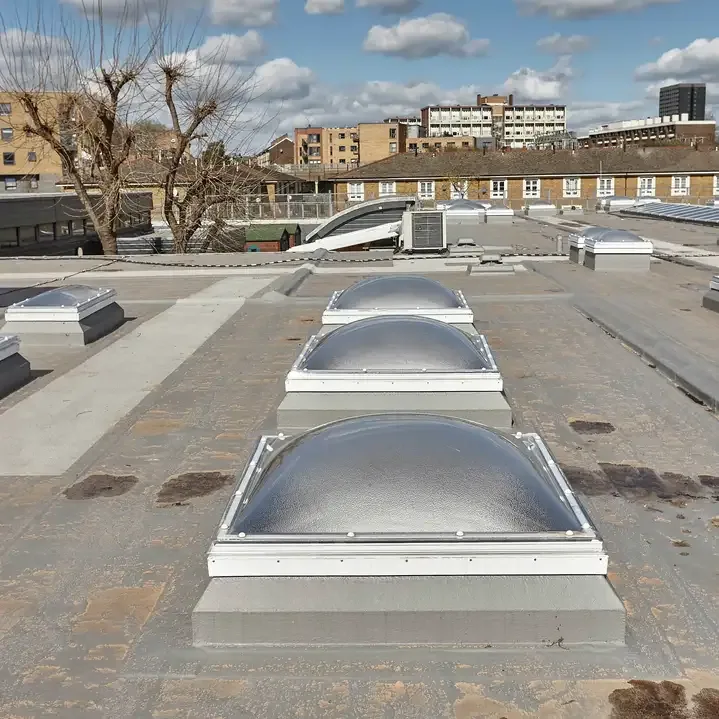
We note the room or sales floor, date, weather, customer or staff impact, and any action already taken. On the roof, we examine seams, flashing, curbs, penetrations, skylights, drains, edges, and prior repairs. A ceiling stain may be downstream from an opening, especially where water moves across a deck or insulation joint. Photos and a marked plan connect the report to the roof section that needs review.
Restaurants add exhaust hoods, grease lines, rooftop units, and service routes that can affect membrane details. We inspect curb flashing, support, condensate, and technician pathways. Retail stores may have skylights, signage, and more customer-facing entrances. A restaurant roof inspection can focus on kitchen and exhaust details; the chain's property team still needs access and tenant information for the actual site.
If the roof shows repeated leaks or soft areas, we identify whether testing will change the removal boundary. An infrared moisture survey can help select areas for confirmation under suitable conditions. A possible moisture signal is not a measured quantity. We explain whether a selective opening is needed before an estimate includes new insulation or deck work.
We plan lift placement, deliveries, roof access, and debris movement away from customer entrances where practical. A work boundary should identify doors, sidewalks, parking, and loading routes that remain open. In a multi-tenant center, the property manager may need to coordinate several notices, while each operator supplies its hours and any protected inventory or kitchen schedule.
Retail and restaurant work can be phased by tenant bay, roof section, or shared corridor. Each phase needs a safe access route and watertight stopping point. If a roof opening sits above a dining area, food storage, checkout, or a public corridor, interior protection belongs in the plan before work starts. We ask who can approve a short closure if concealed damage changes the sequence.
Carmel Arts & Design District includes shops, galleries, restaurants, and design showrooms around Range Line and Main. The Village of WestClay includes dining, retail, health, and service businesses. These local areas have active storefront uses, but no center's operating plan can be assumed from its district. For a chain with hotel or food-service assets, the hospitality roof program can help coordinate separate operating calendars across locations.
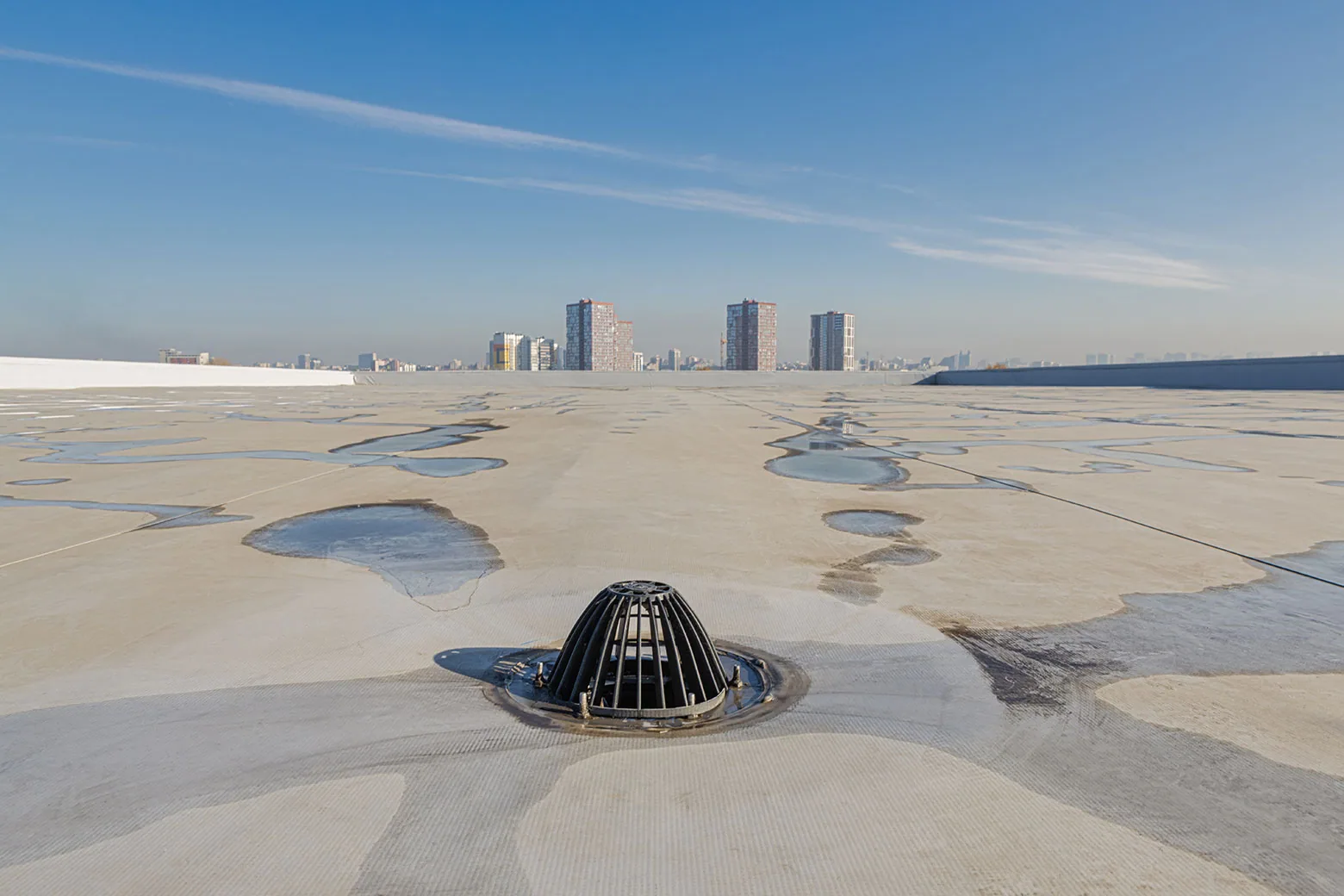
Restaurant exhaust and rooftop equipment create multiple points where flashing or service traffic can affect the roof. We look for separated curb corners, failed boots, damage along the technician route, and condensate that reaches a seam. Drainage gets an independent review: bowls, strainers, overflow paths, gutters, and downspouts are checked by section. Cleaning and roof repair may be separate tasks, and the scope should say which condition each one addresses.
Carmel's climate profile includes 25.5 inches of average yearly snowfall, alongside 43.63 inches of precipitation. At each store, we inspect outlets and edges directly, including runoff paths toward dining entrances, storefronts, and pedestrian routes. Hamilton County has documented hail and damaging-wind events, so after a reported storm we look for observed movement or new openings at the actual building.
A drain and scupper scope can specify outlet service or a damaged connection. skylight and penetration work addresses flashing where roof openings meet the field system. If a storm produces active water entry, we stabilize it first and define the permanent repair after inspecting the assembly.
A local repair can be appropriate when one seam, penetration, or curb has failed and nearby materials remain serviceable. We define preparation, tie-in, materials, and tenant protection. When failures repeat across a roof section or moisture is confirmed, a larger scope may reduce multiple service calls. The chain can compare properties using active leaks, tested conditions, repair history, sales or service hours, and access rather than a shared assumption about roof age.
Recovery depends on existing layers, attachment, moisture, drainage, and edge height. A recover assessment can be compared with replacement planning, including equipment, curbs, membrane, insulation, cover board, edge work, disposal, and interior protection. We can phase work by location to align with remodels, seasonal demand, or lease turnover. Measured quantities and allowances stay separate.
A multi-location owner can ask its property management team to coordinate tenant notices and access; the roof files should still stay specific to each building. If a storm claim is involved, insurance restoration documentation can align photos and observed damage with the repair estimate.
Closeout should show the roof section, photos, materials, repair limits, exclusions, and any follow-up inspection. We note what remains untested and whether customer routes or tenant access changed during the work. That lets the next store manager or property contact check the same detail without searching across a chain-wide file.
Clay Terrace is a broad retail center between 146th Street and U.S. 31; Carmel City Center includes retail alongside offices, housing, and public parking. A chain may operate at or near such districts, but a center fact does not identify an individual tenant's roof system. The Clay Terrace area record provides the district context, while each building's closeout file preserves its condition and repair history.
Share the location list, store hours, roof records, leak history, equipment schedule, and access rules. We can inspect priority sites, define immediate protection, and prepare separate scopes for repair or renewal. A property list paired with consistent roof maps helps leadership decide which location needs action before the next seasonal rush.
Compare active water entry, business impact, repeated repairs, testing, and access by property. We map each report and separate emergency protection from planned renewal.
We map the kitchen, dining room, exhaust route, deliveries, and customer entrances before setting the work boundary. The operator receives a daily dry-in plan and any area that needs a temporary closure.
We inspect flashing, curb attachment, condensate, membrane tie-in, and the technician route. The repair needs to restore waterproofing and preserve access for future equipment service.
A common specification can help organize bids, but measured quantities and conditions must remain asset-specific. We record each system, access plan, and confirmed repair boundary.
Keep the inspection date, photos, location, observed changes, repair scope, and exclusions. We distinguish storm observations from prior wear and unconfirmed concealed conditions.